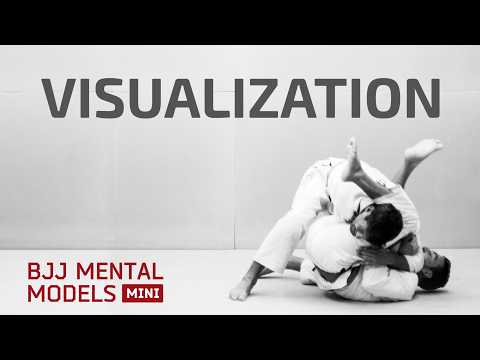
In this mini-episode, we discuss head position, or how to tell if your head and neck are at risk in jiu-jitsu. We use a 3-point framework to determine if our head is safe:
Avoid constriction (be safe from squeezing),- Avoid impact (be safe from blunt force trauma), and- Avoid broken posture (be safe from neck misalignment).
The world's LARGEST library of jiu-jitsu audio lessons, our complete podcast network, online coaching, and much more! Your first week is free: https://bjjmentalmodels.com
Speaker 1: Hey everybody, before we get started this week, I just want to let you know, we released a new mindset course featuring Rob Bernaki from Island Top Team and BJJ Concepts. It's called Mindset for Betas. It's an amazing resource that breaks down a new way to build a resilient jiu-jitsu mindset. It's part of BJJ Mental Models Premium. I will spare you the full sales pitch because you can try it for free. Just go to bjjmentalmodels.com/beta. I will give you a free month, you can check out the course and if you decide that it's not worth your money, you can cancel, you won't have to pay a cent. I've already been told by subscribers that this is the most valuable piece of jiu-jitsu content they've ever received, so I hope you like it too.
Speaker 1: Hey everybody, welcome to BJJ Mental Models. I am Steve Kwan and BJJ Mental Models is your guide to a conceptual and intelligent jiu-jitsu approach. And we are going to spend a few minutes talking about how to tell if your head and neck are safe in Brazilian jiu-jitsu. Now, we have had a similar series of conversations about arms and legs. Check out our mini episode on the three-joint rule if you want an explanation. But I find the question of head safety to be challenging. With our arms and legs, we've got three major joints of articulation and I have found a simple way to explain whether an arm or leg is safe. With your head, it always feels like you're in danger when someone grabs it, and we tell beginners, don't let your opponent grab your head. That's good advice if you don't know what else you're doing. However, we've seen times when someone gets their head grabbed and they're still able to grapple effectively. Think of a wrestler who shoots a double, their opponent grabs their head, and they still get the takedown anyway. Or think of someone who passes the guard while their opponent has their head grabbed, they can turn that into a Von Flue choke from the top. So sometimes it is okay to let your opponent grab your head, much of the time it's not. How do you tell which is which?
Speaker 1: I've got a three-point framework to explain that. But first I want to talk about why we should use our head as a weapon. Your body has a lot of different weapons. There's your torso, the strongest weapon, then your legs, your arms, and your head. To be effective at jiu-jitsu, we want to be using all of these weapons. Against a good opponent, if you're leaving a weapon unused, then that's an advantage they have over you. Although your head is not as strong as your torso or legs, and it's not as dexterous as your arms, it's still a big blunt instrument. And you can use it as a frame, as long as you prevent your opponent from choking you. You can use it as a wedge, which is very helpful if you want to pin your opponent from top position. And you can use it as a post, although that's often not safe and I wouldn't suggest it, it is an option.
Speaker 1: So, with that said, let's talk about how to tell when our head is safe and when it's in danger. We are looking to avoid three things when it comes to having our head grabbed. Number one, we want to avoid constriction. Number two, we want to avoid impact. And number three, we want to avoid broken posture. Let's run through each of those. So number one, avoid constriction. It's not great when your opponent grabs your head, but what really makes it dangerous is when they can constrict your head, when they can squeeze. Go back to that example of a wrestler shooting a double. If their head is upright, then even if their opponent grabs their head, they won't be able to constrict it and get a choke. If you shoot with your head down, then when your opponent grabs it, they can guillotine you. That's because when your opponent's head is down, it makes it possible to constrict their head. So this is what we're looking for. It's not just whether your opponent is grabbing your head, it's whether they're able to constrict around it. Number two, avoid impact. Now this one is probably obvious, you do not want to sustain blunt force trauma to your head. But in the middle of a match, we sometimes do things that run contrary to that goal. Be mindful of elbows and knees that could clunk into you if you run head first. Be mindful of going head first into the mat. And also be mindful of getting sprawled on. If your head and neck are getting sprawled on when you're shooting a double, that's an indication that your double setup needs to be improved.
Speaker 1: And number three, avoid broken posture. We're using the definition of posture that comes from Rob Bernaki. This means the ability to effectively use your head and spine. Think of how you would deadlift. You would look straight ahead. If you are looking too far up or down or to the side, a deadlift doesn't just become difficult, it becomes dangerous. In jiu-jitsu, if we allow our opponent to pull our head upward like a Pez dispenser, push it downward so our chin touches our chest, or twist it to the side, then we have broken posture. Much like how you could not deadlift with your head in one of those positions, you'll have a hard time grappling in one of those positions. So if your opponent is able to pull your head up, push it down, or twist it to the side, you have broken posture and that means that you're at risk. However, if you're able to keep your head and neck aligned with your spine, you're not in as much danger as it might feel if your opponent grabs your head. So let's combine these three things. Number one, avoid constriction. We want to be safe from having our head squeezed. Number two, avoid impact. We want to be safe from blunt force trauma to our head. And number three, avoid broken posture. We want to be safe from having our head twisted out of alignment. If we can avoid those three things, our head is probably safe even if our opponent is grabbing it. If even one of those things is happening, we are at risk. So that is my simplified way for understanding when your head is safe in jiu-jitsu. We talk about things like this a lot at BJJ Mental Models. We did a similar conversation on how to tell if your arms and legs are safe. Check out our mini episode on the three-joint rule. You can find everything we make at bjjmentalmodels.com. That's where our full-length episodes, our mini episodes, and our newsletter live. And if you would like to level up with us, please check out BJJ Mental Models Premium. It is the world's largest audio library of jiu-jitsu master classes. All of this is at bjjmentalmodels.com. Thank you so much for listening and we'll talk to you soon.