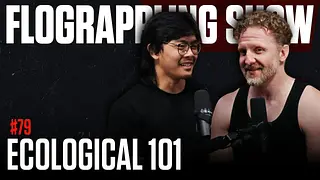
Greg Souders and Gavin Corbe join the show to talk about the ecological approach, life as an engineer, and WNO 32!
Learn more about your ad choices. Visit megaphone.fm/adchoices
Transcript
Show transcript
Speaker 1: All right, we got a stack show for you guys today. We're bringing on Greg Souders and Gavin Corby. We're going to talk a little bit about ecological, some other stuff, and then WNO 32, of course. But before we get into that, I just wanted to tell you guys that this show is brought to you by Meric Health. Helping athletes optimize hormones, improve recovery, and maximize performance through precision lab testing and expert medical oversight. Before you guys know it, I might be just jacked out of my mind. And if that happens, you'll know it was with the help of Meric. So, let's go ahead and get right into the episode. What's up, everybody? Welcome back to the Flow Grappling show, aka the worst show on the internet. We got a very special episode this time. I ditched Joe and Reed. I said, listen, I've always been looking for a better option, you know what I mean? I've been shopping around trying to figure out who would come on here, who could live in this thing up. And I said, who better than Greg Souders and Gavin Corby. So, thanks for coming on, boys. I got to give it up to you, you know. You normally, we clap for, I guess, it's a little weird that it's just me, so, you know, just me clapping for you guys. But, I'll start, you can join in. Yeah. We both clap for Gav. 100%. Yeah, let's clap for Gav real quick. There we go, Gav. But yeah, I'm excited to have you guys on, you know, obviously, you guys have been doing great things in the Jiu-Jitsu world, kind of, in some ways, taking the Jiu-Jitsu world by storm, you know. Um, whether it be like the ecological approach and kind of like making that more prominent. I feel like everyone is now pretty hip to ecological, but I feel like, you know, there's still some mystery around it. There's still some things maybe people are getting wrong and stuff. So, I want to dive into that. Gav, I want to talk to you about, you know, the athletic side of things, your career, your come up, and all that. Get into some skateboarding as well. But, I guess first question I want to ask you, uh, Greg, if I'm looking to get as good at Jiu-Jitsu as I possibly can, as quickly as I can, how do I do that?
Speaker 2: I'm going to use uh Gavin and DeAndre's phrase they uh copyrighted. Grapple with intention.
Speaker 1: Okay.
Speaker 2: So, uh one of the things that sits central to our philosophy at Standard Jiu-Jitsu is intentional grappling. Um, you want to do it in a live context, meaning if you want to get good at grappling, you have to grapple. But when you do, what do you focus on doing? Whatever that focus tends to be, whether it be something you do while playing the whole game or something you do while playing a small part of the game, like a situation, uh, be intentional about it. And I think, again, grapple live, grapple intentionally, you're 90% of the way there.
Speaker 1: Okay, so I got to I got to start getting intentional with it. Um, are Gavin and DeAndre intentional grapplers? I I know we got to see a little sneak peek. We came and visited Standard, and Gavin wasn't there. He was he was doing his CEO business, for people who don't know, Gavin's a he's the businessman now, you know. He's like, I'm not a businessman, I'm a business man. That's Gavin's vibe. I'm just kidding. But, you know, DeAndre clearly was super intentional, but I'm just wondering like, you know, how intentional really are the Corby brothers and like, how does that affect them in their growth and everything?
Speaker 2: Well, they're both extremely intentional people in general. That's the lifestyle they live. I mean, anything they do, they put their whole heart into it. Uh, though they are different about it, which is really interesting. Uh, when I first met DeAndre, I could tell right away that he really liked to be coached. Tell me what to do, coach. Point me in the direction, coach. What do I have to do, coach? And uh in that sense, he was a little easier for me because I could be a little bit uh like a rigid in my subscriptions sometimes, but we vibed over that. Uh, when Gavin first came over, D said, he's not like me, coach. You got to speak to him differently. Uh, and I learned that he's also intentional, but he needs more space, right? He's a creative, he's an artistic guy. He's very implicit. So, where you can shrink the space real tight on DeAndre and he'll just get in there with effort and make it happen with all his intention, Gav needs to be himself, you know what I mean? And so, they're both deeply intentional, but uh the way they approach their intentionality is slightly different.
Speaker 1: Yeah, when we were there at Standard, um, obviously you weren't there, Gavin. We missed you, you know. We wish you were there, but you were running the business. Um, but DeAndre talked about, which I thought was a funny thing. He said, you know, inside the camp of like, I'm a fan of the Corby brothers, there's two divided camps. There's Gavin guys and there's DeAndre guys, you know. And I thought that was an interesting thing, and I think it's like a cool aspect of how, you know, you got two brothers who can kind of even have like segmented sub fan categories and draw on different people. And it even comes through in your grappling, kind of everything, your social media presence, all that, you know. And one defining thing I noticed, we DeAndre was uh we did his morning routine. The video's up on Flow now if you guys want to watch it, Day in the Life with DeAndre. And he started he had this crazy pour over setup where he's making these pour overs. He had two kettles for temperature management, all that. And he said, Gavin is more of the espresso latte art guy. So I said, wow, what could lead two brothers, same upbringing, one a pour over guy, one an espresso and latte guy, you know. So, what what what's going on here with this espresso versus pour over divide between you and your brother?
Speaker 3: So I started with pour over, right? And black coffee. Then it got to a point where I was like, I'm just lying to myself. I do not like this. I like milk, I like it sweet, you know. If it if it's not blonde like my wife, I don't like it, right? Yeah. Uh, yeah, I just got into espresso because I like the latte art. I knew it was a skill that it took some time and it's just not something you could easily pick up. So that's how I got into it. And for like a year straight, I just tried to do latte arts. And uh it took like three months for me to get like some art on top, like just some foam, not even art. And yeah, I just appreciated the process in that. So, uh, yeah, I just like lattes. So everywhere I go, I get a latte.
Speaker 1: For sure. You know, with sugar, yeah. With sugar? Yeah. Dang, dude. I don't know. This might be that might be too far, throwing in the sugar, but.
Speaker 3: Yeah, I like the sweetness. I don't like the caffeine.
Speaker 1: Gotcha. You like do enjoy the caffeine as well, though? I mean,
Speaker 3: if it wasn't there, I'd still make it, you know. I'd still get coffee.
Speaker 1: Okay. Gotcha. Do you find you and your brother have like a lot of things like that, you know, where it's like, obviously you have commonalities, you have similar traits and all of that, but, you know, have you guys always kind of been a little bit on your own path, even if you're going parallel somewhere together?
Speaker 3: Uh, I don't think so.
Speaker 1: No?
Speaker 3: I had this joke with my brother that I didn't become conscious until I was 16. I was always following him everywhere. Like, uh, Jiu-Jitsu is an example, wrestling is an example. Uh, he always just did it and I saw him and I was like, all right, it's easy. He's basically cutting the path for me. I just have to follow it. Uh, then around like pre-COVID, when he moved away and, uh, yeah, he started taking Jiu-Jitsu a little bit more seriously. I just didn't care, right? I just wanted to do my own thing. Then I found Jiu-Jitsu, I refound Jiu-Jitsu with a new purpose and I felt like that is when I started living life. So,
Speaker 1: Hmm. What was that what was kind of that new purpose you found with Jiu-Jitsu?
Speaker 3: Uh, I thought Jiu-Jitsu, I wanted to do Jiu-Jitsu because it was fun. At first, uh, competing as a kid, I was never forced to, uh, compete. But again, I was just following along. I didn't know why I competed and did all these tournaments. So, it became more of a chore. Then after a while, I was like, dang, I just don't like this. So I actually took a break. Then when I came back, I'm like, I'm just going to do it and I'm I'm going to stop when it's not no longer fun. And that's just like the forefront of all my practice. It's like, if it's not fun, I'm not doing it, so.
Speaker 1: Gotcha. I feel like, to be honest, like, watching you most recently at, uh, at trials, I felt like that was a Gavin where I was just watching a guy out there living in the moment, having fun. You were hitting the the shoulder rolls, you know, kind of dancing a little bit. I was like, man, this is a suave fellow out there. DeAndre's all like, DeAndre's intense, he's like focused, but I was like, Gavin's got a little style to him, you know. So, it did seem like you were kind of had a little more of a fun edge.
Speaker 3: Yeah, a little cringy, but.
Speaker 1: I don't think it's cringy. I think it's awesome, bro.
Speaker 3: We always think something I learned about competition, and I I think I picked this up from Greg, uh, we're in go mode. So, whatever impulse I have, uh, leading up to a competition, maybe a day or that day, I just let it be. If I want like six lattes that morning, if I'm compelled to do that, I'll do it, you know. If right before the match, I want to move because there's music going on, I'll do it. Like, before I used to be very internal where I'm like, overanalyzing everything I do, and that really hindered me. It made it less fun, right? So, yeah, that's just like at trials, I was like, I don't care. I'm just going to be here. I know I'm going to compete, I'm going to try to win. Other that's that's all that is to it, so.
Speaker 1: Yeah. And I like, you said it's a little cringy, but like, I don't think so, bro, because I think the reality is like, people like to use that as a crutch now. They like to kind of throw out cringy as like, you know, oh, it's cringy. I don't want to express myself. But like, when someone does go out there and it's clear that you're kind of like expressing some part of yourself or a feeling or something you have and in doing it in an authentic way like that, that's the best stuff I think as a fan an athlete can like put on display for me is where I get to see like more of a true expression of them. So, I I'll back you. Anybody who says it's cringy, dude, I'll freaking I'll roll up on.
Speaker 2: That bothers me, man. Like, internet has made irreverence cooler than trying. Yeah. And I hate it, right? Like, why is it cringy to try real hard and care about what you're doing? No, that really it's it's a thing now. And so, yeah, the internet has has has ruined that for us.
Speaker 1: Yeah, no, if you look at like historically, a lot of the the most impressive people who are able to accomplish stuff, it's because they care very deeply about something and they're willing to kind of like let themselves dive into it.
Speaker 2: There's never been a person who's accomplished something great who didn't care. Like, that's a lie. That doesn't exist. Like, people say that shit. But there's not a there's not a person you could read about in any field. Even someone crazy like I was talking about earlier, Hunter S. Thompson, like even he like did some crazy shit. He cared. He he really cared about what he did. So, um, yeah, it's that's a myth. It's not real. And it's really for him, it's like something I really noticed about coaching him that I really enjoyed is watching him become himself and develop his own voice. It's very satisfying for me. Like, I told him afterwards and during the trials, like, it was the best I've ever seen him. Because he was being himself, just literally letting it out. And that's when he operates his best, you know. So, it's a that's why I think you saw you saw you saw joy, you saw fun, you saw Gavin.
Speaker 1: Yeah, no, there's there's something uh there's something as like a spectator to to like latch on to, you know, beyond just like, oh, wow, that was another incredible bear bolo, you know what I mean? Like, it's like there's something more to it. It's like gives you something to grip on to and be like, okay, I can get behind this guy, you know. It's like, when I'm in the mirror, I want to hit the cool shoulder rolls, you know. I want to be like Gav out there hitting tre flips and whatnot.
Speaker 2: I've been thinking about it recently, and uh, you know, I said it in the car, we were chatting earlier, it's like, people try to separate the dance from the dancer, and I don't think you should do that. I think that's a mistake. You know, let the dancer do his dance, man. Because when those two things are bound, you get the the best type of expression. And so, uh, yeah, I appreciate people who are able to do that.
Speaker 1: Definitely. And so, I kind of want to ask you a similar thing I asked Gavin about kind of this, there's a lot of similarities, a lot of differences, at least from the outside perspective of Gavin and DeAndre. And I'm just wondering as a coach, you know, kind of, do you see any of those? Do you kind of like, I know you mentioned coaching him differently and all that, but what's what's kind of the big differences between these brothers?
Speaker 2: Uh, just how they approach the thing they do, right? Like, DeAndre really likes to dig down into every aspect of what's going to improve him. Uh, Gavin likes to connect, it's going to sound kind of weird, but likes to connect with himself. He likes to be inspired by the moment. Um, and so, like, for example, he'll take longer breaks. Like, he'll be really digging for a while and then he'll switch it to something else for a little bit. He likes to take that diffuse period to sort of like reset and then rehit it again. Where DeAndre is just comfortable just, you know, with the grind, so to speak. Um, the care they have for their art and the care they have for the things they dedicate themselves to is identical. It's just their process to reach that that that peak is is different, which is good. Differences are healthy. I think it'd be weird if they were too similar. You know what I mean? I I think their differences actually highlight them and actually make them interact with each other. They give each other what the other one doesn't have. And I think they're a very balanced pair in that way.
Speaker 1: Is it hard to balance that as like a coach, kind of?
Speaker 2: Only if you're trying to resist it. So, one of the things is is I don't resist the environment. I'm just a designer. So, my my job is to serve the athlete, right? So, if I know something about Gavin, it's very important for me that I pay attention to that. If I know something about DeAndre, it's very important for me that I pay attention to that. We don't change them, we enhance what's already there or we give the opportunity what needs to be there to come out, to grow. And so, yeah, no. Doesn't that's going to get in my way at all.
Speaker 1: Gotcha. I got another important espresso question for you, Gavin. Were you out here drilling latte art or did you approach it ecologically? This could this could be a defining moment right here.
Speaker 3: How I started, I saw the outcome that I wanted, right? I was inspired, you know, just brain rotting, seeing these latte arts. I'm like, dang, I think I could do this. I got a machine for my wedding and, uh, I just tried it every day. And that my intention was to make it first try easy, right? One one shot it. Then I was like, damn, this does not look anything like it. Then that started my investigation on I just watched videos and see what people said, then I just kind of analyzed it, not to a T, but try to see what they're doing different than me, then try to replicate it. And it was a whole long process. Like, maybe three months until I got the foam to sit on top. Then it's just refining it from there, you know.
Speaker 1: Gotcha. What what level would you say you're at? Are you where you want to be yet?
Speaker 3: Maybe seven out of 10. Okay. No, six out of 10.
Speaker 1: That's pretty good. That's not I'm maybe four out of 10. Never mind. All right. Never mind. Changing the scale here. Um, so yeah, obviously I do want to get into the ecological stuff and I want to kind of dive into it. And I think, to be honest, like, I'm very amateur in the ecological realm, you know, I don't train necessarily ecologically. This is one thing we talked about, uh, oh, I don't there's already.
Speaker 2: Oh, it's okay, no, go. Get it. Get it.
Speaker 1: But well, I this is one thing we talked about where I see now, like, I I'm lucky that I get to go to a lot of different gyms and whether I'm observing or participating, you know, I get to see how a lot of different teams, a lot of athletes and coaches are kind of doing things. And I feel like one thing I see now, and we talked about this, is it feels like people are trying to almost take like a hybrid approach, where it's like they're doing this kind of mixed traditional style of drilling and whatnot, and then kind of like, oh, here's some games as well. And so, I guess just to start, because I know you have thoughts on the whole hybrid thing. Like, what's the foundational like, this is what you need to know about ecological to then build from there. Like, what's that foundational ecological aspect?
Speaker 2: I think it depends on how far you want to take your understanding of what that means. I think that one of the issues with any community where there's a pop culture is that they're going to bond to any like buzzword or any new thing, anything that's exciting, and they're going to run with it, which in in essence is kind of okay, because that's how you get inspired to try and investigate and do things like he did with with his art. But the problem comes when people stop their investigation, oh, I already understand this because we've always been doing this. That's what I think is the big issue. And people are so eager to say they know it, to use it, to sell it, that they're not going through the process of pouring thing until you get the foam right type shit, you know what I mean? They're just saying things they don't understand, right? So, at the base of it, and I've said this a thousand times, is that an ecological approach is just a a way we look at the relationship between the individual, the task, and the environment. And this relationship is there it's embedded with each other. We can't actually separate it. We can't we can't separate the individual from the task or the environment. We have to assume they're working as a system. And so, any training intervention that we use assumes that they're embedded with each other and cannot be separated. That is essentially what an ecological approach is. Again, it's a philosophical view on what we think a person does with information that's present in the interaction of their task, themselves, and the environment. And then we come up with a method, the constraints-led approach, to enact an ecological approach to skill acquisition. And so, people are just mixing buzzwords and saying things and there's no hybrid, guys. There's no hybrid. Even if you're drilling, that's still ecological. You're just taking away this the the information source. You're the information source is now a static body versus the information source we need, which is a resistant and unpredictable body. That's the environment we need to train in. So, again, don't think about it as drilling versus not. Think about one environment has information that we coordinate to to move and the other does not.
Speaker 1: So, really, even if I'm drilling, I am ecological, I'm just kind of doing it somewhat ineffectively.
Speaker 2: Well, you're not doing it you're you're doing it effectively for what it's for. So, you are literally learning to move against the non-resisting body. Information is you think of it as a Scott, thank you for this, as having a witness and awareness to act. So, as we pick up these moments to act and these these values that we align to, like how much squeeze, how much angle, how much height, how much effort, we can only pick up the how much when you're resisting us. Without that resistance, how much doesn't have any value. So, how much angle, pressure, squeeze it takes to align yourself with a non-resistant body is a completely different thing than a slightly even even slightly resistant body.
Speaker 1: Gotcha. How how did you first come across like the ecological philosophy and everything? How did you first get hip to it?
Speaker 2: Well, it was actually random. I I I told I've I've said this story a million times. I was I I was big into Anders Ericsson. That's who I was reading, that's who everyone was reading. He studied elite performers for 30 or 40 years, and he said a bunch of stuff about them. He came up with the idea of deliberate practice, which we all thought we were doing. Um, and then when I opened my own school, I realized there might be more to this, because even in Ericsson's findings and his meta-analysis, uh, deliberate practice only counted for for 20% of the change that was seen in an athlete. So, what's making what what's making what's where's all those percentages of stuff that's causing the change? So, as I investigated, I bumped into a guy named Michael Turvey. And Michael Turvey was writing about self-organization. Uh, there weren't any really books on it yet. It was a bunch of white papers that were really hard to read. And then I just poked around and, you know, I bumped into Rob Gray. Rob Gray was actually my professor. So, uh, shout out Rob. Uh,
Speaker 1: Yeah, we got his book right here. How We Learn to Move. You're you're uh you're in this book, right?
Speaker 2: I'm in all of his books, man. Me and Rob are homies. Um, yeah, Rob's great, man. Actually, shout out to him too. He is the uh highest-selling skill acquisition author in history.
Speaker 1: Wow.
Speaker 2: You're welcome.
Speaker 1: Yeah. Little little credit to Greg there.
Speaker 2: No, no, I'm just kidding. No, because he's very effective at communicating a difficult science. You know what I mean? His disposition is wonderful. Uh, he takes a very pragmatic approach, which I really like about the way he talks about things. He's not so stuck in the theory. I mean, of course, he's a professor, so you can get down and dirty with him if you want to talk about the difficult shit. But he can design a very effective practice for pretty much any sport. Uh, and he's in he's been my inspiration since I first heard about him on his podcast and, um, you know, he taught me he taught me uh indirectly everything I I think I know about it.
Speaker 1: Gotcha. And so, DeAndre came over around 2020, right? Was uh whenever he came over to Standard. Did you come same time, Gavin, or were you
Speaker 3: later? I was a little later. Uh, he ended up getting a job and started going to Standard. Then when he visited back home, he would tell me like, yo, you should listen to this guy or like, experiment with stuff or like, just tune in a little bit, see what he has to say. Then I ended up following after I graduated college, I ended up getting a job at the same place. So, I was near Greg and we started training together. That was maybe like two years afterwards.
Speaker 2: Yeah, yeah, for sure.
Speaker 1: So, like 2022, you would have been there? That because 2022 is the same the Pans year, right?
Speaker 2: It's the Pans year because he Gav was coming up when he could. So, he'd spend like a few days there, go home, a few days there, go home. What's really impressive about Gavin, really, people don't know this, is he was experimenting using this with white belts for his training. So, when he won Pans, he was training with mostly beginners under his own ideas, right? So, whatever we were working on, he would just take it back and he would do it to the guys he was training with. And so,
Speaker 1: What what was your uh I guess you and DeAndre's training like before the move to Standard? You know, what was kind of like your your initial roots in grappling? You guys are both wrestlers, right? You Yeah.
Speaker 3: So, uh, we started a long time ago, like 2009. Then we started wrestling right after, maybe like a year or two after, uh, we started Jiu-Jitsu. So, that really built our work ethic on how we view Jiu-Jitsu. A lot of people in Jiu-Jitsu, sorry to say, are soft. Uh,
Speaker 1: I mean, when compared to wrestling, for sure.
Speaker 3: I I identify more as a wrestler than a uh a Jiu-Jitsu-er. So, uh, yeah, it's just like just, you know, embracing the grind and taking that with Jiu-Jitsu really helped me. Uh, but before, we were drilling a lot, uh, before Standard. And when my brother became a black belt and we started or he he started trying at these IBJJF majors, uh, he wasn't too successful. He tried to do one last run before he got into the workforce. Uh, then COVID happened and we started doing No-Gi a No-Gi more and he got in touch with Greg and started like talking before he got his job. And but before that, it was just we used to drill like at before I had class at like 7:20 in uh 7:20 a.m. in high school. He would wake me up at like 5:00 and we'll drill for an hour. And uh, yeah, I wasn't conscious for that. Like, I was literally still asleep. Like, all right, we drilled bear and bow, drilled all this stuff because we thought that was the best way, right? And it was just by happenstance that, uh, D met Alex and met Greg, and Greg was also uh really serious about like getting guys good. And he brought D along, then he brought me along, then ever since that first year or we started competing under Greg, it was like, we we never went back, so.
Speaker 1: Gotcha. Was there almost like a I guess for lack of a better word, like a culture shock moment or anything from like switching from like, I I mean, some sort of like focus on drilling and all that, and now you're in this kind of new environment, a new style, kind of like, uh, with a new coach and all that. Was it did it take anything for you to kind of get used to that, to fall into that more format?
Speaker 3: No. Uh, we bought in pretty quickly. Uh, me and D were on our own for a long time and we tried everything. Uh, we never blindly or blindingly, uh, followed any one protocol or method. Uh, we did whatever it took to get better, right? And we're open to change. So, when Greg told us or he told D about it, we didn't, uh, like push it down right away or accepted it. We, all right, we'll play around with it for a year. Then we'll come to our own conclusion. Then after a year, when we're or D was doing good, then brought me along, it's just like, we we never seen a uh a reason to change, so.
Speaker 1: Yeah, there was just kind of like a pretty immediate return, I guess, on it and everything, you know. Did you did you or go ahead.
Speaker 2: Oh, no, please, what are you going to ask?
Speaker 1: I was just going to say like if if you noticed any sort of like, were these guys naturally they were like good at kind of this I I don't want to say style. It's hard.
Speaker 2: They're just serious, real athletes. I mean, it's like they wanted to get good. And like Gavin always makes the joke when people complain, he's like, I guess you don't want it bad enough, right? And then that's it's it's funny, but it's actually true. Uh, and being in the room with them, you realize very quickly that they want to be good at this and they're willing to effortfully go after it. And because of their natural ability to be intentional, it just works out. You know, some people work well under certain methodologies with certain coaches and we just vibe. We got along. We're all serious people. My room is free, it's open, you know, people can be who they are. It just it was just it's just a good culture, you know, that people came in and everyone really trained hard together, supported each other. It just it just worked out, you know what I mean? The method was just what we used, you know what I mean? No no no two athletes' success are an excuse for a method. Um, but they did thrive at Standard.
Speaker 1: Gotcha.
Speaker 2: You know what I mean? So.
Speaker 1: So, one thing I do want to ask you guys about, and it feels like it kind of fits the timeline of uh DeAndre being there for a couple years, now Gavin's coming over, you guys are kind of training, uh, under the Standard umbrella and everything now, is that 2022 Pans. Because for me, that was like, I guess like, I felt validation for you in some ways. Or maybe even just like a like a, oh, okay, this you got to at least respect this, you know. You got to like be hip to what's going on because Gavin, DeAndre, and Alex all three won Pans that same year. And it just was like, I remember, uh, it probably would have been, I guess like Alex won, then you would have won, and then now DeAndre wins and you get they he came running over. You guys are like hugging and I'm like, this is actually nuts, dude. Like, Greg has three Pan champions right here. They're all like going crazy. Like, this is a sick moment, but what what was that moment like for you guys doing that?
Speaker 2: Well, it was lovely for us. I mean, because we're in the room every day, we're working hard together. We got to celebrate together. We got all of our efforts hit at one time. And for me, I mean, people we don't talk about I mean, Alex is uh is doing something else for her life now. She trains when she can. But Gavin and D like came along, but Alex has been with me. I gave Alex her little kid, orange belt, her green belt, her blue belt, her purple belt, her black belt. Alex has won worlds at every level. She won the juvenile uh worlds one and two. She won uh teens Pans when she was a green belt. She was unscored on for four years. And nobody ever talks about her. And I'm like, she she was my best athlete. You know what I mean? Um, and so it was nice for her, her boyfriend, her boyfriend's brother to all like come under one roof and really express themselves and show show how uh good they are and see their efforts uh play off. So, it was just great, man. I was very proud for her too because she was funny. She was like, oh, I'm so happy I won first because that's too much pressure for me. Yeah. Because she won and then Gav won and then D had to hold it down. D was the last guy. But it was perfect for D to be the last guy.
Speaker 1: Yeah, I was going to say, is that that's probably the guy you want to be like, all right, I have a clear focus, a clear intention. I got to do the three for three here for.
Speaker 2: He's he's cleanup. He's the pressure player. Like, you know, it doesn't matter how how heavy it gets, he's he's ready to go. So, now it was it was a really cool experience and uh and we were just having fun. It it was it was really cool, man. And no one knew about us at the time. It was it was really great because like I I didn't do any social media. I was actually convinced to do it by somebody else and I had like what like 400 followers. I had like 20 posts in like 10 years. Like, I didn't even care, you know. And then one of my friends was like, you should share share share your stuff. So,
Speaker 1: All history from there, yeah. What what was that experience like for you, Gavin?
Speaker 3: Uh, I know it was important. But it didn't feel any different than what we've been practicing. Uh, before I would put a lot of pressure on myself. You know, I'll get anxious, get nervous. But that was like the first tournament where I I really didn't get nervous. It's like, we've been training hard for this and I always look for long-term development. Like, how does this serve myself one, two, three years from now? And coming from that that mindset, it's like, when I competed, it's just it's just another day in the office, you know. It's not if I win, I win. If I lose, I lose. It it doesn't matter. I'm just I'm just being me and I know I intend to win everything I every match I do, right? But if it doesn't happen, it's like, no hard feelings anymore. But I know it's important for like, you know, it's a cannon event for us, but, uh, yeah, it was it was no nothing different. I used to I used to make competition a a bigger thing than it actually was and it made me hate competition. And that was like my first major tournament at black belt. I just I didn't care. I just just going out there and competing. So,
Speaker 1: What what was there a certain thing or I mean, some sort of like mental switch or anything that kind of led you to think like that? Because I feel like from the hobbyist level to like, you know, like a blue belt who's just trying to do an AGF or something regional, you know, all the way to the highest level competitors, that's such a big aspect of it where it seems like when athletes do break through to any level, they kind of achieve all these high-level titles and all this, they have similar stories where they kind of were able to like readjust their approach to the mental side of competition and like how much it weighed on them and everything. Was there like a catalyst moment for you?
Speaker 3: Uh, one thing that helped me was I realized that regardless if I win or lose, Monday is still going to be Monday. I got to go to work or I got to go to school. It didn't change. I won a lot and people still treat me the same. My family's still supporting me. I lose a lot, same thing. So, when I realized that, it's like, what is all this pressure I'm putting on myself? It's essentially not real, right? And what's left is me just doing it for the love of the game, you know. So, that's like anytime I compete, it's like, I I don't care if I win or lose. I just do it because I like it, so.
Speaker 1: Yeah. You you sounds like you were cracking open a little Marcus Aurelius or something. I leaning into stoic stoic philosophy. Read meditations a second time and you're like,
Speaker 3: I don't read either.
Speaker 1: Yeah. Some of us. You can tell by how I speak. Gotcha. Yeah, so obviously, you know, the success has kept compiling for you guys and the Standard crew and all that, you know. Um, I want to ask you more about ecological and specifically the misconceptions of ecological. What are the number one things you see people throwing out there about it, you know, that it's like you want to clear the air on, you want to kind of make sure people are getting this right if we're going to talk about ecological.
Speaker 2: Oh my God, there's a mountain. You know, honestly, I don't I don't want to point any point any fingers and say you guys are idiots or whatever. Just the the thing that I really want to say is, man, there's more work involved than you realize, right? So, like, you know, I I started working on this in 2014. I didn't have my well, I had some success with a little Alex and some other athletes like uh Samir and Maji and me and Mike and, um, you know, I I've always produced like pretty pretty good competitors, you know. Um, but it took me quite a long time to really understand how to develop a truly effective practice. Um, and and a language I could use to describe it to regular people. And so, I a lot of people haven't gone through that and all they're doing is they're taking either my work and which is fine, you're supposed to copy people who come before you. That's you're supposed to do that. And they're they're letting that be the whole thing or they're just doing this weird bastardization of it, which is just like they'll be like, okay, we're having eco class on Tuesdays. What what? You know what I mean? I don't know. Uh it there's not enough work being done in this space. People aren't digging hard enough into the why we need ecological approach why you need an ecological approach, what's important about an ecological approach, how to be ecologically consistent with our practice design. There's a lot to it, man.
Speaker 1: Yeah, so I mean, the thing that I I'm getting from you talking about it and stuff and spending some more time with you and everything is that it's much more of a holistic approach than maybe people are realizing that it's like ecological is kind of the holistic philosophy around how you're structuring out all this stuff. And CLA is like the method or the vehicle for kind of delivering that in that setting. To or go ahead, yeah.
Speaker 2: I was going to say one of the things I can I can do one of like we don't show moves, right? So, I could easily say that on a podcast in a philosophical way, we don't show moves because I'm I'm being honest when I say that. But at the same time, like, well, you showed an arm lock. Letting people know something letting people see something that's possible and then coming up with a training intervention to get them to do it are two different things, right? So, having someone start an arm lock breaking position and showing them a process by which we go through separation, straightening of the arm. Again, that's letting someone that's affecting the perceptive side of things. Here's something we're going to try to accomplish. This is kind of what it looks like. And then that's not enough. We need we need a bridge between what's possible and or changing someone's perception to getting them to be able to do it. There is a series of behaviors or focuses or intentions that have to happen between seeing something and becoming skillful at applying something. And so, again, people aren't aren't seeing that there's a there's like a a bunch of phases from that one thing to being able to do it yourself. Um, and they think showing moves or talking about a move or describing how you've done it historically is enough. And it isn't. It just isn't.
Speaker 1: Gotcha. And I do think that's that's one side of it where, um, you know, maybe I even would want some clarity and stuff is the like the whole showing the move and everything because of course that's a talking point that gets brought up into like the anti-ecological camp and everything, you know, is like, oh, well, you can put a you can put a day one white belt out there, but it's like, they'll never find an arm bar because it's like they haven't seen it or anything. So, I guess I I feel like maybe a way to talk through that is like, would you be down to kind of explain like the fundamental ecological approach? So, it's like, guys come in day one, this is like, I guess the week of how we lay out these games to like get them up to speed to have like this kind of baseline of grappling, right? Because that's really what they're like pointing out is like, they have to have a baseline knowledge of what grappling even is. So, how do you structure that under the like CLA uh format?
Speaker 2: Well, before I tell you, there's two things that are really interesting uh that that you just said that people bring up all the time. So, one they say, a beginner would never have come up with an arm lock. But we know it's not true because we have arm locks. So, there was a time we didn't. So, sorry.
Speaker 1: Good point. Shout out Helio. Shout out to Mitsuyo Maeda, the big man.
Speaker 2: And then we can talk about more of like not reinventing the wheel. But either way, an arm lock emerged from the relationship between human capacity and the opportunity to express that capacity. And that's why we have them now. Uh, that's why people see them and and we can replicate them and things like that. But there is an intervention on how to get people to do them more effectively. But either way, it is emergent. They did happen once in history and they are repeated. So, again, that's not a good argument. Uh, the other one is, the only two examples people ever bring up about the complex move that can never happen without showing, are always the same two. Always the same two. Everywhere I go in the world, every all 12 different countries I've been to, everywhere in the United States, every state, they're like, what about the bear and bolo and what about the false reap? Nobody ever says anything else.
Speaker 1: First one I was going to say was bear and bolo.
Speaker 2: Bear and bolo or false reap. The two greatest, most complex, crazy moves that have ever been seen. Sorry. All right, I'm done ranting.
Speaker 1: Gotcha. You can rant as much as you want.
Speaker 2: No, so here's the deal. So, uh, the the the lesson I've been trying to use to teach this idea, people who have come to my seminars will see this. Uh, exposure and opportunity. We need to make sure that our training interventions have both of those things. So, when we're dealing with new players, we need to expose them to grappling action. That's pushing, pulling, twisting, lifting, squeezing, holding, the human capacity of gripping grasp and grip objects. When doing that, we put them in what we call stereotypical positions. These are alignments that happen all the time, like the mount, for example. And then we have them do those basic grappling behaviors. We expose them to them, right? Like, hold your partner down, partner try to push them off of you. An arm lock cannot emerge unless we can first hold somebody down and create the conditions by which the opportunity arises. And that's the second thing. If we want our students to realize a behavior or produce a coordinated behavior that produces an effect on their partner, when we start them training, we need to start them as close to the end point as we can or the close to success as we can. In order for training to make sense, an opportunity to realize that training needs to exist. So, we let's say we're exposing them to pinning, which is a basic grappling action. They need to be close enough to the opportunity for pinning to function. And then we train them there and then we move them back out and make the tasks more complex as the behaviors start to emerge. So, as pinning starts to emerge, we do different things with the pin. Like, we isolate arms. Once isolation starts to emerge, we can now transition around the isolated arm to reach breaking positions. And we just scale and scaffold the training focuses to go from large, simplistic behaviors to smaller, more complex behaviors.
Speaker 1: Gotcha. So, so, um, when you're when you're like applying it in that setting with all the white belts and everything, like like new people, I guess, you know, because it doesn't I guess it doesn't have to be a white belt, but so when someone who doesn't have those skills yet, hasn't acquired those skills, do you find that there's any sort of like disconnect when you do it in like a big group training class versus like, like because it does it does feel like if you're watching me and you're like, I'm going to one-v-one or not one-v-one, but I'm going to one-on-one kind of coach you through this and we're going to, all right, Trey's showing like exemplary action with the pinning mechanics and all that. Let's progress. But is there kind of like a little bit, does it get harder whenever you have now a full class?
Speaker 2: Yes. So, it's it's a what I would consider an artificial constraint, meaning I think true coaching is one to one, me and you. I have you and I got six other people I can use as for variation to help you develop these skills. That what I that I think is the most optimal coach-student relationship. Now, there are some other examples of what I could consider that could be optimal as well. Like, let's say three coaches and and six students or student coaches or people who are also athletes that are trying to help the coach, you know, things like this. But either way, setting out a general class structure for 20 to 40 people is very difficult to do. The framework that I've created starts to solve this problem and that's why one of the reasons I created it because one of my major constraints and every constraint of every gym owner is having 20 to 40 people on the mat at a given time. So, how do we get them to do things that get them to start doing something that looks like grappling if we can't be specific one to one, right? What do we need to expose them to and what tasks do we need to give them that give them the opportunity to realize the effects of their actions? That's the question we start with and then we create a training protocol that follows that or tries to tries to answer those questions. Um, the way that I I started to try to solve that was play the whole game every day. That's a general concept. It has nothing to do with the ecological approach directly. It's my interpretation of the literature. Basically, expose beginners to the major phases of play, standing, guarded, and pinned, every day, as frequently as possible, and have them do simple tasks so we can get them transitioning through those major phases of play. An example would be, if I want to learn how to take somebody down, start them with a grip that can take somebody down. If I want them to pin somebody, start them with a grip where pinning is possible. If I want them to resist being pinned, start them with a grip where resisting pinning becomes possible.
Speaker 1: Gotcha. So, I guess when we're getting close on time, one thing one last thing I want to just ask you guys, we try to ask a lot of guests that comes on, do you have uh like a like a favorite grappler historically or someone you used to watch, someone you were big time into, someone like you loved, I guess, uh when you were on the come up and everything?
Speaker 2: Yeah, coming up, man, my two favorite ones and Lloyd actually made fun of me for this was uh Te and Jacare. I loved watching them grapple. I couldn't get enough. Anything Te did, I would try to replicate. He was phenomenal. That guy. He was he was way ahead of his time. And what's interesting is he had a lot of effect on the on the modern generation. So, uh, like he had a lot of effect on the Mendez brothers. He had a lot of effect on uh Cobrinha. So, he was like this early guy that was like them, right? He was one of my favorites. Jacare too. Uh, modern grappler, No-Gi specifically, shout out PJ Barch. You're you're the man. I used to watch him quite a bit before we became friends. Uh, he was my favorite. I because when I switched over to No-Gi, I was really looking at wrestling heavily heavy grapplers, people who merged the standing situation and the ground situation more fluidly. Uh and as as athlete as like a wrestling-based athlete and PJ Barch did that the best I thought. And so, I used I watched him quite a bit. Um, but yeah, those were my three I would say that I.
Speaker 1: Some good picks right there. A couple deep cuts, you know. And then PJ, obviously PJ is just awesome. Just a good dude, too. You know, he's just awesome.
Speaker 2: Everyone loves PJ.
Speaker 1: Yeah. What what about you, Gavin?
Speaker 3: I watch more wrestlers than grapplers. Uh, Spencer Lee was always my favorite for a while. I've been watching like Jack Forest and uh Bo Bassett. I like I really like I don't like looking at the technical side of things. I just I try to see what they're they're perceiving when they wrestle. I've been watching all those guys and I used to just analyze like, oh, what setups are they using to get into these shots? I was watching Bo Bassett. Dude, that guy just shoots. Technically, he's not setting up his shots. And I'm convinced that like, Jack Forest, Bo Bassett, Spencer Lee, doesn't matter what. They're just getting get to your leg somehow and put you down. Like, screw the technicality or the technical side of it. It's like, Bo Bassett is double legging with his head down, but if he touches you, he's putting you down. So, I like looking at athletes that go beyond like what's right or wrong, uh at least how I view it. And it's just basically guys that are just dogs, you know. They just go after it. It's like, you can't you just cannot deny this guy. Maybe he goes in uh with uh imposing your will. It's like, this guy like Bo Bassett, Spencer Lee, they can't have one like Spencer Lee, he had two torn ACLs. It doesn't matter. He's get to your leg, he's putting you down. He's going to attack you every time, you know. Bo Bassett is the same way. If he had one arm, I dude, he's going to take down 99% of the people in the world. And I like that side of things when I uh watch athletes. It's just what makes them tick, right? What what what makes them operate? Uh, and that just helped me a lot too, like competing, of course, because, you know, I think everyone gets into that over technical like over analytical state, like, oh, what I need to anticipate. No, if you want it bad enough, you're going to put that guy down. If not, that's all right. You're you're going to go back to the drawing board, go back to practice, you work on things, then when you compete, just who wants it bad? Who wants it more, you know? So,
Speaker 1: Definitely. Jack Forest obviously just had a crazy run at.
Speaker 3: Yeah, basically a high schooler.
Speaker 1: Yeah. Like, same year, won high school state or uh yeah, state and then also uh NCAA champion. So, that was.
Speaker 3: People just can't be denied, you know.
Speaker 1: For sure. I I think Jack's is a great example of that too because it's like, I don't have the deepest wrestling knowledge. I have like some base, you know. Shout out Columbus Unified Junior High, 14 and 6, seventh grade record, you know. I listen, the boys called on me. I'm a bit of a bit of an anchor myself, Greg, you know, because I got called up from uh the B team squad, pulled up to the A team, seventh grade. We went to Joplin South. It was a tournament and it came down to my match. I was, you know, the young kid. I had to make it happen where as long as I didn't get pinned, we were taking home the team trophy. And the dude I was going against, absolute dog, Gavin. He you would have liked it. He was he's the guy who he was a dog. He liked just doing it. And I went out there, got put on my back. Little sneaky tactic, blood time. Every time. Just, you know, I I pre-cut my lips so that I could, you know, get a little blood time. We had to reset. All right, I ride it out some more. Didn't get pinned. We win the team trophy. That's sometimes what it takes, Gavin, right there. But so that's my my limited knowledge of wrestling. But watching Jack's, it is just like, it doesn't feel like this kid is doing anything different. It's just like, whenever like, you watch NCAAs and they're so defensive. They're so good at not letting anybody touch their legs, you know. It's like, often that's how the match goes. But it's like, Jack's just somehow he gets in on a shot anytime he wants and then also puts him down. Like, it is crazy to watch. But I always shout out Joey Blaze, too. Do you watch Joey Blaze?
Speaker 3: I watch him a little bit, yeah.
Speaker 1: Joey Blaze, uh, he's a he's a he does Jiu-Jitsu, too. I think he's a purple belt. He cross-trains with Max and Dante, actually, uh, in Toledo. So, that's why I always shout out Joey Blaze, you know. That's pretty sick. A guy and sometimes you see it in his in his wrestling, you know. He'll kind of he'll like get like a weird little butterfly hook or something and it's like, oh, shit, that's a little bit of that Jiu-Jitsu influence. So,
Speaker 2: I've been I've been fortunate enough to work a little bit with Helen Maroulis, uh, because she grew up 20 minutes from my gym.
Speaker 1: Oh, that's incredible.
Speaker 2: She come visit her family, do like privates with her. She comes in and I make sure she's like isolated, no one bugs her and she is a phenomenal athlete. I would give three fingers to be her coach. I, you know, I got to touch a little bit of that, you know what I mean?
Speaker 1: For sure. Well, you know, I appreciate you guys coming in, talking to us some more. I think you guys are definitely like super interesting, you know. Like, whether it be you and DeAndre or all the stuff you're doing, Greg, you know. So, I appreciate you guys taking the time and talk with me and all this. Clear some of the air. We probably didn't get into all the nitty-gritty, you know, but maybe we'll have you on another. This was I would say this is ecological 101 for everybody. We just touched the surface here. We might have to bring you back on and uh we'll dive deep into, you know, the advanced courses.
Speaker 2: You know, the people asking me the same question a thousand times or what's making everyone hate me. I've already done like 30 podcasts on the thing. I don't mind doing more. You're awesome. This place is cool. I had a blast. It was, you know, anytime people like you give us a platform to talk to each other and to share ideas and to be ourselves on camera. It's it's lovely, man. So, thank you.
Speaker 1: Yeah, of course. Appreciate it. Yeah, thanks for coming in. For everyone watching, you know, make sure you tune in WNO 32. DeAndre's going to be out there. Got a crazy bracket, a bunch of cool stuff going down. So, Tuesday, March 31st. We'll see you guys there and I'll see everybody in the next episode.
Mentioned in this podcast
People (2)


Published by

More from FloGrappling
-

You don’t see the closed guard smother every day😳 #IBJJFNoGiPans
Oct 4, 2026
-
Nothing sweeter than hitting a comeback submission #IBJJFNoGiPans
Oct 4, 2026
-

Pawel Jaworski is doing his thing at #IBJJFNoGiPans🔥
Oct 4, 2026
-

Sarah Galvão with the RNC at #IBJJFNoGiPans🔥
Oct 4, 2026
-

2026 Polaris 39 | LIVE Preview
Oct 4, 2026