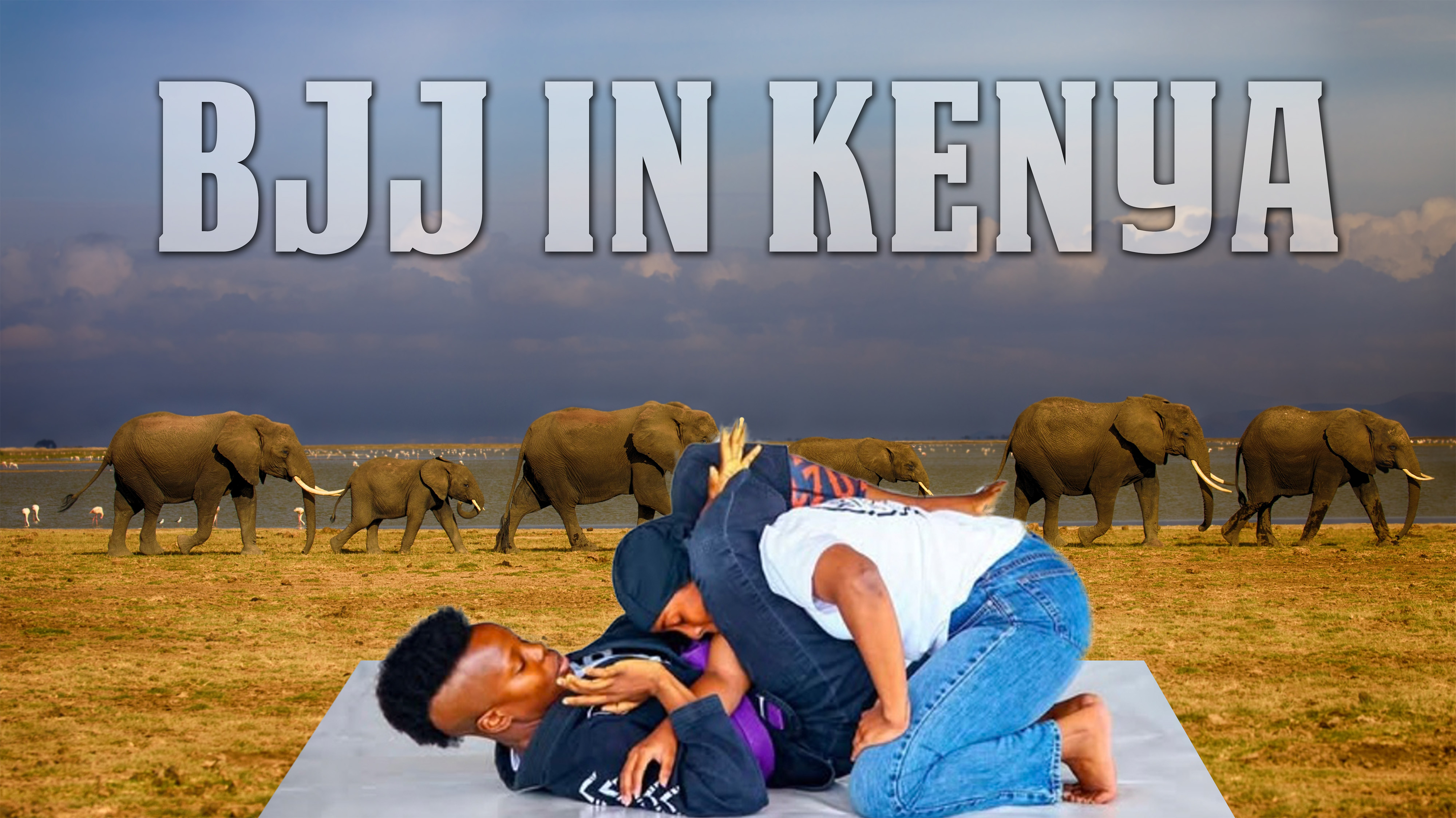
Shiggi loves BJJ and thinks that it can build and change communities in Africa, and is on a mission to open a community dojo in Kenya aimed at empowering girls aged 12 to 18.
Shiggi is a BJJ practitioner with a background in Shotokan karate, Taekwondo, Capoeira, and working the door as a bouncer in UK night clubs. Her ambitious goal is to establish a community dojo in Kenya that not only teaches Jiu-Jitsu but also provides a safe space for girls to learn self-defense and life skills to counteract some of the societal issues affecting young girls in Africa, such as child marriages, domestic violence, and lack of educational opportunities.
The community dojo will be situated in Kenya and serve as a retreat space where tourists can engage in Jiu-Jitsu camps and go on safaris to see lions, elephants and giraffes. Camp attendees will generate funds to support the dojo and its programs. This model not only benefits the local economy but also provides an enriching experience for visitors.
A lot of people have goals in jiu-jitsu and a lot of those goals are things like get my brown belt, get my black belt, go compete at Master Worlds, whatever it is. But Shiki, I think you've chosen something that's even bigger and even scarier than those considerable goals. What's your big audacious goal right now? Hey there, I'm Stefan Kesting and this is the strenuous life podcast. So, my big audacious goal, um, is to open a community dojo out here in Kenya. I know it doesn't look like a pretty Savannah behind me and everything. But yeah, starting jiu-jitsu after about 47 classes, I was like, I definitely need to bring this back to Kenya, um, and figure out a way to just help a community of some description and specifically girls between the ages of 12 and 18, because over here that age bracket has the highest likelihood of like not having a good life or not having access to just like experiencing or figuring out what their good life looks like, uh, due to, you know, child pregnancies, marriages, domestic violence, you know, just literally not affording to go to school and having to look after their family and stuff. So, that's just something that kind of came to me eight years ago now, that I've been doing jiu-jitsu and I'm back home and finally starting to kind of start getting that going. Yeah. So, what does this plan look like on the ground? You you're in Nairobi, the capital of Kenya. Is it going to be in Nairobi? No, um, so there's the locations that I'm looking at, like I need to actually go out and kind of feel for places, because there is a family farm that I could set up on, but there's also other places down by the coast potentially. Um, there's people literally messaging me and saying, hey, look, if you want land, like I've got this place over here, like in the middle of places I didn't even know existed. And there's a place like Mount Kenya, because I love rock climbing, hiking. I haven't quite done mountaineering yet, but like it's on the to-do list. So, somewhere like that would be great. And then also like the option of a safari, because Kilimanjaro's in the other direction, um, and Tsavo and the Maasai Mara. So, the idea would be to buy land and ideally anywhere from like five to seven acres, depending on like if there's a riverbed or not, because floods are a thing. And I would want the community dojo to be there. I would want a guest house to be there, so people can come over and do retreats and jiu-jitsu things and, you know, all that kind of stuff. And then have my own house that I'll be building. And yeah, that that's just basically that that's what I had. That's what I held on to and and anything beyond that, I think I'll see it once it happens. Hmm. So what would be the plan then for working with the Kenyan girls? Like there's there's obviously multiple tracks here. One track is bringing in tourists to help pay for the whole damn thing and doing camps and and uh, you know, sort of jiu-jitsu tourism, right? Go for a roll in the morning, go to a safari in the afternoon, which is kind of a cool idea. But how would, you know, you'd be bringing kids out that for a couple weeks at a time or a month at a time or or setting up a school there, like what would that look like? Yeah, so what I'm doing now is like outreach work, so going out into spaces. This year, after being in the gym for a year, I've decided I need to get out a bit more. So, I'm reaching out to initiatives and communities that would do well with like just workshops to start off with, because we all know that self-defense as a concept at the moment is really popular, but the way it's being administered as a kind of one and done is kind of giving a a false sense of capacity, right? And and we will know like once your adrenaline hits, like your brain kind of shuts down into like just throwing rocks and you can't do anything more than that, unless you've been training for a while. And even then, you know, it's never it's never a done deal. So, what I'm doing is I'm reaching out, doing workshops, getting people interested, trying to find a pathway of people, girls specifically, who potentially could get a school sponsorship. So, the idea is like five girls, five years, 25 at a time. So, if I can find, you know, girls who are particularly interested in the art or particularly gifted and, you know, sitting down and coming back a few times and making sure like, you know, it's a good fit. The idea would be they would have a half or a full school sponsorship and half of their time away from school, they would have to come to the dojo. Um, so, you know, half of Christmas, half of summer, half of whatever. Because that's what I got to do as a kid. My parents sent me to karate camp, Taekwondo camp, you know, all those kind of things as a kid. So, I'm using that model for better or worse. And in that dojo, there will be dormitories just for five of them. They would support like, you know, looking after the dojo, looking after the kitchen, learning how to, you know, cook food, how to tend to food, like in the farm, because there'll be a little farm as well that will do the food and stuff. And also contribute to, uh, the community around us. So, I would want there to be a kitchen. So, if there's anyone who was hungry, they could literally just come and eat some food, you know, in the day and then just go on their way. So, that's that's the broad plan. I'm I'm pretty sure there's going to be more details as time goes by. I don't want to get too deep in the weeds, but you mentioned a school sponsorship. Does that mean paying for school? Is school not free in Kenya? Not particularly. And beyond that, families here can get big because of afore-mentioned reasons. And as a result, like just at least easing the loads, that's why I said half or whole scholarships, easing the load for the parents, you know, providing whatever whatever it looks like for each each child, because each girl's going to have a different kind of set of needs. But the main focus would be school fees. Especially if maybe, you know, they need to go to a different school because they have learning difficulties, or if they are particularly gifted, there is another path I'm considering to kind of go and go through a school, a group of schools. So, if they're at a primary school, maybe they would go to this one and then they could kind of progress through to high school and potentially do university if they're gifted. So, yeah. Okay. And let's just explore the sort of adventure tourism part of the thing. Is that something that's on the the list? Yes, very, very much so, yeah. Because it's quite popular in Europe. So, before I came back home, I lived in the UK for a while. And as I was leaving, weirdly, you know, I started noticing these like jiu-jitsu Zen retreats and camps and all these kind of like really fancy things in uh, Mallorca and Croatia and all that kind of stuff. And I'm like, okay, but none of you guys have lions. Where I'm going, like, I I have lions and cheetahs and and leopards and giraffes and like I have the whole Lion King, but real, like live action Lion King without the animorphics. So, my idea is, you know, people come for jiu-jitsu and like you said, you know, like roll in the morning and safari in the afternoon, or the other way around, because sunrises are beautiful over here. And as the animals have kind of finished their night hunting and stuff, like, you know, as they go and disappear before the sun comes up, that's quite magical. So, I've already found someone I've teamed up with. I actually did something for them, uh, down at the coast two weeks ago. So, we've already teamed up and that's already a plan. Like people can come over and if they have someone they want to just do like a really small event with, they can do that. And then, yeah, go do a safari, somewhere at Mount Kenya, Maasai Mara, Tsavo. If they want to do Kilimanjaro as well, we're close enough. And one of the land options someone gave me is literally by the border next to Kilimanjaro. Like their land, Kilimanjaro's in the background. And I'm like, That would be an That would be an impressive photo for the website, for sure. It would, but the next thing for me is always logistics of transportation, you know, where's the biggest airport and how good are the roads and, you know, this is all the stuff that I need to do over the next, I guess, 18 months, considering how fast everything's moving. Yeah, and I what I see people do these adventure camps, whether it's a globetrotter's model or a million other examples like you mentioned, people are willing to spend good money to have a good experience. And maybe it's because we're all living behind screens for so much of the day that we want to actually get out and, you know, into the world again. And that's wonderful. But I could really see how, you know, the money from the tourists could help support all your local projects as well. It it it could fit really well together. Yeah, um, I mean, the the for for better or worse, like the exchange rate between say the Euro, the pound or the dollar versus the Kenya shilling means, you know, every dollar, every pound, every euro goes far longer here, far farther here than it would at home. So, um, yeah, that that's basically the idea is not huge levels of people, definitely smaller, maximum maybe 30 people. And even then, for me, that would probably be a push, but the nice thing is the the guys who are guides, you know, I've I'm starting to develop a directory of guides as well, so I can be like, hey, I've got 15 people or I've got 30 people and they want to go up Mount Kenya, you know, and we can like figure that stuff out. And then support local projects, like Kakamega Forest, you know, go support maybe adopt a rhino, you know, all that kind of cute stuff. But you can see them in person, because I think adopting a rhino or a hippo is really cute, but if you're doing it from a letter from abroad and you get photos sent, that's one thing. But if you go in person and like you you hand feed a rhino and you get told the story about like, you know, how its mother probably got poached and they saved it and now, you know, they've saved a whole bunch of others and they're all adults and roaming around. And go snuggle a hippo. The baby hippos, not the big ones. The big ones will squish you. But yeah, the babies for sure, they're very adorable. Yeah, seen enough videos of hippos with their gigantic bloody mouths and just coked out on insane levels of testosterone going at it. I I you know, I always get asked if jiu-jitsu would work against a bear. And the answer is, of course it would. But whether it would work against a hippo is an entirely different question. I mean, their necks are as big as five people put together. I don't know how you're going to do a triangle or a rear naked choke hold on any part of their body. Like, yeah, I just run. Yeah. Heel hook. Heel hook. Yeah, yeah. You can you can go first. I'll I'll watch you do that. Yeah, that that that video will go viral. This is the this is the key to success. Okay, hippo. Well, I mean, if you know, when you start this, you'll be doing everything. And then if it's a success, you'll also have, like you said, you'll have a much better vision of how this plays out once you get some feedback from the real world as to as to how this all works. So, you mentioned self-defense and, you know, performance under stress. What's your background, I guess, with martial arts and getting this stuff to work in real life situations? Yeah, so I I was put into martial arts since the day I could walk, basically, as a form of trying to tire me out, but it didn't work. I still go to bed at like 1:00 in the morning. So, I started with Shotokan karate, which I think every 80s, 90s kid did. Um, and then Taekwondo, and I did that competitively for a while. And then the Capoeira, and then started being a door supervisor/bouncer. And with that team, Was this all in Kenya? No, so up until halfway through like my Taekwondo, I got sent away to boarding school in the UK. So, I was born born and raised in Kenya, uh, born in the coast, funnily enough, born in Mombasa, raised on a farm in Kisumu, and then did school in Nairobi, and yeah, at about 15 or so, that's when they sent me off to the UK. And I carried on doing uh, Taekwondo in the UK as well, whilst I was studying. And then when I went to university, I kind of discovered Capoeira and I was like, this is cool. So, let me go do that. And I got, you know, very hyper-focused on that for a long time. And then I started working as a bouncer. So, in the UK, and this was in London as well. And this is early 2000s when the laws just came in for door supervisors to actually have a registered, government registered license. So, with that, we actually had to do a little bit of work, um, on restraining people safely and, you know, identifying markers for if someone's passing out and all that kind of stuff. But there wasn't any real training. So, you basically had to watch Roadhouse 13 times until you could recite it by memory. Got it. But yeah, basically that that that was as as uh, in-depth as our training was in 2006. Throat grip. Literally, just just roundhouse and and all that kind of jazz. We um, did I I did move to a good team and the main head guy was ex-special forces. Um, so he made us train together outside of work. And we would train as a team. We would do a lot of like modified Krav Maga, because again, he's not like a huge fan of it as, you know, something that you just kind of learn and like, oh my God, I'm the best thing since forever. It doesn't work. And then we did some close quarters combat, some military training, and functional edge stuff, which kind of just relies on your reaction, uh, to things. And then there was some floor work with like very basic jiu-jitsu, but he didn't call it jiu-jitsu, because he's just like, I'm not a jiu-jitsu person. I'm not going to call it jiu-jitsu. It's just stuff that's from military, you know. So, yeah, that that's that was the background. And then jiu-jitsu kind of started in 2018. And that was after a bad fight happened as a bouncer in the nightclub. A fight happened between two groups of women, not men. Two groups of women, eight and eight. And I went into the fight with a guy who I was working with, who was brand new that night, and he got put on the snatch team, which, you know, is where you run around and like you kind of respond to things. And he didn't come into the fight because they're women. And we have this thing of like, you know, if you're going to throw hands, everyone gets treated the same, you know. So, um, I fell to the ground and I saw all these huge 90s style stiletto pumps around my face. And I'm like, if any of these women knew what they were doing, there would be a high heel like through my eardrum or through my eye hole. Or just I I should be dead. And I'm like lying on the floor kind of going, I'm not dead. And I'm not dead for a reason. So, I went up to the head door guy afterwards. I'm like, um, I was on the floor and I didn't like it. I didn't like not knowing what to do. And he was like, yeah, you should go do jiu-jitsu. And it took a little while for me to get into it, because just beforehand, I tried to start class and the guy didn't respect the tap. So, he kind of pulled some ligaments in my shoulder and I was just like, ah, I'm good. Just I won't do jiu-jitsu. And apparently that's it's not a common thing, but like, you know, the ego of a woman being better than a guy, something I learned in jiu-jitsu, some people get upset. Um, And you had a lot of athletic background at that point, including lots of martial arts training. So, the guy might have been underestimating you, at least your your fighting spirit. Did you did you go full hyena or did uh No, I I mean, to be honest, my first jiu-jitsu class was kind of cool, because like the guy who was running it, the black belt who was running it, he saw that like I was just moving a little bit more laterally than than front to back. And he's like, do you do Capoeira? And I'm like, yes. And he's like, good, do more of that. And like he encouraged me to do more lateral movement as a way just to like challenge, you know, some other people. And I was enjoying myself until this one person just didn't like that I was good as a brand new person. And then he got me in an arm bar and I was like, okay, cool, well done, have a gold sticker. And he just kept on going. So, yeah, so I I stopped. I was like, if that's what jiu-jitsu is, I don't want any of it. But thankfully, two years later, I was in a gym personal training someone else. And the gym owner was just very, very gently, I think it took him about six or eight months, very gently kind of like was like, you should do jiu-jitsu. You you would enjoy it. I'm like, I didn't enjoy it last time. He's like, no, no, no, it's different. It'll be it'll be nice this time. You know, this is the jiu-jitsu, this is the martial arts you're looking for. And yeah, I started in 2018. It's funny. I mean, you you're born in Africa and you move to the UK, which is where you started training in your first African Brazilian martial art, Capoeira. Yeah. And then in the UK, you started training in a Japanese Brazilian martial art, developed in Brazil by Scottish immigrants. It's just such a United Colors of Benetton, uh, picture, right? Where it really is an interconnected world. And you've got people who went from the Scotland down to Brazil, stole a martial art developed by the Japanese, fused it into their own unique Brazilian thing that now that's that's everywhere. And you're training it again in in the UK. It's so weird. Yeah. Yeah. And then, you know, in Kenya as well, like there are Brazilian people here as well. So, you know, what would be the dream is for it to come full circle, so you know, people from Kenya can go over to Brazil and people from Brazil can come over to Kenya. But yeah, it is crazy international how it's all transpired. And how was your journey through Brazilian jiu-jitsu after not getting your arm destroyed on your second training session? It's it's been it's been good. Um, I think I I had the I guess the white belt focus that a lot of people get when they kind of get bitten by the bug and then it like becomes their whole personality for a while. So, when I started, uh, in London, I was at a place called London Fight Factory, because I kind of I just wanted something kind of gritty and just like tough and like, you know, just so I could not think. I just wanted to go somewhere so I could not think for an hour, you know, and then be somewhere where I have to toughen up a little bit. And and I did. That place did definitely toughen me up a lot. And then after a while, I realized like I realized that actually maybe a little bit of structure would be nice, so I actually know what I'm doing rather than just surviving. So, I literally went from one end of the spectrum to the other and went to a Gracie Barra after that. And Here is what you will do and here is exactly structured and it is laid out for you. Exactly. No questions, you're not allowed to ask what ifs and no real life scenarios ever. Um, here's your self-defense. We're going to do a haymaker because that's exactly how you you you do uh, fights in in in the street. But I I sucked it up. Like, you know, after a while, it's just like, this is a little too restricted. But at the same time, I'm like, look, if I do the 16-week program a few times, then at least I know my basics and then I can kind of freestyle out of that. So, I'd stayed there for I think about a year and a half, uh, and then COVID happened. So, I was kind of gymless. And then there was a gym that was nearby where I lived, which is under Mauricio Gomez. But it's it's called Guild and it literally just feels like a little Spartan 300 fortress of just like misfits who just train. But they're not like, you know, out misfits. So, like moms and dads and and whatever of the area, but just not beholden to any gym politics at all. So, I stayed there for a long time. Got my blue and my purple belt there before realizing, oh, I said to myself, when I get my purple belt, I'll move. And I did. So, that's that's how my jiu-jitsu's been so far. It's interesting that you kind of positioned just the all out, you know, scrapping versus the incredibly structured learning, thou shalt do this, thou shalt do that, as the two ends of the spectrum. I think that's exactly right. It's it's similar to if you want to become tough, then you spar with a certain kind of person. But if you want to become technically good, then you spar with a different person. It's it's hard to have one training partner fulfill those two roles. Yeah. Because the the level of intensity that you need to go at and the the level of safety that you need, frankly, to become good. If you and I are rolling and I feel safe with you and you begin setting up this bizarre, I don't know, arm entanglement from, let's go on the gi, from spider guard that I've never seen before. I'm going to give it to you and like, let's find out what happens here. And regardless of what happens, I become better. But if I don't trust you, if the last time we rolled, you cranked me or I've seen you maliciously hurt other people, I'm going to absolutely refuse to go there. And as a result, I might become tougher, but I might not I won't become technically better. Mhm. That's exactly kind of something that I've experienced in those gym in those spaces and and even now with my training, like it's very easy to be able to identify, like you say, someone who feels safe enough to kind of experiment and maybe kind of try to understand their game versus someone who's just like on a mission to take heads. And you're just like, well, I'm just going to survive this. I'm not going to, you know, go out on a limb because I might lose it. So, before coming here, actually in 2024, I spent 10 months traveling across, you know, from east to west and back again of Europe. Didn't get all the countries for obvious reasons, but I managed to visit 25 gyms. The main reason I did it was to kind of understand, you know, beyond the person, what community in jiu-jitsu actually is, because as jiu-jitsu's everywhere, there's going to be different pockets of experiences, you know. So, whether it was Spain or Croatia or Italy, um, where else did I go? I was in Germany, I was in France, I was in Portugal, I was in uh, Basque Country as well. They don't call them Spanish. You know, I just went to all all sorts of places. And even with language being an issue, most people could speak English, which was great. And even if they couldn't speak English, like our our limbs are all the same. We don't have different limbs. So, if we're talking about an arm or an elbow or something like that, we could communicate. And I think being a higher belt definitely helped, because if I was a white belt and I did this, I would definitely be lost in some of those countries when they're doing movements. I'd be like, I have never inverted into a gogo plata before. Like, what is what is going on, you know. So, that was a really good experience to get uh, before coming here. So, we can kind of divide the greater activity of jiu-jitsu into various components. There's sort of the technical component, the inverting into a gogo plata versus uh, the CPR arm bar from the mount, right? That's that's two very different approaches to the technique. Then there's differences in training methods and then there's differences in community and how they build community. Can we just look at each one of those separately? What did you notice in your tour of Europe and those 25 different gyms so close one after another in terms of technical differences? What what's what jumped out at you? The gyms that were very kind of again, like, you know, using using the two gyms that I started as as a reference to the ends of the spectrum. Gyms that felt like they were more formal and more traditional, um, and more rigid. Um, the instructors kind of a lot of them kind of would respect the rigidity, but ultimately would just kind of after doing the move, they would just let people just roll more and kind of figure out how to use that technique in uh, a space. So, I'm not going to say it's like ecological or CLA or anything like that, because I I that's not my remit. I don't understand any of it. But, you know, that aspect, you know, the gi was very kind of like important and it was it was structured but still kind of very chill. And then other places, they would literally just kind of have like a theme of the day or the week and each instructor would have something kind of different. So, sometimes we would have like brown belts or even purple belts teaching the class if the black belt was away. And I kind of I kind of like it when brown and black belts who are actually passionate about teaching run a class. If it's someone who's just, you know, there and they've just been there for so long, like they could teach a class, the difference between that is kind of obvious when you're traveling. So, I quite enjoyed just, yeah, people who kind of like would show a technique and then we'll just let you kind of explore and then they'd mix you around with different people. So, I'd be with white belts and, you know, I'd be teaching and then I'd be with like a brown belt and I'm being taught, you know, they're like, oh, you've done this, but can you look at it this way and this way? And I'm like, oh, I've never thought of it that way. So, that's really enjoyable. And then the community side of things, weirdly enough, the amount of women in a space dictates whether a community is good or not. You're you're not the first person to say that. This is something that that I've often thought as a good indicator and the at least the lack of women in a space is certainly a massive red flag. Why do you think women on the mat are an indicator of good community? I think I think it connects to, and this is it's probably been said, but I'm going to say it anyway. It kind of connects to the level of intelligence that's on the mats, so far as social and emotional intelligence of both sexes, of men and women. Because, you know, we've we see it online all the time where they're just like, the sexes, the gender should be separate and they shouldn't train together and. Um, and that's just a fear response, you know, it's just like, what what are you afraid of, you know, it's just training, it's nothing weird. So, what I've always noticed is when there are women on the mats and they are respected, not tolerated, because that's another difference. If if women are on the mat and they're respected, it's a very, very chilled atmosphere, you know, everyone rolls, everyone talks to everyone about the rolls. Like if you want to roll with someone, you're just like, oh, you got any injuries, you know, what's going on, what do you want to do? Shall I start attacking, defending, you know, I've I know that was very common. And then other places that didn't have that, everyone just kind of grunted at each other and, you know, you just got on with it. And if you're a woman who's tolerated there, you kind of have to man up a little bit, right? You can't you can't be a little bit soft. You have to just get with program or don't don't come on the mats at all. So, that that was the kind of biggest obvious kind of difference was just the level of talking and the level of like emotional intelligence on the mats. One other indicator, I think a bit more subtle that I've heard people talk about and I think it's correct, is number one, are women ever teaching? And not just teaching the women's class. And number two, does the instructor ever demonstrate with a woman? If if he doesn't demonstrate with a woman ever or have a woman show a move, then it's a subtle way of kind of sidelining them. Agreed. And you reminded me actually, there was um, a great gym in Berlin, I think it's Hilti, that I went to and the head instructor is a lady, black belt lady called Denise. And very tall person. And yeah, the way that gym ran was, you know, probably probably what I'm referring to as far as like the mat intelligence. And even if like some people were afraid to speak English with me, they would still try because, you know, I I I assume that they respected there's like, this woman is visiting, she's not a white belt, you know, you know, I could learn something from her potentially. And other places did use whoever was highest ranked in the class at the time was the person that was being used as an uke. So, sometimes I would get used. I'm like, I I don't know what's happening in this class. You know, but like you I I got used and I'm like, okay, cool, I I know what this move is. I know what I should be doing. 100%. I I agree with that. So, you're traveling through Europe, going all these different gyms. But you are an outsider to the school. Uh, some would say a crayon to use the old school Brazilian jiu-jitsu derogative or derogatory terminology for somebody who's traveling around. You're also female, you're also black. Were you ever not welcomed? Um, no. So, I would normally like I I actually would use kind of Instagram as my screening platform. So, wherever I was at or wherever I was going to, I would Google search jiu-jitsu gyms in the area. I'd look at their website and then I'd look I'd use Instagram mainly to kind of just screen like, is there a woman in any of these pictures, you know? And then checking to see if it's diverse, but really my my main concern was just like, is there women in in the photos? If no, I'll try and find a place that did and depending on where I was like at, if I was at someone's on someone's sofa or in a hostel or a hotel or whatever, I'd see how close it was. And some places wouldn't reply to me. So, I don't know if that's whether they don't look at their inbox or they just genuinely looked at me and just went, absolutely not. I don't know, I don't care. It's fine. Of every single gym that would reply to me, I didn't get a no from them. So, you never got any pushback about this crayon business that you're you're travel you're training outside of your your designated tribe. No, weirdly, I think the whole crayon thing is is definitely more of a Brazilian thing. Because in Europe, you know, I'd I'd I was in big places like, you know, Barcelona, Madrid, Lisbon, uh, Berlin, you know, I was I was in big cities. But I did actively avoid the like kind of very common gyms, like, you know, the kind of the super popular gyms. One, because the mat fees were ridiculous. But two, because I I genuinely just wanted something more in line with like what I would have to be dealing with when I have my community dojo. You know, so that level of kind of like very small grassroots culture is what I was more interested in, because I have no intentions of the dojo becoming a gym. I don't I don't want it to be big or anything like that at all. So, I wouldn't go to those places. Okay. So, you were traveling around and one of the things on your mind was to be looking for models of what could work for you back home in Kenya. Absolutely. Yeah, that that was the main focus. Obviously, to have fun, to learn, to roll and all that jazz. But literally just to kind of feel like, okay, what number of people kind of makes sense? And I'd talk to the owners if they were there on the mats. I'd be like, how long have you been running the gym? You know, what are the common pitfalls? You know, how do you get more women into your gyms? And yeah, I just kind of used that as a field research experiment. Let's just go back in time a little bit and talk about bouncing once you'd done uh, jiu-jitsu. Did you find that that changed your uh, your experience of bouncing at all? By the time I started jiu-jitsu, I think I had reduced the amount of door work I did. After that, I did private gigs and I think a lot of the wrist control work that we did definitely translated into just holding people in a very kind of like relaxed, but if you turn, I can do something manner. That's the only jiu-jitsu I've ever had to use and even then you could maybe not call it jiu-jitsu. I've never had to use it so far. So, yeah, restrain people in door work. And I've I've I've yeah, pretty much stopped doing it. I'm not doing bouncer work in Kenya. No. No way. Well, two questions. Why did you even start working as a bouncer? It's a little bit of a strange decision. And why not in Kenya? Um, so my main skill set is actually as a sound engineer and there is relevance, I promise. When I was at university in 2004 or so, I worked in a nightclub. So, whilst I was doing my degree, I managed to get a job as a sound engineer in the nightclub. And whenever I would finish setting up for the night, I'd always go to the front door just to hang out with the bouncers and stuff and also see my friends and also try and make sure if any of my sports teammates, because I played hockey at the time, were completely paralytic or something, I could take them and tell them to go do a tactical chunder and then come back into the into the queue, otherwise they won't be able to get in. Tactical chunder is a tactical throw up. So, like go and I realize it's very a very British terminology. Go and do a tactical vomit to get rid of the alcohol in your system so you can come into the nightclub. So, whilst I was on the front door, a lot of the time, I would have arguments and stuff and I would just start talking to people and calm them down and like tell them you can't come in tonight or whatever. So, the bouncer guys are like, you should get your uh, license and do the job if you need extra money. And I'm like, okay. So, yeah, that that's literally how I started. And I started at Wembley Stadium first as a steward. And then as time went by, I started doing uh, nightclubs and then I worked at the London 2012 Olympics as a manager as well. And after doing that, I'm like, I have a choice to either stop doing this or I have to keep on going. And I really did not want to keep on going with the Olympics because it's a mess half the time. You guys don't see it, but like the back end is just a nightmare for four years and then, you know, you move on. So, yeah, that that was that's how I got into bouncing and that was 2006 to about five years ago. That's really interesting and and you're actually not the first bouncer on the podcast to talk about the verbal de-escalation skills required. And that's so much more of the job than, you know, knocking out fools left and right. Because that's also just a great way to end up in court again and again and again and and ruin your life and the life of your employer. Absolutely. And, you know, it it does feed into self-defense, which is, you know, something I tell people like the verbal judo aspect and spatial awareness aspect is so much more important than physically doing anything. And then your second question, which I'm going to answer because I just remembered you asked me this, why not in Kenya? Because I like myself and I don't want to die. Because there like Kenya is okay, but it's still a developing country. It still has a lot of flaws and as far as the chain of accountability is concerned, it's not as clear cut as it is in the Western world. So, you know, if I was a bouncer in a nightclub here and a fight happened, you know, and we apprehended someone in the fight, when I'm in London, if we do that, there's usually a police team nearby, you know, if they're really, really unruly, we hand them off to the police and then we file a report. That report goes with that person and so forth and so on, you know. They'll come back the next day, get the CCTV footage and, you know, there's there's a whole judicial system that works, yeah? There is not one here. Like a fight happens, you you uh, hold on to someone, their other friends might have knives and stuff and you might get stabbed, right? There's there's no way of stopping that. So, that's number one that could happen. You try and take them to the police. The police really don't care unless you pay them money, right? They might want money from you and from the the person that's being apprehended. And then they'll get let go like two hours later. That person could potentially come back to the nightclub or go get their boys and, you know, wait for you to finish your job and then, you know, follow your car and then you get killed, kind of thing. And I'm not even joking, this has happened. Like I'm not saying this as a random thing, like this is literally something that's happened. So, yeah, I I like myself too much. So, given that you're trying to balance a couple of different things here, but one of the things you're trying to do is serve as an ambassador for tourism to Kenya. And you've just made a compelling case for not going clubbing in Nairobi. Tell what would you tell me as a tourist? I'm interested in going to Kenya, but I've heard it's a little bit unsafe. What do I do to keep myself safe in the big city and out when I'm presumably, I don't know, climbing Mount Kenya or on safari or whatnot? Yeah, so so in the city itself, I've that that one example is definitely an ex an extreme but not uncommon example. But if you're going out in Nairobi, you know, stay in the popular areas. Because you're foreign and you don't speak the language, maybe don't go with someone who says, oh, let's go to a cool place. I know a cool spot nearby, unless they're part of the group of people you've gone out with. And even then, like there's more kind of Euro and US friendly spaces to go. Those are the places that I go to, because I can't speak Swahili at all. I'm not going to go to, you know, a a local dive bar, because like I can't speak the language for one and then they're going to look at me funny for two. So, if you wanted to go there, have a friend that you know well enough and make sure you just don't advertise yourself as being super foreign. Like I know it's hard, but, you know, don't wear gold chains and, you know, have a have an expensive bag on you and, you know, cash and all that kind of stuff. Just try and be as low key as you can. There are places that are super glamorous and stuff and you can go there as well, that's fine. Mount Kenya, have a guide. I think you can't actually go up Mount Kenya unless you either have a license for it or you have a guide anyway. So, that kind of saves you from that. And then there's just like general things, you know, if you're driving on the road, especially if you go further up north where it's more kind of barren, just have your wits about you and don't stop. Because it's important to I'm not painting this place as a great place, but it's important to realize who our neighbors are. So, you know, there's there's just just don't be dumb. It's really easy. Just don't be dumb. So, I I live in Vancouver and when Joe Rogan is losing his mind about how, you know, Canada has fallen into a communist dictatorship, please, Joe, learn some words. Know what the word communist means, please. Uh, and then shows pictures of addicts that are walking down the street like zombies. There is a small portion of Vancouver that is like that. It's maybe 10 blocks. It's like a smaller version of the Tenderloin in San Francisco. Yeah. But if people go to San Francisco, you know, don't get a hotel in the middle of the Tenderloin, like I once did. I booked it online. I showed up and it's a pretty bad part of town. Like there are zombies everywhere. And I didn't even stop at the hotel. I was like, I've been sold a bill of goods and I I've got a van full of stuff and I've got two kids on board. And if I park this van outside this hotel, it's going to be up on blocks and and uh, burned by morning. So, Yeah. So, yeah, if you come to Vancouver, don't stay in the downtown east side, you'll be fine. If you go to San Francisco, don't stay in the Tenderloin and you'll probably be fine. And if you go to Kenya, don't go to the dive bars in dodgy parts of town. How do you figure out what the dodgy parts of town are, though? Uh, you know, you can you can see it. Like the the rate of um, development kind of is like night and day in some places. So, most of Nairobi is honestly, it's fine, it's beautiful. Like where I'm at, I'm in a place called Lavington, which is quite kind of like central. Um, I'm in I'm I literally I live on the 12th floor in a high-rise block of apartments. Like it's it's fine. There's another area called Karen, which is famous for the Karen Blixen House, because there's that Danish lady who came to Kenya and she loved Kenya and and I don't know, it's a weird history. But that area is super rich. Like there's a whole whole bunch of rich people down there. But there are people places like the Kibera slums. The clue is in the name, right? Like you don't want to go down there. It's not the worst, but at the same time, like you'd visit during the day only, you'd have a guide just to kind of see see what's going on there just to kind of get a real experience of like, you know, this is what poverty really looks like. Like poverty in America versus poverty in Africa are two very different things. And it's very obvious over here. There's not just a strip, there's literally just bubbles of areas. And just talk to people. Like people here are quite chill. If you're in a shopping mall or if you're, you know, in your hotel or wherever you are, just ask like, where are the good places to go and where are the places I should avoid, you know? And it's it's that simple. I mean, it's the same if you were out in South America somewhere or anywhere. Don't go to the favelas of Rio. Exactly. Right? Same same same thing. So. So, what's next for you in your project? And does your project have a name? It does, actually. I've literally spent the last two weeks designing its logo. So, the whole concept is called Pamoja Dojo. So, Pamoja is roughly translates to togetherness or coming together. And then I like dojo because dojo is kind of the way. And also, the community dojo is the Pamoja Dojo kind of thing. Like just all of that. I I find it quite quite fun. So, that's the name of it. And uh, the next step for me right now is I'm literally about to buy a second-hand car because I will be doing a lot more outreach work, because Nairobi is great, but Nairobi is not where this project is going to be. There are great gyms here. There's like two Brazilian jiu-jitsu gyms here. One called One Tribe, which has been here since I think 2009. And a new gym called Nairobi Jiu-Jitsu Academy, which just expanded to a 600 square foot space. It's beautiful. It's got probably the best mats in Kenya. But they're doing well. That's why I'm mentioning them. They're doing okay. I don't need to do that in Nairobi. So, the plan is one, to go back to the family farm to see what that's like. Two, to go up to Mount Kenya and that area, like Nanyuki, Nanyuki to kind of feel what that feels like and to see where the community is. Like what community I can tap into and support. Because the whole idea is I don't want to overtake anything. I don't want to come in with this kind of like savior complex of like, yeah, I'm going to save everybody. Like, no. No, no, no. It's very low key. It's very much a case of if there are girls who are, you know, skilled, here's a a home for you to be the best version of yourself and to realize you can do it and to feel supported that you can do it and then go back out into the community and go find find five other girls to come do the same. Because, you know, five exponentially can become 100, can become 500, can become 1,000 very quickly. So, I don't want to be the, you know, queen of all of that. I literally just want to plant a seed and then retreat to my house. Yeah, you're going to have to be queen for a day and dictator for a year, because somebody needs to have a vision and then basically beat that vision into existence. Correct. When you realize you have a skill set and you've put a whole bunch of ideas together in a specific order, I'm like, okay, this thing's not leaving me alone. You know, it's been with me for eight years. It's it's it's grown, it's manifested, it's helped me, you know, not backpack, but travel through Europe for a whole year. Crowdfunded, by the way. Like literally people were just like donating money as I was going along to kind of watch my adventures. So, yeah, um, I don't want to do it. I want to just sit and write books and and and knit sweaters, but I don't mind doing this as well. So, yeah. Well, it's important work. How do people keep track of it or contribute in some way? The best place to find me would probably be on patreon.com/justshiggy as that's the first place that any updates, any fun cool videos and some exclusive stuff, you know, that you won't find on my website, Instagram or anywhere else. That's your best place to go. So, if you want to stay on top of everything, including some cute pictures of hippos and rhinos, I don't know. Go follow me there. Instagram, I'm on there. I've got two profiles and they're connected. So, just shiggy is probably the easiest one to remember. So, it's J U S T S H I G G Y. You'll see it attached to my jiu-jitsu page, which is the.ronin.storm. So, either one of those. One's more jiu-jitsu focused, the other one's more just kind of life focused. My website is justshiggy.com as well. So, that's where the blog posts will be. There will be a GoFundMe, but that will be for the bigger projects of like buying land and buying equipment and all that kind of jazz. But for now, those are the best places to go. Send me a message on any of them. The Patreon is probably the best one to see the more behind the scenes stuff. Oh, also YouTube. YouTube/atjustshiggy. I'll be doing long videos eventually of my adventures of trying to find where this is all going to be planted. Wonderful. Well, even you traveling around the country looking to find a place, like that would be interesting. And that's also uh, you know, a way to get community feedback. Oh, man, look at that, I don't know. I and can you imagine a mat here right in front of that lion with uh, that mountain in the background? Yeah, that's Yeah. I mean, I've I've got puzzle mats. A friend already has gifted me 12 puzzle mats, which are literally sat here in my living room right now. And they're going to be in the back of that car and I will definitely There's your team. There's your team. Film a film a jiu-jitsu video in each place. That uh, you know, is this the future site for Pamoja Dojo? Pamoja Dojo. Pamoja Dojo. Yeah. Yeah. Yeah, that I mean, that that'll definitely be a series. Um, I I quite like that idea actually. But yeah, that that's what's happening for the rest of 2026. It's just getting out there and putting some feelers out. Awesome. Well, thank you so much. I've really enjoyed this conversation and uh, I hope people listening have as well. Thank you so much for having me.