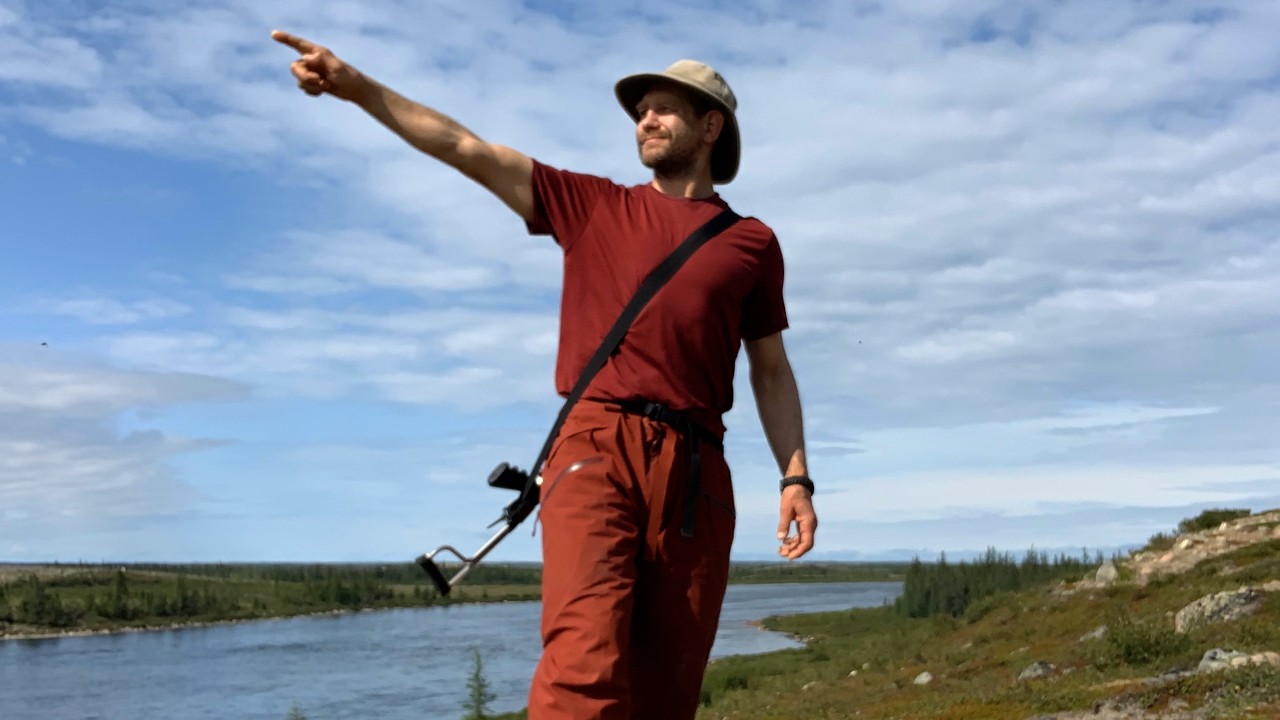
In today's episode of The Strenuous Life Podcast, I share the story of dealing with storms, giant tides, and the ever-present threat of polar bears on the remote Hudson Bay coast at the mouth of the Thlewiaza River in Nunavut, Canada and what I learned about physical, mental, and emotional performance in extreme circumstances.
And in many independent bookstores all around the world (they can always order it in if they don't have it).
Thanks so much,
Stephan Kesting
P.S. If you enjoyed this episode check out the beginning of this journey in episode 419 of The Strenuous Life Podcast (links below). For everything in between that episode and this one you'll have to check out the book though...
Speaker 1: Hello everyone. I hope you're well, and I hope that your training, whatever it looks like, is going well as well. What I've got for you today are the last two chapters of my book, Perseverance, Life and Death in the Subarctic, and I think that there are a lot of lessons here for everyone, regardless of whether you do jiu-jitsu, train in another martial art, or try to accomplish anything difficult in life. Because ultimately, one has to push oneself in physically, emotionally, and mentally challenging circumstances from time to time, no matter what one does. And so one can learn a lot from other people, even if one never actually does that activity. For example, I'm not an alpinist. I don't climb mountains. But I learn a tremendous amount about dealing with the physical, emotional, and mental challenges in extreme circumstances by following what mountaineers are doing, because that's a pretty distilled environment. And taking the lessons from that environment and applying it into my own is very useful. So at the start of this episode, I've just spent 41 days in the deep subarctic and Arctic wilderness of Canada. The last 26 days have been spent completely alone. There have been bears, there have been caribou, there have been forest fires, there have been rapids. There have not been any people. So I'm re-entering society now, and it's this weird staged process, which really helps clarify a few very important things. Incidentally, this book is available everywhere that you get books, Barnes and Noble, Indigo, Amazon. It's actually quite heavily on sale on Amazon at the time of recording. Hopefully, it's still that level on sale at the time of release. And it's available in physical, Kindle, and audiobook formats. If you enjoy this little snippet, please check out the whole thing. And if you've already consumed the whole thing, then a rating or a review on Amazon or on Good Reads is super appreciated. Thank you so much.
Speaker 2: Hey there, I'm Stephan Kesting, and this is the Scrappiness Life podcast. Day 41, the Bay at last. August 10th, 2019. Start on a Tundra Island in the middle of the Fluiaza. Finish, the Hamlet of Arviat. Distance covered, 54 km by canoe, 90 km by powerboat. All good things come to an end, and there came a day when we turned our canoes down the Liard and saw Nahanni Butte sink below the horizon, perhaps for the last time. Then it was that I realized we had been allowed to live for a little time in a world apart, a lonely world of surpassing beauty that had given us all things from the somber magnificence of the canyons to the gay sunshine of those wind-swept uplands, from the utter silence of the dry-side canyons to the uproar of the broken waters, a land that men pass and the silence that falls back into place behind them. R.M. Patterson, The Dangerous River. I staggered out of the tent physically crushed. It had taken forever to calm down, and I had slept less than 4 hours, not nearly enough to recover from the near continuous exertion and insane headwinds of the last week. The 5:00 a.m. sun climbed into the narrow band of clear sky between the horizon and the clouds overhead, tinging the land with a tyrian purple glow. Despite my bone weariness, I was also excited. There were only about 50 km left to Hudson Bay, and it was all down river. This should have been a leisurely morning paddle, but of course it was not. A dense bank of clouds moved in as I ate breakfast, removing all color from the world and turning everything monochromatic gray. The light gusts of early morning stiffened into a strong headwind. When I cast off from shore, the boat skittered sideways on the river. The strong downstream current was wholly canceled out by the wind blowing upriver. Instead of the current at my back, there was a wind on my face. To make my new rendezvous, I would need to cover all those 50 km with paddle power alone. Downstream from the camp was a serious rapid that required a lot of ferrying. Ferrying in smaller rapids is often a short, technical maneuver that relies on precisely calibrating your angle and speed to account for the force of the current. By contrast, ferrying on the large, wide rapids of the lower Fluiaza was becoming an endurance exercise where I had to maintain paddle power for extended periods while dodging haystacks, rocks, and curling waves. The first ledge forced me to ferry out into the middle of the river. Immediately afterwards, I had to start working my way back to the left to avoid a different hydraulic. Then a final ledge on my left forced me back into the middle of the river again. It reminded me of Frogger, that video game from the early 1980s where you try to get a frog across a busy highway by moving forward, backward, left and right, without getting squashed by the uncaring traffic. By the end of the rapids, the wind was howling, but this was just mere foreplay compared to the much stronger storm coming in tomorrow. Missing that pickup boat would have dire consequences. I paddled for hours against the omnipresent wind, and eventually the river splintered into many smaller channels which perforated an endless maze of islands. This was the Fluiaza Delta, the last obstacle before the ocean. Most deltas are languid, lazy affairs where a depleted river drifts down to its final resting place in a lake or an ocean. The Fluiaza was the opposite. The delta churned with rapids for 20 km as the river flung itself off the land and into the sea. Navigating river deltas is often confusing. The massive number of islands and the changing landscape create an intricate maze where your map doesn't necessarily correspond to what's ahead of you. Today, the ongoing white water and the eye-blurring rain made tracking my location even trickier. I also had large aggressive carnivores on the brain and glared at every white rock, daring it to become a polar bear. I opened the fasteners holding the waterproof shotgun case shut. There might not be enough room to maneuver around a threat in the narrower channels. Better the gun get wet from the rain than I die fumbling with the buckles, I thought. Then I saw a dark brown shape moving side to side on the shore about half a mile ahead. I concluded that this must be a skinny tundra grizzly, so I took the shotgun out of its case and laid it within easy reach on the forward deck of the boat. A few seconds later, I laughed aloud. This bear was only a stone's throw away. It had a white head and feathers. It wasn't a 500-lb grizzly bear. Instead, it was a 10-lb bald eagle hunting for geese. The rain and lack of trees for reference had completely distorted my sense of distance and scale. I wish I could say those final few hours on the river produced a cascade of profound revelations from pondering the meaning of 41 days alone in the wilderness. That would be a lie. The truth was far more prosaic. The mundane procedural minutia of travel took up all available mental bandwidth. Which of these two channels should I go down? The water is deeper to the left of that rock. My shoulder hurts. Should I bail some water out of the boat? Did the wind just change direction? Any assignations of meaning would need to come later during retrospective analysis. The current cut through the soil to create tall river banks, exposed polished bedrock, and produce a dizzying array of diverging and converging river channels. A large river joined the delta from the north. This was the Thaane River, which flows through the remote tundra north of the Fluiaza and merges with it in the last kilometers before the bay. The memory of that short glimpse of the Thaane is singing to me as I write this, urging me to return to the barren lands and explore that river. And maybe, someday, I will. Gradually the river slowed, and it became harder to find deep water. The wind faded, and a heavy fog gathered, further decreasing visibility. The water became gradually saltier, from fresh to brackish to oceanic. I was now in the legendary tidal flats of Hudson Bay. The mud and boulder flats extend out from shore for miles at low tide before you get to deeper waters. Through the rain and the fog, I saw the remains of a small cabin on a bluff to the north. I was supposed to meet my pickup there, and I rejoiced. After paddling 50 km without a single break, my body had never felt so tired. My muscles were nearly useless now, and any headwind would have halted all progress. Fortunately, the ocean was calm, and I crawled towards the cabin landmark at a snail's pace. Just as I approached the landmark, my GPS buzzed. The satellite text message read, "The tide is out. Water too shallow. Meet us at 60.47 degrees north, 94.59 degrees west." Unfortunately, this location was 4 km away out in the open water. I should have known better than to fixate so much on one specific goal. The finish line had just shifted, and I felt gutted. There was nothing to do but glumly swing the boat around and limp into the offshore mist. There was nothing but shallow water, occasional boulders, and patches of exposed mud. This was a bizarre trust exercise, relying on a compass and GPS to navigate through the fog onto the ocean to a destination that I couldn't see. Those last 4 km took forever. My physiological gas tank was empty, and I crawled past the undertitled boulders and deeper into the fog at a glacial pace. Finally, one of the boulders ahead started changing shape as I got closer. It was a boat. A large orange flag had been hoisted into the air to make it more visible, and it had two Inuit men on board. "Thanks for picking me up," I said as I paddled my boat alongside theirs. "No problem," they said. The men hauled my canoe aboard their open 20-foot aluminum boat. I was being picked up by Joseph Ikkattak Jr., a conservation officer who would go on to become the mayor of Arviat, and his father, Joseph Ikkattak Sr., the premier of the territory of Nunavut. The premier had been home for a few days and had spontaneously decided to accompany his son for the day. I felt honored. The outboard motor roared us toward deeper water. The cold wind and large chop made me grateful that I didn't have to paddle this section. It would have been a difficult and dangerous journey. The northern genetics of the two Joes were on full display as they barely needed gloves for the freezing ride. I shivered and stuffed my hands deep into my raincoat. "But it's summertime," the two Inuit men laughed. During the boat ride, it finally began to sink in that the trip was over. I had traveled the old way north, had some amazing experiences and seen some incredible things. My kidney and I had pushed ourselves to the absolute limit and somehow had achieved the goal before everything broke down completely. The doubt, pain, and suffering of the last 41 days seemed worth it. 3 hours later, low bumps on the shore slowly resolved into the houses of Arviat, a small Inuit town with 2,000 souls. When we landed at the dock, the two Joes loaded my gear onto an ATV and drove me to one of the two hotels in town. Standing inside the Padley Inn in dripping rain gear, I learned that exactly one room was left. It was a tiny room, but I didn't care. The decor was drab, but I didn't care. And it was over $300 a night, but I didn't care. It was warm and sheltered, the only two things that were important. The enclosed space of my room made me realize that I stank the way that only a man wearing the same clothes for weeks could stink. Still wearing my paddling clothes, I walked down to the general store and bought razors, chocolate, and a complete change of clothing. The clothing selection was limited, and the best I could do was to grab a three-quarter sleeve t-shirt straight out of the early 1990s and fleece pajama bottoms with a green camouflage pattern. There was no saving my clothes, so they all went into the garbage at the hotel. Then I stumbled towards the shower and spent an hour under the hot water, after which I finally almost felt warm. I ate a simple dinner in the hotel dining room and collapsed onto the tiny bed while the cold Arctic rain continued to fall outside. I come from the land of the ice and snow, from the midnight sun where the hot springs flow. The hammer of the gods, I'll drive my ship to new lands, to fight the horde and sing and cry, Valhalla, I am coming. Led Zeppelin, The Immigrant Song. Postscript on the difference between happiness and satisfaction. We are not now that strength which in old days moved earth and heaven. That which we are, we are. One equal temper of heroic hearts, made weak by time and fate, but strong in will, to strive, to seek, to find, and not to yield. Alfred Lord Tennyson, Ulysses. High winds and freezing rain punished us passengers crossing the tarmac of the Arviat airport as we boarded a jet bound for the south. The bad weather that had chased me into Arviat had worsened overnight. The wind had become a gale, and the rain become sleet, and the waves on Hudson Bay had become unsurvivable. If not for pushing myself to the limits of endurance, I would have now been sharing the storm-blasted shores of Hudson Bay with some very wet polar bears. Once airborne, the endless tundra, lakes and forest of the Canadian Shield rolled past the plane's windows. In minutes, we crossed lakes where I had struggled for days. South, south, south. All that work undone by 90 minutes of air travel. 9 years prior, I had thought I was financially ruined for life. 5 years prior, I had been on the brink of death from kidney failure. And now I was homeward bound, having completed a goal that had haunted me since my youth. The trip had been a meditation on mortality, fueled by my brushes with this life-threatening medical condition, the loss of my brothers, my mother, and my grandmother. Somehow, a stubborn belief that things would eventually break my way had prevailed, and it turned out that I was still capable of putting it to the touch despite all the mileage on my body and soul. Despite it being a solo trip, so much of this journey had been enabled by others, and I was very grateful to them. This undertaking would not have been possible without my wife's blessing, and it had been made easier by the explorers and native people who had shown a path for me in their accounts. I was so lucky that my brother Christoph had been willing and able to give up a kidney. And that the medical technology of transplantation existed. 50 years earlier, I would have been dead. 100 years earlier, I would have been dead. Anytime other than in the modern era, I would have been dead. In Winnipeg, my checked baggage needed to be x-rayed before it could be loaded into the belly of the plane. "What's that?" gasped the horrified airport security drone, pointing to the image of a sheathed hatchet deep in my checked luggage. "That's a very small axe in a very sturdy sheath," I replied. "But what if it cuts through the sheath and out of the bag? Someone could get seriously hurt." In a calm voice and using small words, I explained that it was impossible for the axe to cut through the hard plastic sheath and all the gear that surrounded it, and then magically fly across the hangar into the throat of a baggage worker. After checking with his supervisor, he eventually relented, and I didn't have to trade the axe for the right to board the plane. It was mind-boggling. Less than 24 hours before, I had been making life and death decisions multiple times each day. Now I was back in the world where every sharp corner is padded, and nincompoops can blurt out, "It's not safe!" 100 times a day without consequence. At the time, I was incredulous and enraged, but this wasn't his fault. The people most fearful of bears are people who have never interacted with them. This guy, who had never used an axe, was full of trepidation about their imaginary dangers. Since my axe and I both made it on the plane, I now think this episode was pretty funny. My wife was waiting for me in the arrivals area of the Vancouver airport, looking impeccable in a sleeveless Native polka dot sheath. I rushed over in the baggy camouflage fleece pants and the Arviat t-shirt I had bought at the Northern store, 20 lbs lighter than when I had left, with bloodshot eyes and patchy facial hair from a poor shaving job. I was immediately intercepted by a security guard who wanted to see identification. He had quite reasonably concluded that I was a homeless person stealing luggage from the carousels. A few minutes later, my wife and I were homeward bound, back to the kids and a new cat. It all felt very strange at first. I had, after all, been gone for a long time. A few days later, I grabbed dinner with two old friends. They had questions about the trip, and I was happy to go into details. From being windbound on tiny beaches to paddling 14 hours a day, I think I told a pretty good story. Finally, one of them blurted out, "That's a really cool trip, but did you enjoy it?" The question took me aback, and it took a while to collect my thoughts. When I finally spoke, I explained that this was probably the wrong question. Yes, this trip had had many enjoyable moments, but the trip hadn't been about enjoyment. And yes, I had been happy sometimes, but the trip hadn't been about happiness. Most of the time, I had been worried, cold, wet, scared, or exhausted. The totality of the trip wasn't as simple as seeking enjoyment. The thrill of enjoyment and happiness fades quickly, leaving you chasing the next hit. Happiness and type one fun are responses to your current environment, and feelings like that come and go. Instead of asking about enjoyment, the right question might have been, "Did you find that satisfying? What did you learn? Or how did you change?" The afterglow of satisfaction is much more durable than the fleeting sugar high of happiness. And yes, the whole thing had been profoundly and immensely satisfying. Experiences that give you satisfaction transform who you are, and you can bring those changes back to the world with you. You can't get to satisfaction without a lot of hard work and perseverance. Finding meaning in life is largely about the challenges you choose and the person you become when you tackle them. It may not always be easy or fun in the moment, but you can't go wrong with using satisfaction as your North Star. In the weeks and months that followed, my body slowly healed. My gaunt face filled in, and the burning pain that had been my constant companion for so long faded and became a memory. Physically, I was back to where I had started, but there had been a tectonic shift in my psyche. I had come back stronger, enriched by the journey, excited for what lay ahead, and bursting with a deep admiration for the reservoir of capability that lies in each and every one of us. We shall not cease from exploration, and the end of all our exploring will be to arrive where we started and know the place for the first time. T.S. Eliot, Four Quartets.