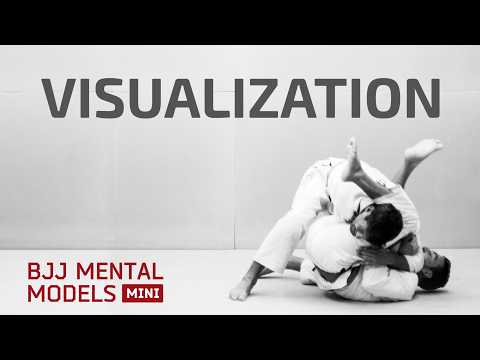
In this week's mini-episode we discuss shifting platforms, wherein you as the bottom player use continuous movement to prevent your opponent from fully establishing their base on top of you. Moving away from big, explosive escape attempts and toward smaller, continuous movement makes a huge difference in your success from bottom positions.
Don't forget to check out BJJ Mental Models Premium!
If you love the podcast, you'll definitely love our premium membership offerings. The podcast is truly just the tip of the iceberg – the next steps on your journey are joining our community, downloading our strategy courseware, and working with us to optimize your game. We do all this through memberships that come in at a fraction of the cost of a single private.
Hey everybody, before we get started this week, I have huge news. She actually did it. We're pleased to announce that Beatrice Jin, top-ranked women's competitor in North America and long-time BJJ Mental Models premium community member, has published her first ever course with us, exclusive to BJJ Mental Models. It's called Stop Being Nice. It's a three-part audio series designed to solve real mindset problems that regular folks experience in jiu-jitsu. If you struggle to be aggressive and competitive in jiu-jitsu, you'll find the solutions here. If you're already a BJJ Mental Models premium subscriber, you've already got access. And if you are not, good news, you can get it now and get your first week free. Go to bjjmentalmodels.com and check it out today. Hey, welcome to BJJ Mental Models. I'm Steve Kwan. BJJ Mental Models is your guide to a conceptual and intelligent jiu-jitsu approach. And in this week's mini episode, I want to unlock a concept that is really helpful for learning how to defend and escape bad positions in jiu-jitsu. It's something that really was never taught to me properly, but once I learned it, it made it so much easier for me to get out of bad positions like side control, back control, mount, and I want to share it with you today. For a lack of a better term, I've always called this the concept of shifting platforms. Here's how I like to think about this. Imagine a cement mixer, you know, a big cement truck, it spins around and around and around, and it's important that it keeps spinning around because that's what keeps the cement fluid. If the cement truck settles, then the cement settles, it solidifies, and you got a big problem. So, the whole goal of a system like that is to keep things in motion so they can never settle down. The same concept applies in jiu-jitsu when we're in an inferior position, especially those where our opponent is sitting on top of us or putting their weight on top of us. So think of something like side control or knee on belly or mount. These are situations where your opponent is basing off of you. They're using you as a platform to stabilize themself. And this is a bad position for you to be in on the bottom because not only is your body in a mechanically weak position, but also you've got the power of gravity working against you if they're on top of you. And when you're in one of those bad positions, it can it can feel like there's not a lot of options to make your opponent work. It often feels like you as the person on the bottom need to do all of the work. However, what I can tell you here from my experience, if you can be a shifting platform, meaning you're constantly moving, as opposed to a stable platform, meaning you stay still, what you'll probably find is it is way easier to escape from those bad positions, and you can really force your opponent to work even though you're the one on the bottom in an inferior position. And the logic here is the exact same as the cement mixer. Um, think of it this way, right? One of the most important things in jiu-jitsu, we want base at all times, the ability to generate or absorb force relative to our goals. We need to have base. And it's especially important if you're attacking from a dominant position, because keeping base is how you keep your weight positioned down on your opponent and you hold them in place so they can't get out. Now, if I am in an inferior bottom position like side control, and you're cross-facing me, you're pinning me from the top, if I just sit still, then your weight settles on top of me, like cement. And the more it settles, the more that position solidifies for the top player, and the harder it's going to be for me to get out because they have base. This is very similar to the last mini episode we did on technique chaining, where against a dead stop, against someone who has full body alignment, it can be very hard to make jiu-jitsu work against them. Individual techniques tend to not work so well against someone who has full alignment. So, we need to get them moving before we really get our escapes going, because by forcing them to move, we force them to react, and that can create openings. The same applies when you're on the bottom. So, rather than just sitting there from bottom side control and trying a hip escape, and then it fails, and then you stop and you reset. And then you try a bump, and it fails, and you stop and you reset. You want to take that piece out of the middle there where you stop and you reset. If you stop moving from the bottom, then like that cement mixer, the person on top is going to be able to solidify their base down on you, and it's going to get real hard to get out. That's where a lot of those problems with people getting stuck in bottom side control come from, is because they're not moving enough, and that lets their opponent solidify their base, take away movement opportunities, and just camp there for as long as they want, making the bottom player miserable. So how do you deal with that? Well, like the cement mixer, you just keep moving. And the important thing I want to clarify here is we're not specifically talking about big, explosive, energy-consuming movements. Way too many people, when they're trying to get out of these inferior positions, spend tons of energy doing big hip escapes, explosive hip bumps. These are not the best way for you to get out. Because when you make big explosive movements, it tends to create big explosive openings. Think about again, if you're on bottom side control or bottom mount. If you do a giant explosive hip bump, there's a possibility you might knock the person on top off of you, but there's an equal or possibly greater possibility that they will use that explosion to ride you and get up to an even more dominant position, like a higher side control or a higher mount. So often, people's explosive and energy-consuming escape attempts work against them. Because if you do that against a top player who's got good base and they anticipate what you're going to do, when you make a big explosive movement, it creates big openings that let the top player further advance their position. So we don't want to do the big explosive movements. Additionally, because it's going to burn our energy, and energy conservation is tremendously important when you're defending. So instead of doing big explosive movements, we want to do small, continuous movements from the bottom. So don't think of it like big, giant hip bumps or massive hip escapes. You're not trying to clear three feet of distance with your hip escape to try to reguard. What you're trying to do is constantly keep moving without doing anything so big or explosive that it creates openings your opponent can exploit. So, in practice, that means little hip bumps, little hip escapes. It shouldn't look like you're trying to bench the person off of you, it should actually look like you're an earthworm trying to wiggle out from under them. Now, why does this matter? Because honestly, trying to bench a person off of you or trying to clear your entire body with a hip escape so you can reguard, that's really hard to do against a good player on top who anticipates these things, because they have the benefit of top position. They have gravity on their side, they can move more easily than you. So if they anticipate your hip bump or your hip escape, it's easy for them to then just counter that and just reposition on top of you. However, if you make little moves, so rather than doing that big hip bump, just a tiny little bridge, just the tiniest one, and then you do it again, and you keep doing it and you never stop, what happens is you never create a big enough movement that makes it easy for your opponent to exploit and advance position. And you also turn your body into a shifting platform that they can never get truly stable on top of. And much like in the technique chaining episode we talked about in the last mini episode, that forces them to react. Now, if you're constantly moving on the bottom, they have to constantly be moving on the top to react to what you're doing. First of all, this means that now you're dictating the pace, even though you're the one on the bottom, you're now dictating the fight because they're reacting to you. And second of all, the more you make them react, the more opportunities you create for openings that you can then use to escape. So this is my favorite strategy for escaping from bad positions in the bottom. It's not about knowing the perfect escape. It's not about doing the perfect bridge or the perfect shrimp. None of that stuff is going to work against a good person because it's easy for them to predict what you're going to do and react accordingly. And the worst thing that happens too is if you do a big bump, often people who do that, they burn a ton of energy, and then they stop, and then that allows their opponent to reset and get their alignment back. And then the person on bottom does it again. So you're doing a bunch of big explosive movements without actually achieving anything other than wasting your own energy. You don't want to do that. Instead, you want to be constantly in motion, and not big motions, but just never stop moving. This does not mean you're burning a ton of energy. This does not mean you're scrambling desperately. This does not even mean you're moving quickly. You can do this very slowly. You just never want to stop moving. Because like with the cement mixer, as soon as you stop moving, it lets them solidify their base on top of you. So, that's my suggestion to you. If you're struggling to get out of bad positions, abandon the thinking of, hey, what's the perfect escape technique that I can do here that'll get me out every time? Jiu-jitsu doesn't work that way. Instead, think about how can I do small, controlled movements continuously without any breaks, without stopping? How can I do that in a way that conserves my energy and forces the person on the top to keep moving? What you'll find is if they have to keep moving and reacting to you, the more you make them move, the bigger their reactions are going to have to be, and eventually they're going to leave enough space that you can escape. So that to me is the foundation of getting out of bad positions, especially where the person is on top. You want to be a shifting platform where they can never quite settle their weight. You want to avoid being a solid platform where they can settle on you like cement, and then you'll never get them off. I hope this was helpful. This concept made a huge difference to me in terms of improving my ability to escape from bottom positions. If you liked this conversation and you want more of it, everything we make lives at bjjmentalmodels.com. The majority of what we do is totally free, no ads. I recommend going back and listening to episodes of the podcast, they're all intended to be timeless, both the full-length episodes and the mini episodes. And of course, if you don't know where to start, always just shoot me a message on social or email, and I'm happy to kind of point you in the right direction. We've got a contact form on our website. And this is the point where I always tell people, do make sure you check out BJJ Mental Models Premium, our subscription. If you haven't already, it's the best value in the sport for 20 bucks a month. It'll really level up your game. I'll spare you the whole sales pitch, but you can get all of the details at bjjmentalmodels.com. Thanks again for listening. These are always a blast to do. I hope you're getting value out of them, and I'll talk to you in the next one.