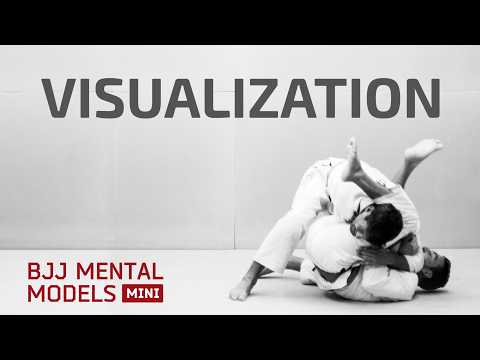
In this week's mini-episode, we discuss center of gravity: your body's "tipping point" of balance. Your center of gravity is around 56% of the way up your body (around your pelvis) when standing upright, but moves as your body moves. Understanding your center of gravity is key to preventing it from being used against you. With practice, your center of gravity can even be a weapon.
Don't forget to check out BJJ Mental Models Premium!
If you love the podcast, you'll definitely love our premium membership offerings. The podcast is truly just the tip of the iceberg – the next steps on your journey are joining our community, downloading our strategy courseware, and working with us to optimize your game. We do all this through memberships that come in at a fraction of the cost of a single private.
Speaker 1: Hey everybody, before we get started this week, I have huge news. She actually did it. We're pleased to announce that Beatrice Jin, top-ranked women's competitor in North America and long-time BJJ Mental Models premium community member, has published her first ever course with us, exclusive to BJJ Mental Models. It's called Stop Being Nice. It's a three-part audio series designed to solve real mindset problems that regular folks experience in Jiu-Jitsu. If you struggle to be aggressive and competitive in Jiu-Jitsu, you'll find the solutions here. If you're already a BJJ Mental Models premium subscriber, you've already got access, and if you are not, good news, you can get it now and get your first week free, go to BJJmentalmodels.com and check it out today.
Speaker 2: Hey, welcome to BJJ Mental Models. I'm Steve Kwan. BJJ Mental Models is your guide to a conceptual and intelligent Jiu-Jitsu approach. I want to talk quickly today about the idea of a center of gravity. For the average person, it's going to sit approximately 56% of the way up your body, so that's going to kind of be in your your pelvis area. Um but not always. The thing about center of gravity is that it's different for everybody. And your center of gravity is kind of weird because it also moves and it can change depending on how your body is positioned and where your arms are. Your center of gravity is constantly moving. The human body actually has a lot more senses than we talk about. We often talk about the five senses when we're teaching kids, but there's a lot more that the body can do and the ability to keep balance is a great example of one of those things that just happens on its own. Our body is always conscious of where our center of gravity is and it's trying to stabilize for it because if your center of gravity goes too far in one direction, you're going to fall over unless you put a post in the way like your leg. So, center of gravity also changes when you're on the ground. And it could be in a very different position. For example, if you are holding side control on someone, your center of gravity probably is going to be in your upper chest somewhere. And that's again, the point of no return. Anyone who's ever been thrown off from top side control knows what I'm talking about where the person just rolls you and pulls you over to the other side and you can't stop them. That's because your center of gravity got up too high and it crossed that tipping point where it became easier for it to fall off the other side. We've talked about tipping points in a previous many episodes, so you might want to check that out. And of course, the idea of a center of gravity is probably the most famous example of a tipping point. So, always being mindful of your center of gravity in any particular position really helps you avoid over-committing your weight. That's why with positions like side control, you will see people tend to play it a bit off-side. You don't get right on top of the person and you don't lean across them. You tend to be kind of hovering on the shallow side, on the near side, and that's because you're trying to avoid giving them your center of gravity. It's the same reason why most people when they play neon belly, they don't have their knee directly on top of the person below. Usually, they're off to the side and that's because they don't want their center of gravity to be on top of the other person. So, those are all examples of how you have to be mindful of where that is. This becomes really important if you're competing against or sparring against someone who's really strong. I talked earlier about that that situation where you are holding someone on top side control and they just roll you over to the other side and you can't stop them. And if the person on bottom is strong enough, they can actually pull you to pull your center of gravity on top of them. That's what a lot of positions in Jiu-Jitsu involve like getting underneath someone when they're standing in your guard. You're trying to get underneath their center of gravity because it's such a powerful place to be. Now, giving up center of gravity isn't always a bad thing. Float passing, for example, relies on putting your center of gravity on top of someone. The difference though is that there you're doing it deliberately and you're positioning your body in a way that makes it really challenging for the person on the bottom to control. My coach Emily Kwok has talked about how this is like making your opponent feel like they have to carry a 20-pound vase. Right? Make them feel the labor of having to maneuver where you are. If they've got good handles on you and they can move you because of your center of gravity, that's bad. But if you just kind of drop your center of gravity right on top of them and they can't do anything to deflect that, then that's how things like float passing happens, right? You're making it very difficult for your opponent because they've got to carry you. So, there are some just tips on center of gravity. The action here would be to make sure that for any position you play, always be mindful of where your center of gravity is and try to avoid over-committing it because that is how a lot of sweeps and other positional advancements happen. So, if you like this, there's a lot more of it at BJJmentalmodels.com. Check out our full-length episodes plus more mini episodes like this. And leveling up with us, that's on BJJ Mental Models Premium. You can check all of that out at BJJmentalmodels.com. I'll put a link in the show notes. Thanks again for listening and we'll talk to you in the next one.