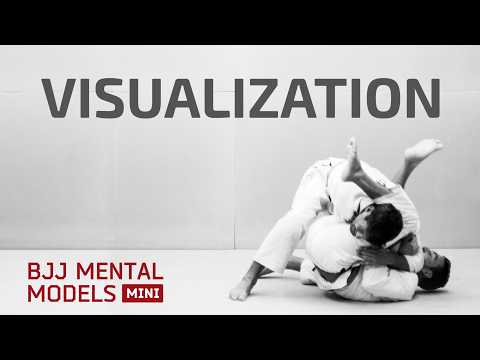
In this week's mini-episode, we discuss Priit's 45° Rule, a helpful tip for surviving (and escaping) bad positions. The "rule" tells us: When your legs have been neutralized (ie. guard is passed), get your shoulders at 45 degrees relative to the floor.
Don't forget to check out BJJ Mental Models Premium!
If you love the podcast, you'll definitely love our premium membership offerings. The podcast is truly just the tip of the iceberg – the next steps on your journey are joining our community, downloading our strategy courseware, and working with us to optimize your game. We do all this through memberships that come in at a fraction of the cost of a single private.
Speaker 1: Hey everybody, before we get started this week, I have huge news. She actually did it. We're pleased to announce that Beatrice Jin, top-ranked women's competitor in North America and long-time BJJ Mental Models premium community member, has published her first ever course with us, exclusive to BJJ Mental Models. It's called Stop Being Nice. It's a three-part audio series designed to solve real mindset problems that regular folks experience in Jiu-Jitsu. If you struggle to be aggressive and competitive in Jiu-Jitsu, you'll find the solutions here. If you're already a BJJ Mental Models premium subscriber, you've already got access, and if you are not, good news, you can get it now and get your first week free, go to BJJmentalmodels.com and check it out today.
Speaker 2: Hey everyone, welcome to BJJ Mental Models. I'm Steve Kwan. BJJ Mental Models is your guide to a conceptual and intelligent Jiu-Jitsu approach. And in this week's mini episode, I want to share a concept that was really helpful to me in terms of thinking about how to defend from bad positions more effectively. The main issue with defending from bad positions is often because you're on the defense, you're under a lot of pressure to make sure you do things right to get out of those situations. So, there's a lot going on in the moment. If you have to do a lot of thought in the moment, it's much more likely you're going to struggle to make good decisions. You want to have simple thinking, especially under really difficult situations where you only have a split second to do the right thing. So, here's a great concept that really helped me tighten up my defense. I learned it from Preet Mikelson, the Defensive BJJ instructor. I recommend checking out his material if you want to get better at defending and surviving from bad positions in Jiu-Jitsu. I don't know what the name of this is, so I've called it Preet's 45-degree rule.
Speaker 2: Basically, what Preet says is, whenever your legs have been neutralized, ensure your body is at a 45-degree angle relative to the floor. Let's unpack exactly what that means and why it's important. So, the first bit, whenever your legs have been neutralized, what are we talking about there? Really what we're talking about is when someone passes your guard. That's when your legs have been more or less neutralized. I don't know if that's exactly a complete definition because your legs are never really completely neutralized. Even if you're being held down in side control, you can probably still move your legs a bit. But his point is that when you're playing from guard, you're using your arms and legs in tandem to fight, and when someone passes your guard, it's going to be hard to do that now because your body's been cut in half. So, that's what we mean when we say whenever your legs have been neutralized. Basically, we're talking about a guard pass.
Speaker 2: The second part of this is, when that happens, ensure your body is at a 45-degree angle relative to the floor. Now, we need to unpack why that is here. When we say 45 degrees, what we really mean is you've got one shoulder on the mat and one shoulder lifted. But you have not lifted that shoulder up so high that you're completely on your side at a 90-degree angle. You don't want to do that. Instead, you stay relative to the floor at a 45-degree angle, a diagonal. Why does this matter? Well, it matters because you're specifically trying to avoid two negative situations when you get your guard passed. One of them is you've got both of your shoulders pinned to the mat. That's not good. If you have both of your shoulders pinned to the mat, that's the basis for a lot of chest-to-chest control that you're going to see when people are trying to complete a guard pass, hold you in side control, even advance to mount. A lot of what you're trying to do is pin someone to the ground, both shoulders on the mat. If you think about most of the escapes that you probably like to do from side control or from mount, many of them require you to get to your side a little bit. And we'll we'll get into that in a second. But they require you to lift one shoulder off the floor. If both your shoulders are pinned, you are pinned. And from there, it's going to be really hard to turn towards your opponent or turn away if you choose to do that. You don't have those options. So, getting pinned shoulders to the mat is usually not a good thing, which is why we want to lift one up.
Speaker 2: Now, there's a problem with lifting a shoulder up, which is that if you go too high to your side, all the way to say a 90-degree angle where you're perpendicular to the floor, that can open up another set of problems. One of them is it exposes your top arm. So, you may have had this happen to you where you're in bottom side control, you try to turn towards the person, but you turn too much, and you go onto your side at a 90-degree angle. Now that top arm is vulnerable to arm bars, to kimuras. Um, that's why we want to stay at a 45-degree angle, because if we go all the way up to 90 degrees, now that top arm becomes a target. Also, when you go to a 90-degree angle, it's harder to protect the space under your head. Of course, when you are in a negative position like bottom side control or bottom mount, you don't want your opponent to be able to cross face you. You can prevent this if you're 45 degrees to the floor, meaning you've got one shoulder on the mat, one shoulder a bit lifted. You can close off that space under your head to prevent the cross face. However, if you go all the way to a 90-degree angle, it gets a little bit harder to do that, and you can become more vulnerable to the cross face. So, there are some reasons why going all the way up to 90 degrees is not great from a negative position.
Speaker 2: Now, again, we're talking about doing this after someone has passed your guard, right? That's what we mean when we say whenever your legs have been neutralized, ensure your body is at 45 degrees relative to the floor. If you are playing guard, this is less important. Now, there are a lot of situations when you're playing guard where you don't want to have your shoulders pinned on the mat. Um, but there are times from guard when it's workable. There are many guards in the gi, if you have good sleeve controls, you can lie down and go supine and put your shoulders onto the mat. There are no-gi guards you can play where you do the same thing. They may not be the most awesome guards for you, but they are options. So, it's not as critical when you are playing guard, but when someone has passed your guard, that's when you need to start thinking about Preet's 45-degree rule and lift up one of those shoulders at a 45-degree angle. If you think about the different angles that you can be at relative to the floor from a bad position, having both of your shoulders pinned and looking up at the ceiling, that's not good. And the reverse of that, of being face down on the mats is also not good. Being completely on your side for the reasons I brought up earlier is not good either. So, those are the four angles that you want to avoid, completely up, completely down, completely left, completely right. That leaves you with four different angles at diagonals, at 45 degrees that you can use. So, when you are defending from bad positions, you want to try to keep your body at that angle relative to the floor until you get out and to a better position like guard or standing. And then from there, of course, this doesn't apply.
Speaker 2: So, this is an example of a really simple rule that doesn't require you to think about a lot of techniques, and it's so simple that you can make decisions based on this rule in the moment. When someone passes your guard, you don't have to search through your brain rolodex to try to figure out what technique to do. You can just think of Preet's 45-degree rule and get one shoulder a little bit, but not too much, off the mat. This is a great concept from Preet. If you want to learn more about his stuff, go to defensivebjj.com or follow Defensive BJJ on Instagram. If you want to learn more from us, we've got a lot of content like this at BJJ Mental Models. The full-length episodes of the podcast, plus the mini episodes like this are completely free, and you can all get them at BJJmentalmodels.com. And if you haven't already done so, please do check out BJJ Mental Models Premium. It is the world's largest library of Jiu-Jitsu audio courses on concept, strategy, tactics, mindset. This kind of stuff can really help your game, so if this short mini episode gave value to you, you'll probably like BJJ Mental Models Premium. All of that's at BJJmentalmodels.com. Thanks again. I hope you got value out of this, and I'll talk to you in the next episode.