Speaker 1: We're rolling. Welcome back everyone. This is episode 188 of the Jiu-Jitsu Dummies podcast. We are brought to you by Blackbelt Digital Marketing. Anything you need to build your business on or offline, web design, SEO, Google Ads, graphic design, we have new AI products, we even do printing. We can absolutely help with anything. Check us out at Blackbelt Digital Marketing on Instagram or our website bbdigitalmarketing.com. You can request a free review of your online presence right there on the homepage today. Joining us today is entrepreneur, business coach, speaker, podcast host, uh Dan Sakowski. Am I saying it right? look at me. Uh also known as Big D. I'm going to call you Dan. I'll let the ladies call you Big D. All right? Good. Uh he's a. Again, he's an entrepreneur, a business coach, uh speaker, he hosts the Big D podcast. He's also the founder of the Seven Figure Blueprint Syndicate where he helps entrepreneurs scale their scale their businesses, strengthen their leadership and build lives designed around freedom, impact and legacy. All things that I love, that I'm trying to do. My name is Milton Cappas. I'm a black belt training out of South Florida. Don't forget to like, comment, save, share, do all those things. Click the subscribe button. We appreciate all of your support. Uh, I'm going to do a few shout outs. I'm going to toss it to my uh my wonderful co-host and uh comic relief, Ben.
Speaker 2: Yours truly. Moi.
Speaker 1: Your your time.
Speaker 2: Well, now is the time. Let's start off where it's most important, right? At home. North Palm Beach, if you are a mixed martial artist, jujitsero or striker in any facet, there's only one place to be. That is American Top Team, Palm Beach Gardens, the premier in mixed martial arts training. The premier. There is none better. We've proven it year after year. ATTPBG.com is the website. Check it out. Follow our Instagram, ATTPBG on the socials. Now, let's get to some serious.
Speaker 1: We're going in a wrestling order.
Speaker 2: No. I mean, I felt the I felt the coming. Why not? When you close your eyes in bed and you see only darkness. Don't do it? Okay, sorry. Go by fight tape. It's the best tape you can have.
Speaker 1: How's how's everything going?
Speaker 2: Uh, I have 100 rolls of gauze left. I have 300 rolls of tape. So we're selling pretty fast. It's been moving really well since the beginning of the year.
Speaker 1: Oh, you're going to do the digit tape? I'm going to keep on asking. Do you got the the thin. I know I know you can, you know, you can peel it.
Speaker 2: My biggest issue is literally storage space because we have to buy them in the thousands and I don't have like a warehouse. So I'm focused on a single thing at the moment.
Speaker 1: You're ready to talk to you about. I've talked to Flow and Roll about your tape. So, okay, okay. You know, whenever you're ready. We can make a little magic. Whenever you're ready, you just reach out.
Speaker 2: All right.
Speaker 1: What else you got to add? Anything? You have a you have a a kickboxing tournament coming up too, right?
Speaker 2: Yes. May 17th, that's Sunday. IKF Point Kickboxing and Muay Thai will be returning to Davey, Florida at the Davey Police Athletic League Gymnasium. We are bringing point kickboxing and point Muay Thai to Broward County. It's the best way to start if you haven't gotten into full contact yet. You're dipping your toes in the waters of competition. Start on that level, work your way up to it. We have a track record proven of our winners as gone up into competitions, taking belts, winning titles.
Speaker 1: You do have some like more experienced guys that come out too.
Speaker 2: Yeah, yeah, yeah.
Speaker 1: You got to tell them though like, hey, this is point fighting. You're not taking anybody's head off, right?
Speaker 2: No, most of the people that have been around understand. There are schools here and there that are like, you're 12. This is the World Series. Try to kill somebody. And we we put the kabash on that pretty quick. This is great for like the fighter who's like, oh man, it's been six months. Let me like kick the rust off real quick. Perfect for that, like warming up, getting back to competition. And if you're on the come up, you haven't really gotten there yet, you're just testing the waters, there's no better way.
Speaker 1: And let me tell let me I'll say this. You don't you haven't said this, but I will say that I've gone and set up for Academy Safe. I've seen Jim Alers, the UFC vet, you know, he was he I think he had a couple fights in the UFC. Roger Crawl, American Top Team fame, right? You know, he was like the striking coach for years. So like if uh, you know, you're interested in in meeting some some big names, they're they're they're they're coaching. They have their gyms and they're and they're coaching their guys, right? So it's a super fun event. It's the 17th. I'm coming home from a cruise the morning of the 16th. So I got to.
Speaker 2: You'll be well rested.
Speaker 1: Yeah. We'll talk about it. We'll talk about if I'm going to feel like coming out the next day.
Speaker 2: Oh, too much vacation.
Speaker 1: Yeah, yeah.
Speaker 2: I'm so well rested.
Speaker 1: All right, let's uh so we're also brought to you by Academy Safe. Uh everybody uh that's listened to the show knows that uh we're advocating for background checks and US US Center for Safe Sport certification for coaches and owners throughout the United States and Canada. So check us out at academysafe.org. You can use code JJD F I V E. It's JJD5. Use that code to get a couple of bucks off your membership. We have some really big things going on. We're working with a new app provider that might completely revamp our system. Uh so lots of cool things going on, but uh for those people that don't know, right? You know, Academy Safe is all about cleaning up martial arts. Um, really trying to get the creepers out. You know, we know that we can't stop somebody from doing something bad in the future, but I think background checks is a good place to start. You are a member. You were our first.
Speaker 2: First in West Palm Beach or third in Florida.
Speaker 1: Third in Florida.
Speaker 2: And I might I think I might still be the only in West Palm or Palm Beach County.
Speaker 1: Yeah. Yeah. We've got some more coming.
Speaker 2: Good. The more the merrier.
Speaker 1: Check us out at academysafe.org. Again, JJD5 at checkout gets you a few bucks off your annual membership. Uh thank you to Flow and Roll, hands down the best custom ghee and no ghee gear in the business. Uh visit them on Instagram at flow_n_roll. Check out the custom designs they've created for academies throughout the country. Uh gym owners, you can stock up on your ghees and no ghee kits at flowandroll.com. Give them a buzz, let them know that you're interested in maybe talking about their pre-order program, which will save you tons of money and get you everything you need. Uh 20% off of your online orders with code JJD. You can't use that code for bulk orders. And that's it. Dan, appreciate the patience. How you doing, brother?
Speaker 3: All good, man. Thank you.
Speaker 1: What's going on, man?
Speaker 3: Oh, hanging out, man. Looking good, you know?
Speaker 1: I uh I was uh I we spoke so long ago that I was like, how did I how did I meet him? And I went back in Instagram. I'm like, oh, Ish. You were on the relentless podcast with with uh Ish Lopez. Um, I did I listened to that episode. I heard him mention us and he was like, oh, you're going to be down in Boca, you should go see my friend, you know. So we had him on. We work with um, you know, I don't know how much you know about Seminar Stack. Company he works with a company called Seminar Stack. They basically uh for-profit company that raises money for nonprofits. It's like so they raise money through like uh wellness, Jijitsu, um, they're do they do competitions, they'll do tournaments. Uh they're doing a they have a big event happening this weekend. Uh that money that comes in, they donate it to nonprofits. Kind of like a tap cancer out kind of does that kind of same thing, right? They they come in. And they.
Speaker 3: I'm actually uh he um doing an event in um Pittsburgh, I think it's in October and I connected him with the the guy who's running the event. I'm speaking at the event. And they're doing some stuff together.
Speaker 1: Yeah, very cool. Yeah, Seminar Stack's really cool. We've had a great relationship with them, but let's um let's tell everybody, you know, kind of a little bit about what you do. So, I mean, you're you got one of those long resumes. So let's start out with with speaking. You just said you're you have a speaking engagement, right?
Speaker 3: Yes, sir.
Speaker 1: And you also mentioned you're doing something in Fort Lauderdale.
Speaker 3: Uh Fort uh yeah, Fort Lauderdale on May 8th.
Speaker 1: So tell everybody what what what do you do with these events?
Speaker 3: So, uh, I'm the founder of the Seven Figure Blueprint. Um, basically the last two companies I built and sold, I understood how to be a true CEO. Work 20 hours a week, scale a business, super profitable, you know, $30 million companies and uh basically get rid of them.
Speaker 2: Did you say work 20 hours a week?
Speaker 3: 20 hours a week.
Speaker 2: That's it?
Speaker 3: Yep. Jesus. So uh most people are operators um and they never become a CEO.
Speaker 1: Owner operator.
Speaker 3: So, um, my first company when I was young, 17 to 24, I was the owner operator. I made tons of money, but I went bankrupt at a young age. And I realized that that wasn't the key. So then the next three companies I built, I built them to sell. And I knew that if I was going to sell them, I couldn't be a key factor.
Speaker 1: Okay.
Speaker 3: Then having a heart attack back four, almost five years ago, I realized that, you know, I was done building business. I was really good at it. But if I would have die like right in that point in time.
Speaker 1: The business dies with you.
Speaker 3: No, not even that. No, my business wouldn't die because I was actually CEO.
Speaker 1: Oh, no, but before, before you kind of realized that, right? I mean.
Speaker 3: What I realized was that like I really didn't build a legacy. I built a bunch of businesses, but I didn't really show my kids what real legacy was.
Speaker 1: Okay.
Speaker 3: So what happens if I shift this and I really teach other operators how to go to CEO.
Speaker 1: Yeah.
Speaker 3: So that's kind of the role I'm in today.
Speaker 1: Let's talk about the heart attack real quick.
Speaker 3: Sure.
Speaker 1: So what happened?
Speaker 3: My aortic valve has a slice in it. So, um, my heart attack was like a little bit different. It was like kind of, you know, going into hypertension, almost a stroke where almost my heart almost exploded, right? So, uh, I was uh, the story goes so far back. Like, right, I was doing steroids, pro bodybuilder at a young age and you know, just abusing steroids for years. You know, your uh heart wall is supposed to be 3 millimeters, mine's seven. So you can imagine my resting heart rate's like 97. supposed to be like 45. Right? So mine's double.
Speaker 1: Still or then?
Speaker 3: Still to this day.
Speaker 1: Really? Okay.
Speaker 3: And um, I'm high blood pressure just because of everything I've done. Three days in a row I didn't take my blood pressure medicine. You know like, hey, I got to go pick this thing up. Keep telling yourself that but you just don't do it. And it was 100 something degrees. I'm with my daughter. She's like, hey, can we have like bad food for lunch? Yeah, we'll go get a sandwich, you know, all the salt. We'll drink soda. You know, so it all just caught up to me. All the sodium in that soda. So just uh after my daughter's mom picked her up, um probably about 30 minutes later, I went numb wrist to wrist. My entire body was on fire. I didn't know what was going on.
Speaker 1: Yeah.
Speaker 3: So, um, I ate three aspirin, went in the hospital, I went in the ambulance and what's crazy is like you watch movies as a kid and you know, people go in ambulances and everything turns white and they feel like they went to heaven. That's the same shit I saw, dude. I was texting my kids and I don't remember anything after that. Everything was just white. and I wake up in a hospital with people talking over top of me. So, you didn't know if it was a dream or you didn't know if it was real. So come to find out, my aortic valve had just like literally opened up and I was bleeding internally. Literally just pouring internally. That's what all that that heat was and all that hot was. So, um, I didn't have to get stents or none of that kind of stuff, but I my valve had to like close up because it like self-closed itself.
Speaker 1: What did they what did they do?
Speaker 3: They haven't done nothing to this point yet.
Speaker 1: Really?
Speaker 3: So it it calmed down.
Speaker 1: When you said in in 2022?
Speaker 3: Yeah, so this August will be five years. Um, so we've just been monitoring it and watching it. I've lost some weight, gotten into better shape. I was always in good shape, but I was just like a big guy. So I just I've I've lost some weight and I really monitor it. My my blood pressure is still high if I don't take my pills. But in the event that it does open up again or through month we have to either like do a replacement or they have to do like a hernia of this kind of thing.
Speaker 1: Oh, like around the around the aorta?
Speaker 3: Yeah.
Speaker 1: Wow. Way worse than what I went through. I had a non-stemy heart attack. I was just like, man, I felt like I had to you feel like you have to poop. That's what I had. I felt like uh like if somebody was sitting on me. You know, like I recognized it from Jijitsu like when somebody has really good top pressure. I was like, holy shit, what's going on? It feels tight. But trained at night, had happened at night after training, went the next morning again, go home. I'm like, both times I told my wife, I'm like, it feels weird. She made me go to the hospital on on Saturday morning after we after I trained. And they're like, oh, yeah, um, we're going to we're going to send you over to the cardiac unit and nobody told me I was having a heart attack till I was in the ambulance. They just say, oh, you're, you know, there's we see something here and you know, like they're trying not to scare the shit out of you.
Speaker 3: Yeah, same when I was like, am I going to be okay? They're like, yeah, you're good, you're good.
Speaker 1: Yeah. But okay. I was up. I was never like in a ton of pain, but what was interesting what you said, which is what everybody thinks like, oh, it's supposed to be like the left arm or whatever. Like I felt it, you said uh wrist to wrist. Mine was elbow to it's funny because I've explained it like that. I was like, it was for me it was elbow to elbow. It's like I felt like this, I can feel the pain in the arms, but it didn't go it didn't go all the way down, but I felt it from there to there. And um, I was like, by the time I got to the hospital, I was fine. But the first the only question they bring me right in and they go in to do the I had four I wound up with four stents over two days. Um, they went back in a second time. And the only question that that doctor asked me, she didn't even ask me my name. I remember this. They're starting to put me out, like you're getting a little groggy. She walks in and she just looks down at me and she goes, steroids? And I go, and she's like, and then I, you know, then I'm like kind of out.
Speaker 3: You know the first question they asked me, what kind of drugs are you on? Yeah. Like when I was waking up, they're like, what kind of drugs were you doing? I go, I don't do drugs. And I was like, call my doctor because I knew I had something going on, but because my doctor wasn't in network, they wouldn't call him.
Speaker 1: Really?
Speaker 3: For three days.
Speaker 1: Jesus Christ.
Speaker 3: So I walked right out of the hospital.
Speaker 1: Wow. Yeah. That's uh I I blame, you know, from that, her saying that made me then go, oh, it's probably because you know, and I didn't do a ton of steroids. I did like Dball and Winstrol and I did H uh human like I did growth, but not a ton and not for a really long time. And but I I definitely felt like after I stopped like I felt how much it fucked me up. Like my body started to change from the like mid 30s.
Speaker 3: It's addictive, dude. Because you're never big enough. You know, it's you you want that, you know, that cheat code to get there. You know, now everyone's just on peptides.
Speaker 1: I was going to say, how do you feel about that stuff now? TRT?
Speaker 3: So yeah, I'm on TRT. I have to because I did so much, my body does not produce. So I'm doing 200 milligrams of test a week. And uh I'm on.
Speaker 1: 200 milligrams? What am I like a.
Speaker 3: It's 1 cc probably.
Speaker 1: Oh, okay. Like one I do 1 ml.
Speaker 3: Yeah, 1 1 ml is like 200 milligrams.
Speaker 1: Oh, is that what it is? I don't know. I'm at 0.8. 0.8 what? Yeah, I do 0.4 twice a week.
Speaker 3: Okay. So you're doing probably like 150.
Speaker 1: Yeah.
Speaker 3: Yeah.
Speaker 1: And I just did my I'm on my last, I just got my last file for of peptides.
Speaker 3: Oh, we're definitely getting. Yeah, peptides are great. I'm doing like nine peptides right now.
Speaker 1: Yeah. Nine?
Speaker 3: Yeah.
Speaker 1: All?
Speaker 3: All injections. I hate the daily. I'm daily six days a week until like till this last file is done.
Speaker 3: I do five, five days a week and uh some stuff I'm coming off now, but you know, there's stuff I'll just keep staying on.
Speaker 1: Yeah. I I was anti the TRT because of the heart attack for so long and then you know, it's like.
Speaker 3: I know more people that you need it. Yeah. You know, it does still elevate your blood pressure, but.
Speaker 1: Funny yesterday, blood pressure, I went to I went for my annual yesterday with just my primary, not my cardiologist, which I I do that both of them I go have to go to twice a year now. And I was asking him about the blood pressure medication. So I've only been taking the blood pressure medication at night. I'm supposed to take it twice a day. I haven't been. Uh what is it called? Carval? Carval? I don't know how to say it.
Speaker 3: I take uh Latan and amlopine.
Speaker 1: Okay. Yeah, I take it's supposed to be twice a day and I go I he he was like, you're still taking this twice a day, right? And I'm like, you know, I've only been taking that one at night. And he's like, no, it lasts for 12 hours. He's like, you got to take it. And he took my blood pressure. He's like, you're a little high right now. You you know, you didn't take it. When did you take it? I was like, you know, almost 12 hours ago. He's like, take it. Take it in the morning. And I forgot today. But yeah, I feel like a freaking drugstore.
Speaker 3: Dude, I can feel when I don't take my blood pressure medicine.
Speaker 1: Yeah.
Speaker 3: Like after I go do cardio, go in the sauna, I'm like, oh, let me go get that, you know.
Speaker 1: Do you I am super, super conscious. I I I don't think it's in my head. If I eat stuff that's salty, I can feel.
Speaker 3: Yep.
Speaker 1: I feel, right? You feel it right away? Like I feel it. And I'm like, shit. I mean, I pretty much don't put salt on anything. I rely on like whatever like if I make french if I like make french fries, like hell I get, you know, organic french fries from whole foods and then like the ketchup has the salt in it. So like I'm like right.
Speaker 3: salt free ketchup.
Speaker 1: Yeah, oh you even do that? You're that yeah. Oh wow. Yeah, I know.
Speaker 2: How do you crust your steak?
Speaker 1: Um, I'll put I'll put salt on steak. I use the uh remember the uh the seasoning? The Mujitsu guy.
Speaker 3: Yeah, he's like sea salt, it's better than regular salt.
Speaker 1: I bought a um, one of my uh training partners put me on to this salt that comes out of like some freaking some salt mine in the mountains somewhere. I forget what it's called. Yeah, it's like mixed pink and white. Yeah, yeah, yeah, something like that. It's from it's I think it's actually from the US though. It's like a um, I forget what the name is. I don't know if it's like diamond salt or something, but it was like, he's like, yo, dude, use this one. Uh and I and I use that when I'm going to use it, but like we had it's not a healthy one, not meant to be healthy, but we had this uh guy on that uh his kids did Jijitsu and they started this company called Mujitsu. He was into like, you know, craft spices and cooking and then his kids started Jijitsu and long story short, they launched this like everything all of the seasonings are based on like a Jijitsu move. So it's just like and and they have little characters and stuff like that. The shit is actually really good, man.
Speaker 2: Yeah, the.
Speaker 1: I was just like, you know, like another seasoning. And I'm like, they have like, you know, lemon and hot.
Speaker 2: Yeah, you did you oh, you got a bottle?
Speaker 1: Yeah, I use it all the time. Like so like if I make like some fries, I might put them like in the air fryer and put like stuff on. So I'm super conscious of what almost everything is organic or at least from whole foods that I eat, you know, so like I'm on a good path with that, but I'm not uh I'm not super strict anymore as like I I went vegan right after the heart attack.
Speaker 3: It's cool about the peptides, you don't have to be super strict.
Speaker 1: Really? Yeah, yeah. I'm doing what what is the I don't even remember what is it uh because they changed the name. Uh what's that what's that part of the the Wolverine stack with the one not the TB the BPC 157. So like even when I went, it was like a different one. Like the BPC 157 was like like they they told me like, it's illegal now, so like we're now we're using this one, but it's the same. Did you guys hear any of this? No?
Speaker 2: It was it was banned sometime last year. There were still a handful of qualified pharmacies that were like allowed to make it.
Speaker 1: Compounding pharmacies?
Speaker 2: Yeah. And but apparently that's been turned back.
Speaker 1: Yeah. Yeah. How you feeling now? Like on the daily, you're are you good? Are you like like like, oh shit, I'm like my heart's racing right now.
Speaker 3: Only if I don't take it.
Speaker 1: Yeah.
Speaker 3: My blood pressure.
Speaker 1: Yeah. Yeah, that's the one. Do you take uh like high like do you have high cholesterol or anything like that? No, you don't have to do that. That's the one that's.
Speaker 3: Yeah, it's just blood pressure.
Speaker 1: I'm cholesterol meds, baby aspirin every day, the blood pressure.
Speaker 3: Baby aspirin is to thin your blood because of your stents.
Speaker 1: Yeah, yeah, yeah. Yeah.
Speaker 2: I take fish oil.
Speaker 1: I take fish oil too.
Speaker 2: I've I've I've supposed to.
Speaker 1: Oh yeah.
Speaker 2: Yeah, because it comes in like the little like the liquid inside the cap.
Speaker 1: Is there any other way to take it? Like the harder pill or.
Speaker 2: No, they have like a uh like a a liquid that you could take, but that's probably worse. I used to pop them and feed them to my dog.
Speaker 1: Do you burp it up? You burp it up too? Like if you burp, you'll.
Speaker 2: I I noticed if you take it with a full stomach, no. If you just throw them in while you're going out the door, yeah.
Speaker 1: Yeah, oh, that's nasty.
Speaker 2: That's nasty. It ain't great. It ain't great.
Speaker 1: I always try to take my vitamins like and my everything in the morning on an empty stomach, then chase it with food.
Speaker 2: Yeah.
Speaker 1: That way it's like it's under there. So we are a Jijitsu podcast. We did I I heard you talking to Ish about it and I and I asked you, you you did Jijitsu for did you do Jijitsu for a little bit or you still training?
Speaker 3: I was doing it for a little bit.
Speaker 1: So what happened? You like burn your leg or something and then you couldn't.
Speaker 3: No, so I got bad uh bad knees, right? Both are replaced and uh it was bothering me. Then I burnt my side of my leg. So I ended up not going.
Speaker 1: How did you burn your leg?
Speaker 3: On my motorcycle.
Speaker 1: Oh shit. Okay.
Speaker 3: You see it took the whole thing off. But it would like it took weeks and weeks and weeks. So uh I just never went back and with all my traveling, you know what I mean? I was like, ah, you know, let me just work out, do cold plunge, do sauna and all that. But I loved it, dude. The workout was great. But my knees just hurt so bad. Um afterwards, just I can't kneel on my knees just because of how they are. But.
Speaker 1: Welcome to Jijitsu.
Speaker 2: Yeah, yeah, buddy. You're part of the club now.
Speaker 1: Everything hurts. I literally got an anti-inflammatory. I I today's been the best day. I could barely look over this shoulder and I told the doctor, I'm like, listen, you gave me some stuff like a year ago. I had the bottle. I'm like, this was I was great for months. And uh.
Speaker 2: Is it like a cream?
Speaker 1: An anti no, a pills. And I'm like, I can't even barely look over my shoulder, my back is killing me. You gave me this last time like everything went away for like months. I was like, it was great. He's just like, what what is it? And he's just like, okay. sent it to the pharmacy. I was like, I didn't I didn't think it was going to be that easy.
Speaker 2: The new the new shit that I'm taking.
Speaker 1: No, I really I really did like it, but for me to on my trip especially this year, my travel schedule, like dude, I probably make it to one class a month.
Speaker 2: Yeah.
Speaker 1: You know.
Speaker 2: Yeah, that's hard. That's rough.
Speaker 1: are fake. So trying to kneel on my knees. Yeah. It just it doesn't work. Just for me to try to do anything hurts.
Speaker 2: With your build being a guard puller would be hard. Definitely better off top pressure. Yeah, but then you got to be on your knees all the time.
Speaker 1: But I was like going with some guys and uh they were like, bro, you're just so strong. I was just like throwing dudes off me. But then they would get me and I couldn't like there's nothing I could do. I can't like break loose. I'm too strong. You know what I mean? You know, it's it you like big guys aren't expected to pull guard. I I the first time I I or the one time I rolled with Jim Alers, it was after I don't know if it was his first or second uh bare knuckle fight. Shows up at our academy. I didn't know that he knew our coach. Two black eyes, like just got into a fight. Like it was like a couple days after. And um, like I didn't know who he I'm looking at him. I'm like, I know I know this guy from somewhere. I didn't know him from the UFC, but kind of thought I knew him from the bare knuckle side. And I, you know, slap up and I'm like, bare knuckle fight and he goes, I'm like, all right. I pull I just pull guard. I you know, just pull guard and he just goes, and at the end of the roll, he's just like, I did not expect you to pull guard. And I'm like, why? He's just like, look at look at that big you are compared to me. I'm like two of him. And he was just like, he couldn't understand. I'm like, I have a bad back. If I'm going to shoot and you know, it's going to, you know.
Speaker 2: Yeah.
Speaker 1: I'm like, path of least resistance. Let's just get down to the floor and do.
Speaker 2: I'm not in my 20s anymore, bro.
Speaker 1: Yeah. Good. Yeah. So let let me ask you Dan, this, uh, the world the world feels like it's ending. I don't know if you feel that, you see that the war, gas prices, I run a marketing company, everyone's scared, people are afraid to commit. What are you seeing out there as a speaker, as a business owner, what's your sense of the world? Let's throw some AI in there as well. AI feels like everything is taking over. Web designers are going to be out of jobs, people that write copy for websites, they're all gone. They're all moving into social media, but how do you feel about what's going on in the world right now and how it affects business?
Speaker 3: So let's talk about a few different things. Number one, I think uh with fuel and all that, I think we finally have a president who has balls and wants us to own everything. Um and if people don't see that, whether you like the guy or not, like we want to have control of it so that we could do what we got to do. Yeah, prices are up because they're closing things down, they're doing. I listen, I don't watch politics, I don't watch nothing, but you know, everything that, you know, he's done in his two terms is just to make us better because he's a businessman. And we're a business country. And he wants to be better for himself too. So I see things that are going a good way and listen, we're just reconditioning ourselves. 2007, everyone thought the world was going to end. Right? So like and then the great depression before that. All we have to do is reconstruct. So everything that goes up must come down and everything has to readjust. So everything's readjusting in the market today. You got a lot of people who have jobs that aren't working. You know, you got people who are just showing up and don't want to do anything. You got many generations today that just can't, you know, be loyal to anything. So now people are worried about AI. AI is going to replace, you know, people and jobs. So what AI is doing is it's taking the laziness out of people because people have been so lazy and and there's so many things that people haven't been able to do because they just didn't want to do it. AI is just speeding things up. So people are actually getting things done by using the internet versus trying to use the human that doesn't want to do it and just wants to clock in eight hours a day. But people will never be replaced. I mean, at the end of the day, AI, people have like this like fear like AI is going to take over the world and we're not going to be able to do anything or it's like AI is not going to do anything. I'm kind of like in this middle part where like I see people, you know, AI could probably cure cancer. But are going to are they going to let it go that far? Probably not. You know.
Speaker 1: That's the thing, does it it is it going to is anyone even is anyone going to be able to stop it? You know, is it does it just say, I'm going to I'm here it is. Here's the answer. I don't need you to tell me that I can't do this.
Speaker 3: But we know the truth to a lot of things, don't we in this world, but it's being stopped. So I mean, listen, everything has to come to a wall where it's like, are we going to open this or not? So there's so many like when you look at the food and drug administration of the world, like they know what they're going to make money on even though it's not good for us. Then you got people who are trying to bring healthy foods and do this kind of stuff and you know, what do they do? They burn down farms, they do this, they do that, they spoil farms because they don't want people to get healthy. Right? Because there's no money there.
Speaker 1: The money's in the is not in the cure.
Speaker 3: Because like.
Speaker 1: The money the money's not in the cure, the money is in the.
Speaker 3: If I give you something to eat that's going to cure your inflammation or I give you a peptide and your doctor didn't have to write a script, two people are now out of getting paid. Right? So I mean at the end of the day.
Speaker 1: But I look at it as like, but there's 10 other people that are helping create the peptide that are getting paid right that that wasn't there before. So like the money just shifts.
Speaker 3: But then what's going to happen with peptides now?
Speaker 1: I'm saying in a good way. I'm agreeing with you. Like I don't think it's like I don't think it necessarily puts this person out of business, but this person needs to go over to work for the peptide company now. You know what I mean? Like, okay, well let's do this. Like I I was talking to one of the producers when when I was waiting in the in the other office. Um, and I said, you know, we were talking about this subject and I said, you know what? Like with COVID, I was working at a marketing company. They thought everything was going to fall apart. They asked every manager for a hit list of people that they had to fire. We were all going to be working from home, 100 people in a company. Everybody's going to be working from home. They were going to chop and fucking slice and dice. We get through March. That was March. We get through March. We have our biggest sales month the next month. We're like, what the what's going on? All the restaurants that closed, everybody moved over into real estate. Like real estate took off. So like money usually shifts in these like in in this craziness. The money's not going to go away. People still need to, you know, have a job, open a business, they still need to do something. and a lot of people went into down here in Florida is like what like one out of four people have like a a a real estate license. So like people are just like, all right, I'm just going to do real estate. That took off. So the money just shifted. That first month was crazy. We just went through that with like March into April here since this since this war starts like what's going on and people getting scared. I'm waiting to see what that shifts to. Like where where is money going to shift? Where what is the industry that's going to take off? It feels like it's AI, but from a marketing perspective, AI doesn't need my help in marketing it. I'm these are tools that I'm using to market my clients, right? So, um, I definitely feel like we're in the we're in the middle of a change and a shift. I just don't know what's on the other side of it. But everybody people are still going to need marketing guys. you know, most people are just like, yeah, I know I could do it with AI. I don't want to do it. You do it, right? So those, you know, those are the clients that we're still going to have.
Speaker 3: Everything has to be governed by a human, meaning like the internet, everything always crashes and it always always has to get fixed, right? So think about last time you went to a grocery store to try to do self-checkout everywhere and there's one guy watching six self-checkouts. Why? Because those self-checkouts cannot be accountable to making the right things happen. So everywhere you go, there's always a situation where someone still has to watch it over.
Speaker 1: I'm going to let me tell you about a place that I went to. I went to Austin, Texas for the IBJJF. I forget what the name of the the place. It was relatively new. Upstairs on the second floor, beautiful, gorgeous facility, they could play basketball. It was like just there's it was a sports arena, like a little mini sports arena. It's gorgeous. Go upstairs, there's a there's a like a Deli, a cafe or not even a cafe. Yeah, I mean there was a little coffee station, I guess, but like snacks and chips and pastries and stuff like that. You have to touch your credit card to a little turn style thing to get in. So now it's got your card. And you just get whatever you want and walk out.
Speaker 2: Yeah, the Amazon stores have that.
Speaker 1: Sensor, yeah. All when you look I didn't look up the first time I was like, how the fuck did this just happen? All right, whatever. I look up and there are just sensors all over the ceiling and you basically walk in through a turn style with your card and you walk out just there's signs everywhere that says just walk out. Go ahead. And like when I went in there later, I was telling people there were people like, what do I do? I'm like, you just walk out. Go ahead, look see the sign. Just just walk out. It's okay. It's going to it's going to charge you. First time I'd ever seen that. No human being, other than shouldn't say that. The people that like restock like hot dogs and pretzels. So they're they're in the back, but no nobody to talk to, no attendance. First time I've ever seen that, which I guess, right, is like kind of that Amazon model that they've been trying to do that for years. There's there are stores like in New York City that exist that do that, right?
Speaker 3: Yeah, already do that.
Speaker 1: You're from you're from up north, right? New Jersey, right? Um, have you ever seen one of those places yet?
Speaker 2: No. I've seen them online, but I haven't seen one.
Speaker 1: I mean I was just like, wow, this is amazing. But well, you know, big fucking deal. I could either stop at the counter.
Speaker 2: The only thing I would think is I'm going to get double charged and it's going to be 50% more expensive than.
Speaker 1: No, it was right on it was right on point, but it was just like go in, you know, no attendant. Yeah, I thought I thought it was kind of cool. I I haven't been in an Amazon shop. I know that that's coming though. Like fill your cart, put it in the bag, it's going to go, you're going to walk out, the sensors are going to pick everything up and you just charge your card, right?
Speaker 3: I've never been to one, but yeah.
Speaker 1: No, yeah.
Speaker 2: Here's what's actually going to happen. When you scan your card, they're going to know your credit limit and then they're going to change the prices on the things you buy. So if you have more money, you'll pay. They've uh two two uh businesses have already gotten caught doing it. Walmart's doing it. So like they'll go through like your cookies basically, whenever you give them access to it. And then in the store, it like tracks your phone and it it's connected to.
Speaker 1: I feel like Amazon does that when I reorder something. As an academy owner, you work hard to build trust with your students, their parents, and your community. But trust isn't something you claim, it's something you prove and earn. That's where Academy Safe comes in. We help academies like yours stand out with verified safety standards. Background checks for all staff, US Center for Safe Sport certification, concussion training, defibrillators on site, CPR, first aid, and AED certification, security cameras, rank and lineage checks, and verification of business insurance. Join the trusted martial arts registry that's redefining safety throughout North America. Lead by example. Show parents you're accredited with Academy Safe. Special thank you to the crew over at Flow and Roll for all their support. Flow and Roll is renowned for their incredible no-gi rash guards, shorts, and leggings. Flow and Roll has quickly become the premier custom apparel provider for academies big and small throughout the United States. Reach out today to discuss your custom order and ask about their incredible pre-order program. You can send an email to
[email protected] or visit their Instagram at flow_n_roll and shoot them a direct message. And yes, they can create an awesome custom ghee for your academy as well. Visit flowandroll.com to check out their awesome designs and remember, you'll get 20% off your purchase of t-shirts, rash guards, or ghees with code JJD. Is your business getting lost online? Blackbelt Digital Marketing is a full-service digital marketing agency that helps you get found, get leads, and grow. We specialize in local and website SEO so your business stands out when customers search. Our website SEO makes sure your site loads fast, ranks high, and stays ahead of AI-driven search so customers find you first. More visibility, more clicks, more customers right when they're ready to buy. Grow your business online with Blackbelt Digital Marketing. Visit bbdigitalmarketing.com or call 954-220-4932 today. So like I can get it cheap the first time and then when I reorder, it's just like, why is this so much what's going on? Why is it so much more? If I reorder the same thing. So I usually try to search it and not press the reorder. I feel like I'm getting like a better deal. If I hit reorder, it's like definitely higher than it was the first time I bought it. But you know.
Speaker 2: Yeah. It's possible.
Speaker 1: But so the world isn't ending.
Speaker 3: I don't think so.
Speaker 1: I feel like.
Speaker 2: I don't know, depends. Are you into mutants? You guys watch The Walking Dead?
Speaker 1: No. Yeah, yeah, yeah. I mean, you know, if you if you listen to people talk about like San Fran, which I think is coming back a little bit in Austin on the homeless problems and all that craziness.
Speaker 2: It it seems like a lot of the craziness of the last like seven, eight years has kind of like the generation that is now like 15, 16, 17 is is like, okay, calm down. And it's kind of like flipping back. Like pretty much all of my employees or coaches at the moment are 18, 19, 20. The 24 to 34, unemployable. They're horrible. Yeah, and so like I'm I'm way more impressed with my teenagers than I am a lot of my older 20s.
Speaker 1: Like they they're not looking at any of this going the world they're just like this is normal for them, right? This is the way they grew up.
Speaker 2: Kind of.
Speaker 1: Yeah.
Speaker 2: Kind of.
Speaker 1: you're you're coaching the generation that was like all they know is the iPhone and all they know is.
Speaker 3: Yeah, cell phones came out, the world was ending, right? And then 2000.
Speaker 1: 2004 I got the iPhone 4, I think is when I got my first phone, 2004.
Speaker 2: My freshman year of college, I think is when the iPhone came out.
Speaker 1: Yeah.
Speaker 2: Yeah. Y2K. Pretty much.
Speaker 1: Yeah, yeah. I I was I feel like I was late to the party even getting an iPhone. For for a business guy, for somebody that was like in the business world and.
Speaker 2: My first iPhone was an iPhone 13. Android all day.
Speaker 1: I just still.
Speaker 2: Yeah. I would have gone with Android, but when I went for a new one, it was the new Android was 1800 and I got the iPhone for 750. I was like, cool.
Speaker 1: I just ordered the 17. I'm they actually went like, you know, put the little sticker on the door. You weren't here to sign for it. So.
Speaker 2: I hate those.
Speaker 1: Yeah, they're assholes. But um, yeah, I'm uh.
Speaker 3: You could leave a little uh sticky note on your door and say, please leave.
Speaker 1: I'm in a building. They absolutely want your signature. So what the asshole did was instead of like hitting my number on the keypad and me letting him in, he just couldn't get in. And he put the sticker on the door. But it's stupid because now you got to come back probably three times and then I'm going to go have to pick it up from the store. Like.
Speaker 2: Yeah, it's the worst.
Speaker 1: Cuz I'm here today. That was day one. Today's day two. I'm not going to be there unless he comes in the evening, but it seems like the you know, I'm in a in a high rise and you can't get in. I got to buzz you in. Somebody can open the door, but then it's like, but now where do I go? I feel like you don't want to go up to the eighth floor, walk down to my like like fuck this. I'm going to go here, put the sticker and now I'll make him come to the store. Like they they didn't even bother. Cuz if he would have called, I was home. If he would have called, I would have been like, let you in with the app.
Speaker 2: You should file a complaint.
Speaker 1: And you know what?
Speaker 2: At your age and file a complaint.
Speaker 1: It happened to somebody else that I know, just happened to somebody else that I know and it was just like she was like, it's been a nightmare.
Speaker 2: This morning the Amazon guy got out of his van, like we have outdoor entrance to like hallway and he just like Oh, I love when I see the on the front of the. I was like, I will bomb you off of this second floor.
Speaker 1: So Dan, tell me about so you're from Jersey?
Speaker 3: Yes, sir.
Speaker 1: Tell me about growing up in New Jersey, how it molded you and I'm interested in hearing about Danny Gordo.
Speaker 3: Uh, so uh Jersey is a different world than Florida. Um, New York, where are you from?
Speaker 2: Connecticut.
Speaker 1: Connecticut. Northern.
Speaker 3: So people from the northeast are very fast-paced. Uh they're very aggressive, they're very um everyone's a tough guy, right? Um, people down here are a little slow and uh slower, right? Um.
Speaker 1: Mentally.
Speaker 3: Everything, just everything, everything just like the slow pace like.
Speaker 1: You definitely move at a slower pace.
Speaker 3: time, you know what I mean? Like.
Speaker 2: Oh my god, it's infuriating.
Speaker 3: Always late and uh I feel like there's so many bullshitters in Florida. Um I literally was I was on a phone, but if I wasn't on a phone, I was going to put a reel up about like the difference between Jersey people and Florida people like just in the last couple days going out with certain people, um just realizing like, bro, all these people are full of shit. Everyone like has this fake and false identity of who they think they are versus who they really are. And I talked about it on my podcast.
Speaker 1: What what city were you in?
Speaker 3: Uh, so the one I was in Miami and then and then that's a given.
Speaker 2: Miami is the worst.
Speaker 3: And then I was in Los Solas, you know, for.
Speaker 1: Oh yeah. That's Miami light. Yeah.
Speaker 3: So you just kind of see people have this identity crisis where they want to show up a certain way and you just kind of talk to them for a couple minutes, you're like, yeah, you're full of shit.
Speaker 1: Well, so this is um like Florida. I forget what do they call it? What what do they because they can't take your home in Florida, right? Like there's a there's a law like. Castle doctrine? What is it called? That okay, so there's some type of asset protection where like if you were a criminal and you did something wrong, they can't take your house. Besides the fact that we don't pay state taxes, right? Uh we don't pay state income tax. Um, you can't take your house like a criminal can't get his house taken away. I think it has to do with like the home like we have the homestead, like you can do the homestead act for your house, right? Again, I'm I'm butchering this, but a lot of people come down here because they can't take your home, like if you're a criminal, can't take your home, keep on running your scam. Wife and kids aren't going to be thrown out on the street.
Speaker 3: West Watson, they'll take his home because he rented it.
Speaker 1: Who's that?
Speaker 3: You don't know who he is? That that that a fitness guy from uh Miami, he got locked up. I guess like he was beating his girl or something. I don't really know.
Speaker 1: That doesn't narrow it down unfortunately.
Speaker 3: But he was like a big fitness influencer, Bugatti, like Lambo, like one of the biggest guys down there, orange everything, chains.
Speaker 1: See I I just don't even follow those guys. I was going to say because we're in Boca because you're you just said where you were buying a house down here. Um, like the cities, the cities along the water, it's what you're going to find. It's all bullshitters, it's all people that like have done scams in other places, come down here, try to retire, you know, there's a huge like there's are all podcast offices like three mobsters doing a podcast.
Speaker 2: Oh yeah.
Speaker 1: It's like it's crazy. Um.
Speaker 2: John A Light lives up in like Port St. Lucy.
Speaker 1: Joe Springs. Dude, like yeah, I'll I'll I'll show you some of the I'll just I'll tell you the podcast studio and you can go, oh shit, I've seen there was a guy that he just did the he has a a Netflix uh a Netflix special and he's does a podcast over here when he's down in Florida. I think he lives down here, so he does it here once in a while though. Um.
Speaker 2: Some of them go into.
Speaker 1: It's crazy. This is like this is the land of fucking of scams.
Speaker 3: Skinny Joe's uh he's down here in Boca, he has a podcast.
Speaker 1: There's a whole bunch of freaking there's a whole bunch of guys. Now so I don't know Ish was on Ish did you see the the thing that Ish was on where it was one mobster and then all cops surrounding him and then they did this they like he would argue a point, he would say, okay, the next topic is this and then like they'd raise their hand or they would run to the table and then that cop would talk to them. I knew two cops on that um on that uh episode. Ish was on there and then the guy that wrote the book uh Daniel Herrera. They were both on that on that YouTube show.
Speaker 2: The mobster was interviewing them?
Speaker 1: So it's this mobster that that like that ratted. He's down here. older guy and he's got a podcast now and he does, you know, YouTube stuff and one of the episodes was like a good half hour episode of him. He's sitting at like a desk and he'll pose a question and then he's surrounded by cops in chairs in a big circle and somebody would run forward who wanted to argue that point. They would do a good job, a shitty job, the other cops would like vote to like get no, that's not a good argument and then they would get to come in. Uh but uh but Ish was on that.
Speaker 2: Can you link me to that?
Speaker 1: Yeah, yeah, yeah, absolutely. I forget what it's I'll find it real quick because I you probably just have to search like Ish. But um, yeah, I mean it's just it's crazy. So, so again, so Jersey, Jersey and Danny Gordo.
Speaker 3: Oh, Danny Gordo. Yeah, so that that was like what my dad identified me as a kid from like seven years old to 14 years old. So my mom was Portuguese. If you met me in public, he said, hey, this is Danny Gordo. So here this is fat Dan. That's how I was introduced, right? So he kind of like, you know, he created my identity before I can create my own. And I searched like for my whole life for him to just tell me I was doing a good job for him and I had the same name as him. My brother was skinny and tall, my dad was skinny and tall. I was short and fat. So I just felt like everything was falling apart in my favor. So that's uh when I was 14, I just kind of disconnected my life and I said, you know what, like I'm not going to search for validation. And later on in life, I realized a lot of things about my dad and my brother, same exact person and um they literally like lived the same life. And I just I disconnected.
Speaker 1: So don't they so a lot of times like people do the opposite, like nicknames. So like when you're a big guy, they call you slim. When you're really skinny, they call you meat. Like you know, I know. They just he went Danny Gordo.
Speaker 3: Right away. And like, you know, he thought it was cool. Like it was good. Like I I just like I started recognizing the pattern of it and I'm like, that's terrible.
Speaker 1: Reading your stuff and listening to to some of the podcasts you were on and I'm I'm like, sounds like my relationship with my dad. Like like trying to prove like, you know, wanted me to become a cop. I didn't do it. Took the test but didn't do it. And then, you know, just being like a business guy is like the opposite.
Speaker 3: He watch this, what do you think about this? And it was always like, I was never good enough and it was just it would never hit his standard. But then I just realized now later on in life, it was his problem. He was dealing with his own problems and you know, he was trying to I was playing football and I was playing baseball. I was doing everything that he didn't do as a kid and he was making me do it because maybe he couldn't do it. And that's a big problem.
Speaker 1: Still around? Is he still with us?
Speaker 3: Yeah. I don't talk to him all too much.
Speaker 1: Yeah. Up there? Jersey still?
Speaker 3: Jersey, yeah.
Speaker 1: Sometimes they never leave, right?
Speaker 3: My brother's down here in Florida somewhere, I don't know where.
Speaker 1: Don't talk to him?
Speaker 3: Not really.
Speaker 1: No. Why? Business? So that that's.
Speaker 3: So my dad was my dad was an addict growing up and uh I didn't realize this till like later on in life, like really how bad he was. Uh because when my brother became an addict and he went to NA, my brother had the NA book. My brother I employed my brother for 20 years because he was my brother, I still gave him a job. He was an addict, whatever. I always tried to help him. And uh what that created was uh he almost felt like he was entitled to everything and he never like respected or appreciated it and I I it bothered me so much. But he was still my brother and I I wanted to help him out. So when he uh went through his first uh rehab and like all that stuff and I saw this book that said NA, I had a flashback to when I was a kid. My dad used to be in NA and I didn't know what NA was, but he used to get these keychains that were all different colors. He used to give them to us as kids and we used to have like these keychains. I had no clue, but I'm like, dude, that gold thing on those colored keychains were different months for my dad that he was clean or whatever it was. And in my 30s, I now knew that my dad battled addiction. I had no idea. My mom never told us.
Speaker 1: Really?
Speaker 3: Right? So now my brother's battling addiction. My dad's my brother's enabler because they're the same exact person and everything that goes wrong with my brother is my fault. Like, come on.
Speaker 1: So yeah, I mean that's right. That's what addicts do, right? Did you ever look at like Alanon or anything like that?
Speaker 3: I was an addict too though. You know what I mean? I was I was addicted to steroids. But the problem is is nobody enabled me. You know, my dad disabled me. So I had to enable myself to do steroids, to not be fat anymore, to be better and always try to be better. And to this day, he's never said he was proud of me. He's never said anything.
Speaker 1: Do you feel like I think like sometimes people, I found myself doing this to other people and I've it's something that I've tried not to do is just like uh like I used to find nicknames for everybody, like especially if there was somebody that had like a big mouth at work. I'd find a nickname to just kind of shut them up, you know, like, Joe, be, hey, it's funny, but like, can take it down a peg, you know, like and I think sometimes families do that like, you know, it's either, you know, they want to pick on you or they want you to change and so I'm going to call him fat so that he changes that. Do you feel like was it or could it have just been was like the Portuguese mom?
Speaker 3: I I just think he was talking about himself. You know what I mean? Like he.
Speaker 1: Yeah, you make yeah, you're making him I'm making myself feel better, but I'm going to put by putting you down. Do you was it just that or was it?
Speaker 3: No, it was just.
Speaker 1: It was just a harmless little, you know, it's like, hey, it's my little fat son.
Speaker 3: No, just you know, everyone. This is Danny Gordo, this is Danny Gordo. everyone all repeat.
Speaker 1: In Jersey though, it's just like everybody, you know, like again, you know, Jersey, New York, you know, that's, you know. Yeah, but when you got a kid who's actually really fat. You know what I mean? And he's not like comfortable in his skin and that's all you tell him.
Speaker 2: You can read the room.
Speaker 1: I get I get. Yeah, okay. All right. Yeah, yeah, yeah. As a as a fat kid, I totally agree.
Speaker 1: Did you ever look at like Alanon or anything like that? You know, like Alanon is like for I think it's called Alanon for like family members of of of alcoholics. I guess Alanon is the alcoholics version. I don't know what narcotics has or if it's the same thing. But it's like uh it's uh the same as going to like an alcoholics anonymous but for family members of alcoholics and.
Speaker 2: Those affected by addicts.
Speaker 1: Yeah, yeah, yeah. I mean, I've had not in my family, in my daughter's family, like they've had to deal with that and some of them have gone to.
Speaker 3: Yeah, I've never really like I've just dealt with it on my own and what I did for many years and in my businesses, in my relationships and everything was I just ran for validation. I searched for validation and I realized that I was self-sabotaging me and everything that I was doing, I was looking for the void and I was chasing something I could never fill. Yeah. So that was one of the problems and I had to come to the realization of myself. So I'm now I need therapy in my 30s and 40s like, yo, man, I have to deal with all this childhood trauma that I didn't know I had childhood trauma.
Speaker 1: Are you doing it? Are you in therapy?
Speaker 3: Yeah. I think it's just being able to talk to somebody. I I I like therapy because at the end of the day, listen, you know, the three of us here are more fucked up than each other. We're all fucked up. You know what I mean? And at the end of the day, like everyone tries to put themselves in a position where they're great. And uh we all have our own issues and the problem is is we don't want to talk to certain people about it because they don't understand it. So that's why I was very like stern on who my therapist was, a guy over 50, you know, a guy who understands high performers, a guy who understands addiction, a guy who understands, you know, someone, you know, who needs someone to talk to, but that's not textbook smart, but actually has, you know, the background in it and and has been able to perform in that field. So it was super, super uh tough for me to find someone and now like I'm not reusing them anymore, so I'm looking for somebody else. So it's it's tough because you know, everyone's a therapist, right? Everyone's a everyone goes to school for business, but they they can't do business. You know, everyone's a professor, but they don't profess. So it's like I really want to find someone who is good in that niche that understood me because it was super important because I don't like to do something or give out information or even put my energy into something that's not going to give me back what I need. So it was it was tough finding somebody.
Speaker 1: What changed? So you're you're growing up, what did was there a specific event or a person that kind of got you away from that feeling of what your dad was putting on you?
Speaker 3: Yeah, so um, when I was uh like 15 years old, we passed Bon Jovi's house in Jersey. And that was the switch. My dad, I go, man, like who lives here? And my dad said, those are rich people, we'll never be rich. I said, I'm a fat kid, you're going to tell me I'm a fat kid, you're going to tell me I'm never going to be able to be something. So now I understood limiting beliefs, like my dad's got all these limiting beliefs, but I didn't recognize that. But I just said at this point like, everything you say out of your mouth, like I can't trust you. because you're not a person that I want to be like. So at 14, 15, I realized this. So I got my first job at 16, uh doing construction with this guy Dave. And uh Dave had three kids, uh beautiful family, two houses and uh Dave was just an all-around great guy. And I used to go to his house on Saturdays and Sundays and sweep his garage, sweep his basement, rake his leaves, whatever I could do. And uh one Saturday morning we walked into the coffee shop and uh he gets his buttered roll and his coffee and you know, I get my buttered roll and my chocolate milk because I didn't drink coffee yet. Hot chocolate. And all these people have a seat saved for Dave around this table because he goes there every Saturday morning. And they all told me how lucky I was to be mentored by Dave. I didn't even know what mentoring was. And then fast forward, um about a year later, I told Dave, I said, you know what, when I grow up, I want to be just like you. And he said, if anyone's going to do it, you're going to do it. I believe in you. You understand what those words did for me? No one's ever said that to me in my entire life. And that's something I searched for my father to just be like, hey son, you're doing a good job. Hey son, I'm proud of you. Hey son. So as soon as he told me that, dude, the switch for success went on. I said I'm going after it. I just needed that.
Speaker 1: Was there was there something about your dad or in his dad's life? Was his dad in his life? Was his dad like that with him?
Speaker 3: My dad's mom was super strict. My dad's uh father was like, he was cool, but my grandma kind of ran the house. Yeah. My my grandpa was timid, but he was like super, he was great for us. You know, as grandkids, I remember I was young, like maybe like 10 years old, 11 years old, my grandfather died. And like, I enjoyed being with him because he actually took the time to spend with us. You know, he used to catch squirrels and we used to go to the park and let the squirrels out. And like I looked forward to that. And he used to get like these little mini bagels and like just save them for all his grandkids and we would all go there and it was just something that, you know, someone genuinely thought about you. Right? He he's like, all right, I got enough mini bagels for all the grandkids. We're going to go in this big and let the squirrels out. We're all going to do it together and we just had a good time together. And then when he was gone, I was just I didn't understand, but now later on in life, I see my dad was his mom, you know, like just really strict in a way because again, my grandma probably went through something. And you don't know what they went through because even me talking to my dad today like, hey, I forgive you for all this like, you know, let me tell you. I remember talking to my dad.
Speaker 1: You've had that conversation?
Speaker 3: I've had it. It was one of the hardest conversations I've ever had, but it was one of the best.
Speaker 1: Yeah.
Speaker 3: And I literally had to do it over the phone because if I would have saw him in person, I probably would have punched him in the face.
Speaker 1: Did he did he understand that you had those issues with him or did he just live here?
Speaker 3: No, so he's living in his own little world of like, hey, I'm was tough on my son. I made him who he is.
Speaker 1: Nope.
Speaker 3: Like take credit for this guy that's sitting in front of us now. Here's how it went. Hey dad, listen, I need you to listen to me. I'm going to talk to you and it's probably going to be a little while, but I need to go over a bunch of stuff. I'm just talk to you about how I feel, number one, and number two, why I feel this way. And everything I told him, he goes, that's not true. That's not true. That's not true. That's not true. And I go, listen, whether you think it's true or not, I'm telling you how I feel, why I do the things I do and how I felt throughout those situations. And I said, I don't expect you to understand how I feel because we're two different people, but I just want to tell you why I am where I am in my life and what caused it. And when when I was all done telling him, he goes, so what's up with the kids? You want to go grab some fruit?
Speaker 1: Typical how old's your dad? Typical guy probably like my dad's generation.
Speaker 3: 60s.
Speaker 1: Yeah. My dad's 80 81 now but.
Speaker 3: And I'm just like, that's that old school. Fuck.
Speaker 1: What what what's his background? Your mom's Portuguese?
Speaker 3: My dad's my mom was never from Brazil.
Speaker 1: They just speak Portuguese. All right, I got it. They fight.
Speaker 3: My bad. So uh my mom my mom was actually born in Africa, Angola, Africa, which is a Portuguese colony.
Speaker 1: Okay.
Speaker 3: So she's African.
Speaker 1: Okay.
Speaker 3: Um, and then my dad's Polish and Russian.
Speaker 1: Okay. Is it that tough background?
Speaker 3: Like stubborn ass.
Speaker 1: Eastern European.
Speaker 3: When did he come here? My dad was born here.
Speaker 1: Born here? Okay, so he's not he was from the old country.
Speaker 3: Yeah.
Speaker 1: His parents were?
Speaker 3: His parents, both of my grandparents were from Polish Poland and Russia. But all of my dad and his siblings were born here.
Speaker 2: Yeah. He he's probably you're raised by old country folk, you're going to be kind of old country.
Speaker 1: Yeah, I mean, I you know, my dad will probably never listen to this, but um, you know, my parents are like they get around. My dad's 81, my mom's 75.
Speaker 2: You just say they get around?
Speaker 1: Well, I was going to say uh because you know, when I say they're 80, they think he's sitting in the chair and a rocking chair wasting away. They're in fucking Europe right now.
Speaker 2: He meant to say they're mobile, not get around.
Speaker 1: Yeah. They're he's they're like two teenagers running around. They travel a ton. They were they like went to Europe for three days. They're going to be on a cruise for seven and then like they're going to stay another three days in another city.
Speaker 2: Swingers.
Speaker 1: Yeah. I was wondering what that upside down pineapple was on the back of the car. So um, so I mean they they're like they're out there like, you know, they're they're just doing their thing, you know, they're not they're not wasting away at home.
Speaker 2: That's the side effect of retirement. You want to live life.
Speaker 1: We told like they even though he says this this is my last international trip and like that was a little when he said when he we were at we were at a baseball game and he said that and I was just like, the way he said it was just like, like I know my age and there's I'm not coming like I can't do this anymore. I'm not going to go overseas anymore, but he's like, I'll travel here and we do family stuff together. But anyway, so.
Speaker 2: Sell the house, buy an RV.
Speaker 1: Um I mean they they get around but like, you know, my dad didn't have his dad got shot when he was a kid in in PR and uh, you know, I I I say my dad's the way he is. He didn't have a male role figure. He didn't he didn't nobody taught him how to raise another man, you know, how to raise a a boy, you know. So my dad was just like he was a cop, he worked a ton. weekends, he took care of the house and then it was back to work, you know, 20 years of just doing that watching my dad, you know, just work, work, work, work, work. Did a lot of stuff, went fishing, you know, but uh always helped him like, you know, change the oil in the car, did that stuff, but it wasn't like really good at like teaching me life lessons, you know. I really like his sex talk was the most ridiculous thing ever.
Speaker 2: How old were you? How old were you?
Speaker 1: I was 17, first real, real girlfriend. He comes into my room and he goes, hey, listen, you know, you got this girlfriend now. He's like, just want to make sure you know, it drips. That was a that was a sex talk. Like basically he was trying to tell me like, hey, look, you can get a pregnant if, you know, even though you think you're pulling like he didn't go into all that. He said that was it.
Speaker 3: You know what my dad said? Bang bang. I'm like, what the fuck? Bro. Bro, my dad taught me about condoms when I was five.
Speaker 1: You want this was my drug. I I'll tell you my drug talk, same thing, under under a minute. In the kitchen, I was probably a little bit younger than that. The drug talk happened first. He's like, I find out you doing drugs, you see the he pointed at the stove. You see that burner right there? I'm going to take your hand and I'm going to put it on the burner. We understand each other? And I was just like, uh-huh. And I hadn't done any drug. I had like no interest in drugs at that point. And that was it. That was my drug talk. Way to go, dad. I was like, that one didn't fuck me up, but you know, I was a dad at 19 for that, you know, or by the time I was 20, I, you know, I had a daughter.
Speaker 2: There you go.
Speaker 1: Um, so thanks for the, you know.
Speaker 3: My dad never.
Speaker 1: Thanks for telling me to use rubbers.
Speaker 3: He never gave me a drug talk. Me but I started doing steroids at like 16 and like he found my needles. And he's like, you know, what's all that stuff? I was like, bro, I'm just trying to get big. You know what I mean? And he goes, you got any for me? I'm like, what the fuck? Yeah. Bro, I'm telling you, bro, this is not normal.
Speaker 1: It's not normal.
Speaker 2: Yeah. How about you? How about you, man? Like your your dad still around?
Speaker 1: No, no. My dad passed about 16 years ago.
Speaker 2: Oh, wow.
Speaker 1: 52, had a heart attack.
Speaker 2: Tough guy? Was.
Speaker 1: My father was a master pastry chef and like a a chef. Oh. He was big dude, strong as shit, you know.
Speaker 2: Benny Gordo?
Speaker 1: Benny Gordo, you were you did you say right?
Speaker 2: When I when I started Jijitsu at 320.
Speaker 1: Look at him, bro. His dad was probably a barbarian. He was, he was like five. Bro, hundreds of pounds of flour on each shoulder, just dumping it, like doing crazy shit.
Speaker 2: What were you like 3 like you were over 300 pounds or something?
Speaker 1: The day I walked into a Jijitsu school, I was like 320. You know, he was like on the ultimate fighter. He was he did like a.
Speaker 2: We got in there.
Speaker 1: He's like a little piece. A little almost got into the house. You fight your fight was on the on the show there.
Speaker 2: My interviews were better than my fight was. At least for one of us. So like good memories for your dad? Did he teach you a lot of stuff, you know?
Speaker 1: I give and take like pre my parents getting divorced in my teen years, we had a very tumultuous relationship. Yeah. You know, disciplinarian, black sheep, normal. Once divorced, he was great.
Speaker 2: Yeah.
Speaker 1: Like my mom was kind of like, work, work, you got to work. We need money. And then as soon as he was not working 20 hours a day, he was a pretty chill guy.
Speaker 2: Yeah, wow.
Speaker 1: Yeah.
Speaker 2: You think that that molds us into like, I mean, this gym owner, social media guy now. I mean. Runs a kickboxing. I run three businesses right now and. Commentates on combat. Now he's a commentator, great commentator for at MMA events. What else you? I like I'm probably one of the I'm one of the top five or 10 cut men in the country. I'm one of the top 140 in the world. Uh, I own a kit brand, I own a gym, I run events, I'm a I'm a successful commentator.
Speaker 1: How old are you now?
Speaker 2: I'm 43. I'll be 44 in a couple weeks.
Speaker 1: So me. Okay, so let me let me ask you a question. We're going to come to you for some advice now. So like I went I've been in the back of my mind, I have Chris Rodriguez's voice saying, chase two rabbits, catch none. She said that at the event. I've heard her say it on podcasts. And I'm I'm guilty of that where it's just like, what's the next thing? Like, not in a bad way like, oh, I want to do this. Like, I had the podcast came first. I was working for another marketing company. This was just something I did for fun. Bo helped me out with this. It was amazing. Seven year the May 1st is seven years, by the way, right? Seven seven years total that we've been doing this. And then I go out on my own, open up a marketing company, get a bug up my ass about a coach that was being part of an affiliation that did some bad things and then a coach that did some bad things and then I opened up Academy Safe, start that as a nonprofit. And I'm like, I keep on saying that's no more no more businesses, I'm not launching anything. But she's of that much, she's of that mindset like, if you're going to chase all these different things, you wind up like half-assing it kind of is the way I take it. What are your what are your thoughts on that as somebody who's a serial entrepreneur, if we can call you that, right?
Speaker 3: So, my true uh belief in is like, listen, if you have a well-oiled machine that you really don't have to participate in, like your tape company, I don't know what it does, but let's say your tape company, your distribution, your marketing, everything is done and you're not touching it, you're not seeing it. I already know one problem that you have, you don't have storage. So you're not going to grow unless you make that decision, right? So, um that's just something I learned early on here in the show. Um, I don't know about your school. If you're hands on on all these things, it's just the same thing as being a bottleneck in one business. Yeah. Right? So at the end of the day, like you have to be able to pull yourself out and walk away. If something were to happen to you right now, let's let's let's say we had 15 days to live, we're writing our obituary, right? What would we do? What would we not do within that time frame? Now, number two, 15 days from now, we're gone. How many of those businesses are going to self-sustain themselves? So, everyone wants to do everything, right? So you're saying every four people have a real estate license in Florida, right? Every school teacher, every every person, every waiter because everyone sees an opportunity that makes money and they want to do it, but they're not really willing to participate in it. So that's the first problem. The second thing is like nobody ever like fully fulfills one obligation before they go on to the next. And that's the problem. So yeah, you're going to do all these different things, but when you have one thing that can actually be massive and that company's ready to sell even though you're never going to sell it, now you go on to make the next one massive.
Speaker 1: So it's got to your point before was talking about uh being an operator versus being a CEO. Yeah. Tell tell to give us some more on that subject.
Speaker 3: So an operator has to make every decision. An operator has to deal with every email. An operator has to deal with everything going on, has to deal with the people, has to deal with payroll, has to make everyday choices of what's going on in their business versus being the person who has the idea. Like think about some of the biggest companies in the world, even in the Jijitsu world or whatever, some of the biggest companies, like the people who thought of the idea don't participate at all. They just make a lot of money. Take the credit. Because they put the right people in the right places. So here's the the backwards way that business works. I got a business, I'm going to start a business, I'm going to do this. Now I'm going to put people in seats to fill. And all these people are just coming and showing up and I think that they're doing the right thing. That's not how it works. You take the idea, you create the systems, you create the processes. Now once you have that, then you plug the people in. And then once you do that, you should be able to pull yourself out of it because everything is operating. What are one thing that most companies don't have? Core values. So when you hire people to work for you, they're just working for a paycheck, they're not working for a purpose. And if people can't be a part of your mission and they know every day why they're showing up for you and what you're really trying to do, most people show up to work every day because they think their boss is trying to make more money. They don't really see the value in what they're trying to do. You know, because the boss is just pushing these people versus, you know, having an operation that's fully scalable, fully grown and the boss still loves, you know, the idea of what they're doing and really appreciates and is willing to pay the people way more than maybe the owner's making at the point.
Speaker 2: So what do you tell like when I think you were already doing the podcast before you really had fight take going, right? You we were already working together on the podcast, right? Yeah, I think I probably I know I I finally pulled the trigger on like purchasing my first order, I think like.
Speaker 1: How how long had you been was this like in that conception mode? Like I'm thinking about.
Speaker 2: I'm a paralysis by analysis guy. Like at my core for sure. Um, I probably been sitting I had completed plans on everything and just didn't purchase for probably a year and a half.
Speaker 1: So when you I I remember when he when he brought that out or when when he started posting about that and I was like, I I don't even know that I had gone to the my event where I heard Chris Rodriguez speak. And I'm like, wanted to tell him like, bro, concentrate on your gym, man. Concentrate on your commentating. like I wanted like to say that, but I also don't want to shit on somebody's dream. Like you know what I mean?
Speaker 2: So basically what happened, I run a fight team. My guys were fighting, they're doing good. We're going up and down the state. I developed a relationship with the with the promoter and we get talking and he's like, oh, you're you're funny, you're, you know, charismatic, whatever. And I had a show with no guys on it. I'm like, I'm coming out anyway. You want me on the mic? And he's like, yeah. I did it a couple times and he's like, do you want to travel with us? I'm like, I'm going to be going to these shows anyway for the most part. Why not?
Speaker 1: And most those shows are almost all in Florida or are all in Florida?
Speaker 2: Yeah, yeah. I'm they do a couple regions where I don't necessarily travel because it's going to take 10-hour drives or six-hour drives each way and I was like, I'll go Jacksonville, Orlando, Tampa, etc. Down to Miami, right? Yeah. If I'm driving more than four hours, eh.
Speaker 1: Yeah. It's got to make. So I again, when you when you were doing that, I'm just like, never want to shit on anybody's dream, but now, again, then I hear Chris Rodriguez say it and now I say that to people. I'm like, is is your business in a place where you can walk away and if you're not there, it's going to run and it's going to grow and it's going to get better or.
Speaker 2: The reason I got into this, one, it's very hands off. No, I'm not saying this. The gym, no. I'm working on the systems of the gym now.
Speaker 1: Yeah, that's what I'm saying. I'm like, does the time I'm not shitting, I'm using this as an example. Is your time working on fight tape taking away from you growing your gym, which is the bread and butter? Because all of this only happens because you are a gym owner and an martial artist.
Speaker 2: Could I be putting more time into fight tape and making it a bigger thing? Yes. But fight tape is kind of a sit on its own thing. Post some social media and it gathers. I'm not making a hundred million dollars off of it or anything, but it's way more than paying for itself. So on that level, it's okay. And I got into it because I had so many guys fighting so frequently that I was burning money almost not doing it. Like I'm saving let's say 5, 600 bucks a year on gauze and tape by just producing it myself. And so yeah, it sits on a shelf. If I don't sell a single roll, it saved me 500 bucks a year. Okay.
Speaker 3: So it's a it's a hobby.
Speaker 2: Yeah.
Speaker 3: at this point.
Speaker 2: This this was only ever a hobby. Yeah. But it picked up a little quicker than I expected it to.
Speaker 3: Let's let's look I don't know how many businesses you have or how many things you do, but let's look at all five things you do. Let's say it's five. Which of the five could be the most profitable that you could sell for the most amount of money if you focused on it for the next five years and would make more money than the five of these things that you're doing right now with the kind of money you're making.
Speaker 2: Either the gym or the tournament.
Speaker 3: Right. So now.
Speaker 2: The tournament what? The the kickboxing tournaments.
Speaker 1: Oh, the kickboxing. Okay.
Speaker 3: So, why not hire like a CMO and a CFO for this, let them go do what they got to do if they're going to run it. That way you have zero attention to that. Uh the commentating if it's if it's fun and be there, that's cool. It's your free time, but at the same time, look at the amount of time it's taking you away from the things that you're doing and then, you know, make a decision. But dial in on one of those two things and just grow it and grow it to a point where you could sell it. And like I mean millions of dollars, 10X, whatever it's worth at that point because you are no longer a part of it and then go on to the next thing. That's that's what I teach people how to do.
Speaker 2: Yeah. That's the big goal. Like for the gym, I would love to take the step back and just be like the head chef. Thank you for coming. Thank you for coming. Awesome to have you here. When I feel like it or oh, I want to work with this group kind of thing. That's the goal. You know, like I have an international family. I would love to have a second location where my wife's from. And then oh, I want to that's the that's the dream. Realistically, not impossible. I've I've done very good on my on my own with with minimal to no coaching and now I have coaching. So it's like, oh, we can make a fucking difference now. So.
Speaker 1: You're talking about Maya, really?
Speaker 2: Yeah. You know, it's only been upwards since getting with them and the more I put, you know, systems in the practice.
Speaker 1: What's it called? Like Martial Arts Industry Association?
Speaker 2: Yeah, it's Maya for short. Maya is the acronym. It's specifically geared towards my industry.
Speaker 3: Yeah, you guys should come to my seven figure event. You'd learn so much. Um, but it's bro, it's really just all about knowing your lane, right? Elon Musk took Tesla to where it is today. Now he's working on something else, right? So everyone that has grown something magnificent and super big has had a singularity of focus. The problem is is we're all scatter brain because we look at the opportunities, but the problem is is we take away. We only have 24 hours in a day and we can only do so much. So whatever's not scaling for you at the point where it's paying you enough money to be like, hey, if my gym fell apart, I can live off of this, then you have to get somebody else to just do it and then you just focus on the things that you can do, then you pull yourself out of it, then you come back and wrap yourself in.
Speaker 1: So like I know probably not big enough to go hire somebody.
Speaker 2: No.
Speaker 1: I'm using it as an example, but but because I because I see in him the way that I was before I had the marketing company, which is just like, oh, I want to do this and I want and I was all over the place. I had a t-shirt company that turned into the podcast store, so great, it turned into something and it just sits there and somebody orders they order. It's not a big money maker, but it's there. But again, I see like I'm like, man, you're such a talented commentator, man, you're such a talented.
Speaker 2: I would love to double down. It's just not there. It's a.
Speaker 1: Like I'm in so many smaller or niche industries. Like the way the reason it works is because they all feed into the same thing.
Speaker 2: Okay.
Speaker 1: They all benefit the gym in some way. I started the tournament.
Speaker 2: If you were running tanning salons, I'd be like, dude, you're a little bit off of the mark here.
Speaker 1: Like I started the kickboxing tournament because I run a martial arts school that specializes in kickboxing and so it is now a retention and revenue source. You you want to compete. Most people do. Well, here's your first soire into kickboxing. And because that is a separate business, obviously you have your registration, your spectators. So business one feeds business two, business two feeds business one.
Speaker 2: Same here, right? I've talked about like uh this was all unintentional because I had the podcast first. When I opened up my marketing company, I made Blackbelt the main sponsor and then we get business from listeners that are doctors, dentists, they're Jijitsu guys that are that have regular careers and then they're like, oh, I'd love to give my business to another Jijitsu guy. Like that's how it fed into. I'm like, oh, this is great. That's why we still do it. I still love doing this, but it's just like we don't sell a ton of sponsorships. I don't even focus on it. It's marketing for ourselves. I started Academy Safe. Again, completely unintentionally. I got pissed off because my coach was a dirt bag. I start that and all of a sudden we're talking to gym owners and they're like, hey, but oh, can you help us with this? And then, you know, now they're some of those are becoming clients. Was not what it was meant to be, but what's happened. So they're feeders, but I know well, I'll I'll really instead of making the statement, I'll ask the question. Do you feel like guys like us, it's hard do you see people that where it's hard for them to say no to stuff? You know, when there's like an idea comes up, they have an idea in their head or an idea presents itself and a serial entrepreneur sometimes like, you know, like squirrel, right? And they.
Speaker 3: Shiny objects, bro. Yeah. Everything looks good.
Speaker 1: Again, and I'm not attacking you, Ben. I love everything that you're doing and I'm a supporter of it.
Speaker 3: It looks good in the beginning. And again, what we do is we compare ourselves to other people and we look at what other people are doing and we try to size ourselves up. You know, but some of the most successful people in this world focused on one thing, then went to the next, then went to the next, then went to the next. Because we're limited, dude. We only have so much time.
Speaker 1: I'm very close to what you're saying like uh as far as like the marketing company. My daughter is having twins. She my daughter works for the company. She's having twins. And I was like a lot of this has been like I'm I'm going to have her take this over. Now, you know, figure she'd be able to she could do it with one kid. Yeah, she's 32. She's she just got married a few months ago and um she's pregnant with twins. She's like the backbone of our of our our business. And um I'm like, okay, figure she's going to have one baby. She'll come back, go on maternity leave, come back.
Speaker 2: With tuplets.
Speaker 1: And she and guess what? Having twins, I'm like, oh, you're not coming back. You're not going to be able to come back.
Speaker 2: At least a year.
Speaker 1: So I know we have a plan if she wants to work, she'll she'll run the.
Speaker 2: What's that? She's an entrepreneur?
Speaker 1: No.
Speaker 2: Then she probably won't come back.
Speaker 1: No. So again, yeah, the plan is to have her run the nonprofit because she doesn't have to she doesn't have to be as involved or in meetings and calls and available like she does for the marketing company. So she can run that. It's all emailing and texting and just getting make sure people get signed up. Um, so that that's the plan if she decides to come back, but I'm like, shit. I thought I was about to step away and you know, like my focus has been like, let me move over into the nonprofit more. And um, now that like dragging me back in. So I'm I'm at.
Speaker 3: You just listen, you can have people just come in and you know, you just bring trained assistants in for those specific areas and let them just do what they got to do.
Speaker 1: I have a I have a great uh sales manager, so she's she's amazing. She's training somebody new right now. So she's going to hopefully she'll take that her place.
Speaker 2: I can't wait to afford my first full-time employee.
Speaker 1: What for for what business or all of them or just the gym?
Speaker 2: Just the gym. Okay.
Speaker 1: So what I would say to you is you can't afford not to right now.
Speaker 2: I know. I'm at this weird point where it's like, okay, I need to spend the money to get the person who will earn their wage back and take me over the bump.
Speaker 1: What would that full-time person do?
Speaker 2: In this moment, it would be project management or you know, behind the desk, office stuff. I'm much better, you know, on the floor than I am in the bureaucratic, you know, areas and doing follow-up calls. I'm not bad. It's just not where my wavelength focuses well.
Speaker 1: So you have CRMs and stuff?
Speaker 2: Yeah, yeah.
Speaker 1: So I mean they send out emails and all that kind of stuff.
Speaker 2: Yeah. It's the it's just the person to person touches that.
Speaker 1: So I know you use go high level.
Speaker 2: Yeah.
Speaker 1: Is it yours or is it Chris's?
Speaker 2: Chris uses go high level, so all of my stuff through Chris's go high level. I personally use something called my studio.
Speaker 1: Okay. Do you are there are there automations in place to like chase the students, send them a text, like.
Speaker 2: Yeah, I'm actually redoing them now.
Speaker 1: So in go high level though, if you stop working with her, do you not that you are, but if you like that go high level account is yours or that's theirs that they give you access to.
Speaker 2: It's theirs. Okay.
Speaker 1: All right, because I was going to say.
Speaker 2: It's my account. All right, so so if they leave.
Speaker 1: But if you stop paying her, you don't have that account anymore.
Speaker 2: No, it comes with the service. Yeah, yeah, yeah. I don't have.
Speaker 1: It's not you don't own it. You didn't.
Speaker 2: I don't own my high level, no. I it's in our paperwork that all the information is mine. If I am to leave, they will give it to me, but I am not paying high level.
Speaker 1: The automation, you don't get the automations. Like there's a that's a plugin automation, like you set up the automations.
Speaker 2: So I have I have my own automations, which is typically like after gathered, you know, programs, trials, etc. And they're doing all the lead automations.
Speaker 1: Okay. Yeah, yeah. Okay. All right. I mean, still, I I know her I know her program. It's a great program. It's it's, you know.
Speaker 2: I'm comfortable with it.
Speaker 1: Yeah. We do the same thing with our CRM. I mean, like you don't get the CRM. If you're working with us, you have access to the CRM, but we're a completely done for you service. But I'm not doing it like we're not worried about getting the lead, you know, it's a doctor, a dentist, an attorney. So it's not the same chase as like got him in the school.
Speaker 2: Do you own the data though?
Speaker 1: Uh, yeah, yeah, like the so short answer is short answer is yes, they own their data.
Speaker 2: It would have to be built into another CRM if they left.
Speaker 1: If they left, but we're doing like we're managing their Google business profile. They own that already. We're just they just give us access. We're posting to their social media. That's theirs. They're they've they they own it. We're just they're just giving us access. What about like their newsletters and their emails and all that stuff? No, that's all that's all on them. We're we're we're getting we're getting the phone to ring. He's getting students in the door. We're getting the phone to ring and then it's on them. So they don't need our we don't do the chase in our system, although we are getting to a place where we could do that where we I went I moved over to go high level and I just didn't like it. The user interface was horrible, the reporting dashboard sucked. We were our clients were used to a very, very good-looking database where reporting a lot of information and then it's very difficult to program those things. You had to tell it, I want this information and I want this information and versus like we turn something on and all the info's there. Google Analytics, Google Console, SEO, plug in their website, like everything is tracked like seamlessly. So that's what I deliver. Like I'm going to get you more traffic to your Google business profile, maybe we're doing SEO, we get people to your website and we're going to show you that data, but they own it all. And when although I've worked for marketing companies that are like, no, no, no, no, you can't have this Google Ads account or you can't have this uh, you know, you've got to set up your Google Analytics again. I give them everything. If if somebody was to leave, I'm like, this is you here you're an admin on that account. If you don't want to work with me, you have it. I'll take my name off and now you own the account. So I do it that way because I worked for a company that didn't do it like that and that was one of the biggest gripes. It's like, I don't own this. This isn't mine. This is yours. If I I'm going to invest all this time and if I decide I don't want to work with you, I lose all of this and I'm like, yeah, you do. So when I opened up my marketing company, I'm like, nope, you're an admin on it. I'm an admin and you're an admin. You see that right there? See us right there next to each other? It's yours. It's as much yours as it is mine. But don't go in and fuck anything up. But don't touch anything. Let us let me go into your Google Ads, let me go into your GBP, like we're going to do it. But if you ever want to fire us, it's yours. You don't have to worry about it. So it's very different than the old school, you know, I own it. I own your stuff. No. It's like I know a lot of companies will like uh register somebody's domain. I'm like, that's like the freaking title to your house, man. The domain is like $14 a year, but it's like one of the most important things you have. You're going to let somebody else own your .com. I just I literally had the conversation this week with somebody. I'm like, they were charging her like thousands of dollars a year to to update her WordPress like her WordPress, her plugin and and her domain. I go, do you know that your domain is $14.99 a year through GoDaddy? Like you're and and the it's literally like click a button to refresh your WordPress, you know, your your version of WordPress. Uh so anyway, so I mean yeah, there there are tons of sharks out there. She literally showed me what she was paying. She was paying $16,000 a year for email, she's she's uses Google she uses Google Workspace and they're claiming that they're managing her emails. And it was ridiculous. It was it was crazy. She showed me I'm like, oh my god, you're getting fucking robbed blind. So hopefully she's going to become a client.
Speaker 3: That's the problem. A lot of people are like oblivious to these stuff, you know, so they always get hammered on the back end for business.
Speaker 1: Yeah. So, do you have you worked with gym owners? Like, you know, do you have like a niche that you work with that you work with?
Speaker 3: I got a guy right now, he uh he owns two gyms. He's actually uh he's in Jersey and he's going to Austin to open up another gym.
Speaker 1: Jijitsu?
Speaker 3: No, he's actually he owns like a CrossFit gym.
Speaker 1: Okay.
Speaker 3: Um, but dude, every business is the same. Um, but he was doing everything in there every day. You know, now he's got people in there, process systems, KPIs, SOPs that he didn't even know what that stuff was.
Speaker 1: Yeah.
Speaker 3: And uh everything is done and he literally just works out at a different gym, doesn't even go to his gym. just because he doesn't want to be there. He wants it to operate by itself.
Speaker 1: Yeah.
Speaker 3: And uh it's fully operational and we did that for him in six months and now he's opening up another location in another state.
Speaker 1: Yeah. So what was he before he met you?
Speaker 3: Owner operator, everything, you know, billing, this, that, every decision, every marketing decision, every single thing went through him.
Speaker 1: Yeah.
Speaker 3: Opening the door in the in the morning, closing the door at night, everything.
Speaker 1: Yeah. That's you don't want all that. So I'm going to tell I I'll I'll share this and I'm I'm surprised at how well I'm dealing with it. We're doing company's doing good. But we just had a really shitty 45 days. Since the war start like we it was our clients have been affected, we've been affected, clients, you know. So we've had a really shitty time and I'm just like, all right, I'm going to Orlando next week and I'm going on a cruise in May. I'm going up to my daughter like I'm constantly traveling. I'm traveling I've I'm been this is the first time ever in my life I've traveled like every single month out of the state. So I'm like completely unaffected. I'm like, all right, we lost a couple of accounts because the clients accounts, we got one, you know, this person sold their business, this person's closing down, this person, uh corporate won't give us access to their Google business profile so we couldn't do the work that they hired us to do. Like things that are beyond our control and I'm just like, never get it back.
Speaker 3: Never fight resistance, it makes you stronger.
Speaker 1: Yeah.
Speaker 3: You know, it's it's the thing that you have to go through. It's a growth process. And now you know that hey, this is just a period right now.
Speaker 1: Yeah.
Speaker 3: figure it out.
Speaker 1: Yeah. I'm like, I got to be like the man, everybody don't worry, everybody, it's okay. We're okay. Just, you know. But, you know, you lose a couple of accounts and people, you know, and I'm just like, going to going to the podcast today. This is my favorite day of the week of of any week. This is just coming here.
Speaker 3: Look at the opposite of a marketing company of you where they got one or two big clients and they don't have anybody else. And then one of those two big clients cancel on them, now they're fucked because they have no income.
Speaker 1: So I've had this it's funny that you said this because I'm actively I'm I'm changing something about the business because of that. But let me what is your opinion on, you know, 10 clients paying you $10,000 a month or like 100 clients paying you $1,000 a month. Like.
Speaker 3: 100 clients paying you. Yeah, easier to replace.
Speaker 1: Easier to replace. My take has always been easier to replace. If you lose a handful, it's not a big impact on the business. Um.
Speaker 3: And you upsell the other ones.
Speaker 1: And you can upsell them and you have now 100 guys paying you a thousand who could conceivably pay you 1500, 2,000, three, you know.
Speaker 3: So think about this.
Speaker 1: You have a bigger book.
Speaker 3: McDonald's gives away more Heinz ketchup than Heinz sells. How's that even possible? They give away more ketchup every day than Heinz sells. Because of location, distribution, and outlets. So they have more distribution centers than any other place in the world, McDonald's. So just the amount of ketchup they give away for free, the manufacturer doesn't even sell daily.
Speaker 1: Oh, sell. I'm thinking that they that they actually manufacture. I get what you mean though. That's that's a crazy factoid.
Speaker 3: And how? And the food sucks because they focused on the vital few and then went out there and created multiple distribution centers and just bringing money and money and money and it's all system operated. You go to number two is a number two, number six is a number six. You're not changing it, you're not changing anything. Everything is the same. Even if you're in China.
Speaker 1: That's funny because like for in the Jijitsu world, I'm starting to like Gracie Baja more and more because everything is systematized, right? Or, you know, everything is according to them, you might as a gym owner, you might know differently, but like um, back takes at one Gracie Baja, if you're in the United States, everybody's doing the same thing that day. So it's back takes here.
Speaker 2: It's supposed to be worldwide.
Speaker 1: Worldwide. Yeah, like so I can go to Australia and on that same day, everybody's doing back takes. Everybody's teaching back, everybody's on the same curriculum on that day, period. People shit on them because like you got to buy their stuff, got to buy this, got to buy that, got to buy the.
Speaker 2: They're McDonald's. They're the most expensive. Well, they're not necessarily the best product.
Speaker 1: Mcdojo signifies more of like, you know, you're giving away belts, like fake bullshit. You think you think that they're like that?
Speaker 2: Yeah.
Speaker 1: I mean, I think most of the most of the hobbyist gyms are kind of like that. It's like time versus like skill.
Speaker 2: I've had quite a few people come over from there and like one of the how many classes per stripe? I was like, oh no, you you earn them. You don't just check in for them.
Speaker 1: Yeah.
Speaker 2: So yeah, like if we're talking competition wise, if you see Gracie Baja and they're like less than like a high purple belt, dismissive.
Speaker 1: Really?
Speaker 2: Yeah. Dismissive.
Speaker 3: But that's how all big corporations run. They don't want to always uh offer the best, but as long as they can get the most. They want the many, not the few. And uh that's how they all grow. Look, motorcycle clubs do the same thing, right? There's a battle of MCs out there right now because I know guys in the world. They're literally just giving people patches. You know, hey, you pay us X amount of dollars, we're going to give you a patch. You don't got to put your time in. You don't got to do this. And I know guys in this world and the other clubs are getting pissed off because, you know, the one club just wants to grow my numbers because they want to be the most fierce. And you have the other guys who like trying to be integrity and I have this war going on, right? So like yeah, it's happens everywhere, dude, whether it's the good side of the world or the bad side of the world. And I literally have my grew up like some of my family was in that world and I have friends who are in that world and you know, literally just talking, you can walk up to this one club and you can give them a thousand bucks, you're fully patched today. You don't know anything.
Speaker 1: Right. Okay.
Speaker 3: You know, now think about that. This guy's carrying a gun, this guy's starting a fight, this guy's doing this kind of stuff.
Speaker 1: But there's some dad there's some accountant dad over here that's got a patch that's that's faking the funk.
Speaker 3: Yeah.
Speaker 1: Really? That's crazy. Yeah, I mean, does it happen in Jijitsu in martial arts? Yeah. You know.
Speaker 3: Well, where do you learn who the good guys are? They're on the mat. They're the ones that got they're doing it. They're actually going to fight. They're not just showing up to class.
Speaker 1: Yeah. Yeah. It's um, there's a there there is a a an argument to be had on like if I go three days a week and you go six days a week and we're getting promoted at the same time, probably not the right system. I do believe that time is a factor. Most coaches until now, not like a lot of schools don't use a system like to check in, like to know that the kid was there or the adult was there. So it's just like by like you maybe are judging them by how they look on the map, but okay, their moves are good, but he doesn't really know how many days he was there that week. So like these systems like Watify and what's the one that you use?
Speaker 2: I use my studio.
Speaker 1: My studio like, you know, they check in, do they check in with something? It just do they check in with it? Do they little fob or something?
Speaker 2: They come to the door, you can either sign in by name, pin code, scanner, whatever.
Speaker 1: But it goes by you want to you want to advance people up by the amount of days they show up to class, not the amount of.
Speaker 2: Well, I'm saying there's a lot of there are a lot of places that do. As long as you check in, they're like, hey, you're at 60 check ins. Guess what? I think it should be a factor. Like I think I think it should be a factor.
Speaker 1: show up for six months and be way better than a guy who's been there for six years, right?
Speaker 2: Yeah.
Speaker 1: So I I'll tell like I went from I got my blue belt in six months. I was a white belt for six months. But I went to I started at 41, so I was an adult, I was disciplined. I would go six days a week. We were open six days a week, five days at the school, on Saturdays it was an open map, but we would travel to another place. At my six month, my coach wanted to give me the blue belt. I'm like, hey, I want to compete. Let me compete at white belt once. I did a new breed, double gold, guys half my age, nobody there was over 40. I'm fighting guys in their 20s. Beat everybody, double gold, come back and get my belt. I I have that's a respectable. Yeah. Like, okay, yeah. And and I was coaching and I had the keys to the place and I was working out in the facility when nobody was there. Like I was I I two, three hours a day. My it was a problem in my marriage. My wife was just like, really? 5 hours? I'm like, he didn't he couldn't come in. He was a he was a DHS guy. He was like a former New York City cop, became a DHS officer and was like internal affairs. So like investigating other DHS officers. So sometimes like, I'm on a stake out, dude, I can't come in. Can you open up? So I'd show up at 5:00, open up the place. By the time I got home at 10:00, she's like, 5 hours, really? Really? 5 hours of fucking Jijitsu? Like what, you know, six days a week, three hours a day, sometimes five.
Speaker 3: Cause I'm believable.
Speaker 1: She was but I was the best. I mean, don't drink. I'm not in the strip joint, I'm not at a bar, I'm not fucking out here chasing, you know, skirts. And I'm like, this is like the best version of myself I've ever been. Barely drink, don't do drugs. Like now she sees it. Now she's just like, that makes you better. But I'm also like two, three days a week, if that, maybe like really two if I'm being honest. Gym, weights, gym on the days that I'm not doing Jijitsu, but just physically because of like my aches and pains, it's hard for me to get into the into the academy every day. But anyway, but you know, so there's a that's different than somebody that says, if I you come two days a week or three days a week and want your belt and and think you're getting a blue belt in six months, it's not going to happen. But there's like again, so it's like check I think time on the mat is a factor, but your skill should also be a factor. I'm I what do you think about like, okay, it's comparing it's comparing me to another guy that's 53 that comes the same amount of time. Okay, I get that. But you can't compare me to a 26-year-old kid who's just super fucking talented.
Speaker 2: Of course not.
Speaker 1: Right? But a lot of those schools will just do it on time. Like I got I got my black belt with five other people or excuse me, there were five of us that got my our black belts on the same day. We didn't all deserve it. As a matter of fact, most of us didn't deserve it including me. The one person that deserved it to have it before all of us was a teacher there. She was a girl, she competed. She was tougher than my the male roles, just about every male role that I had for like guys that I rolled with, she was tougher than all of them. Wow. She deserved it. And as a matter of fact, she deserved it on her own day. There was nobody else should have got promoted on the day that she got her black belt. So I'm including me. I wasn't she's teaching, training twice a day some days. I'm I'm coming three days a week.
Speaker 2: Yeah.
Speaker 1: It's just easier to promote you all at the same time. Yeah. But that's just the way that it is, you know. But I do believe in also like now at I you know, I don't know if you've heard this like, oh, that it's really Jijitsu starts all over again at black at black belt or it it Jijitsu really begins at black belt. Like now you're really going to learn because now you learn how to coach, how to teach, how to mentor, how you know. Um, I I believe that. It's just like I'm in a gym now.
Speaker 2: Is every black belt?
Speaker 1: 15 black belts.
Speaker 2: No. So you have black belts that are competitors, black belts that are coaches, then you have you have some black belts that have never competed or coached. And they have like different colored bars on their belt. I think it's white while you're a competitor because the stripes of your rank are white, so you wouldn't be able to see them because you're not supposed to get rank. When you retire from competition and become a professor or like a non-competitive black belt, then you get the red bar and you'd start collecting stripes. So if you're a black belt for nine years, but you're a competitive black belt, you don't get stripes. You don't get stripes till you're done.
Speaker 1: But what you could be a competitive and and teach though.
Speaker 2: Yeah, but if you're still competing, if you wear the white bar, you're not supposed to get rank.
Speaker 1: See, I I I don't know that many people that wear the white bar. I do see them usually when I've asked what the white bar.
Speaker 2: I didn't know it existed until like seven years ago.
Speaker 1: My understanding of just the full white bar is he's a black belt, but he doesn't coach. He's just a competitor. He's there for himself. He's not coaching. Then you get the red, if you got the red with the two stripes on the edges that aren't degrees, the red those white bars mean.
Speaker 2: I've never seen that. I don't have them on my belt. I'd never seen them before until my buddy did them.
Speaker 1: On the on the at the ends, that means that you're a I believe it's supposed to be after three years if you're coaching and you at your first degree, then you get those two bars. Like everybody does some fucking different thing about it. But anyway, it's.
Speaker 2: I got a white belt. That thing's sick. That's the hardest belt to get. That's the hardest one.
Speaker 1: Statistically accurate. Right? You feel like you do it again or you saying like your knees too done?
Speaker 3: I might when I when I slow down, I'll do it again. It was just a great workout. It was a really great workout.
Speaker 1: Yeah. I would do it in place of cardio. Like I wasn't going to compete. I wasn't I just like the workout.
Speaker 2: How old did you say you were? 44.
Speaker 1: 44. Okay.
Speaker 3: You know, I'm not going to compete, but now I just do cold plunge and sauna and work out every day, but I just didn't do sauna or cardio when I did that.
Speaker 1: Yeah.
Speaker 3: And it felt good.
Speaker 1: I I'm I've been out for a month. I've went last Thursday to get back on the mat. My neck is still fucked up. I'm like, that made my neck worse. I got to stop. I'm going to go I'm going to get an anti-inflammatory at the pharmacy. I'm picking up my prescription on the way home. Hopefully it makes me back and get back on the mat because I fucking miss it. It's it's.
Speaker 2: That's gym time.
Speaker 1: It is my therapy, man. That is like that whole, you know, that is really true. I could feel shitty, have a horrible day and go to Jijitsu and I come back and I'm like.
Speaker 3: I'm a convenience guy. I would almost put a mat at my place and have someone come do it with me so I got to go somewhere. I could less time, more performance.
Speaker 1: Hey, I turned my home office into a mat room. I just did that.
Speaker 2: Yeah. I used to the guy who owns ATT when I was like way young, I'd he was a big pro wrestling guy, so was I. So I'd like meet him for lunch once a week, we talk wrestling. And in his house, he just had a training room. He would just kick my ass. be like, all right, going back to work. Bye.
Speaker 1: So his dad was the Undertaker now. Look at like the Undertaker.
Speaker 2: I I love having I use it mostly to stretch. Just to have a mat room, stretch, roll the back out. I have a dummy in there every once in a while I'll be like, what was that move? Let me figure out that move.
Speaker 1: I would never. I have a I have a grappling dummy, but it's mostly about well it's different. You live in you live in a gym already. You want to go home. Like an accountant doesn't want to go home and and do accounting, you know, right? Like you know, you don't want to come home and do more MMA.
Speaker 2: I'm a little autistic for uh martial arts. So yeah, I go home and I just do more martial arts stuff.
Speaker 1: Do you?
Speaker 2: Not all the time.
Speaker 1: Well, you're probably doing this on the side.
Speaker 2: I'm also getting home at 10:00, eating dinner and going to bed.
Speaker 1: Yeah, no. Well, listen man, Dan, I appreciate you coming on. We're we're that's a we're what an hour and a half in. It's almost 2:00. Appreciate you coming on. Definitely like to get some information. I don't I'm again, I'm traveling a lot. What when did you say you're you're.
Speaker 3: May 9th.
Speaker 1: May 9th?
Speaker 3: Yeah.
Speaker 1: May 9th. I'm that's the day uh that's the day before Mother's Day.
Speaker 3: Yeah, day before Mother's Day.
Speaker 1: That's a Saturday. It's going to be I don't know what the family's doing. Uh and then you have another one when? You said you have something else going on?
Speaker 3: Uh not Florida. Our next one will be in Irvine, California. Then after that, Detroit and then Philly. And then Austin, Texas.
Speaker 1: When are you in Philly? We have one this next week in New Jersey. Uh Philly will be uh October 1st and 2nd.
Speaker 2: Oh, okay. I'm in Harrisburg for Seminar Stack August 8th.
Speaker 1: Oh, you do which one? Um in August?
Speaker 2: Yeah.
Speaker 1: All right. Supposed to be so the. What they might have been close time wise. What? We're supposed to go to Abu Dhabi for the WKU, but with the war, they changed it to Germany. They're changing it to Germany on their own their own turf, same dates. So they asked me if I'm still going. I said yes, but Rob can't go. I'm not sure if I'm tied to Rob. If Rob doesn't go, I can't go. But also my daughter's due on the 17th, but with twins, they're going to induce, so it's two weeks before. So I don't think you're going. I don't think I can go because my daughter's probably going to I'm going to be up with my daughter. So I'm going to head up there. Be like, hey, look at my babies. Oh my god, they look just like me.
Speaker 2: They already they already like I hope they don't her her husband goes, I hope he doesn't have I hope they don't have your ears. We're we're known for large sticking out ears. Hey fellow jiu-jitsu dummies, think about this. How well do you know the people who are training your kids? Does your academy run background checks on all staff members, not just the owner? That's why there's Academy Safe. We mandate those checks, plus crucial US Center for Safe Sport certification and concussion training. But we require even more. Our accredited gyms must also have defibrillators on premises, CPR, first aid, and AED certification, security cameras, verification of coach lineage and ranks, and business insurance. Don't guess. No. Demand safety for your family. Find an accredited gym at academysafe.org. Academy Safe, the highest standard in martial arts safety. Special thank you to the crew over at Flow and Roll for all their support. Flow and Roll is renowned for their incredible no-gi rash guards, shorts, and leggings. Flow and Roll has quickly become the premier custom apparel provider for academies big and small throughout the United States. Reach out today to discuss your custom order and ask about their incredible pre-order program. You can send an email to
[email protected] or visit their Instagram at flow_n_roll and shoot them a direct message. And yes, they can create an awesome custom ghee for your academy as well. Visit flowandroll.com to check out their awesome designs and remember, you'll get 20% off your purchase of t-shirts, rash guards, or ghees with code JJD. Is your business getting lost online? Blackbelt Digital Marketing is a full-service digital marketing agency that helps you get found, get leads, and grow. We specialize in local and website SEO so your business stands out when customers search. Our website SEO makes sure your site loads fast, ranks high, and stays ahead of AI-driven search so customers find you first. More visibility, more clicks, more customers right when they're ready to buy. Grow your business online with Blackbelt Digital Marketing. Visit bbdigitalmarketing.com or call 954-220-4932 today. And uh so anyway, Dan, I appreciate you coming on. Listen, I mean when you're down here and you want to feel want to come through, if you want to train, there's a place I I train out in Coral Springs, come down and train if you want to get on the mat. Um, but if you ever want to come back on the podcast, just let me know. Give me a little heads up. We do two a month, so you know, like I think when we spoke, like I got to kind of schedule it out. We're doing a lot more solos, so there's a little bit more time like, oh, somebody wants to jump on now. We're kind of I have the the studio booked twice a month through October. So I've got all my dates. So if you were like, hey, I'm going to be down, I've got, you know, a couple of months out that are completely open that I haven't put anybody in yet. So just if you ever want to come back on. Um, I'm I want to get Ish back down. When we did Ish's podcast.
Speaker 3: I would love to do a.
Speaker 1: Yeah, I I thought about that. I would love to have you guys like if you ever you could I I've only do them in house. I don't do them remote. I hate doing them remote. I like doing it like this. If we could work something out, I'm supposed to go up there. So I'm going to try to go up there in the summer and do his. Uh but if you guys ever collaborate, I don't know if you're still in touch with him.
Speaker 3: Ask him what the dates are, but I think it's October.
Speaker 1: I I haven't I haven't done anything solid. I want to go in the summer. I'm going to go in the summer. I don't want to go up north in the winter.
Speaker 3: It's not that cold in October.
Speaker 1: No, no, no, well, I'm going to go up in the summer is what I had told them. I'm going to try to go up in the summer, but again, I have my the you know, depends on when my daughter has a baby. But I'm going to be in Virginia. I was thinking about if I can go from Virginia up, do his podcast, hang out, come back. Got to figure that out. So a lot of things are up in the air because.
Speaker 3: Yeah, let me know. I'll come back down.
Speaker 1: But yeah, if you have like, listen, you got you got my info. We can always have you come through, you know, like, hey, I'm going to be down. I'm I'm down there. you let's do a pod, you know. It's almost always Friday 11:00 to 1:00 or 12:00 to 2:00. We have a couple of 11:00 to 1:00s coming up. It's normally 12:00 to 2:00, but 11:00 to 1:00, 12:00 to 2:00 on Fridays, but again, I'm booked out. So if you tell me when you're going to be down, I'll be like, yep, I got an opening. I'll just put you in. So I appreciate you coming on, man. Thank you so much. You want to uh.
Speaker 2: Oh, me?
Speaker 1: Do your outro?
Speaker 2: Oh, snap. You know I do. I can never overstate North Palm Beach's absolute best martial arts facility. American Top Team.
Speaker 1: Gracie oh, I'm sorry.
Speaker 2: Unbelievable. There's only one option, sir, if you are in the mixed martial arts space, whether it's Muay Thai, boxing, wrestling, Jijitsu, American Top Team, Palm Beach Gardens is the premier martial arts facility in the North Palm Beach area. Don't question it, jump on the website, ATTPBG.com, Palm Beach's only Academy Safe school, just showing how much we care about you, your kids and their safety before we teach them how to beat the crap out of people.
Speaker 1: Tell me a little bit about fight tape.
Speaker 2: Oh my gosh, it's tape and it's sticky and you use it for athletics. And it's way better than the big brands at a much better price. We've gone directly to the factory, we've cut out the middle man, we have none of the BS markup that you're paying just for a name. Come and get the best stuff you can at a way more affordable price. And I'll be very frank, if you want to put your name on it, we can do that too. We will white label your orders. You want to have Joe's.
Speaker 1: That's a great idea. That is a great idea.
Speaker 2: I know. I stole it from you. And with that, uh go to fighttape.us and buy our stuff.
Speaker 1: Dan, tell everybody where they can find you. We're going to we'll have it up on the screen. I have all your stuff. I'll put it up on the screen but.
Speaker 3: Uh biggest platforms, Instagram, uh Big Dan Official. Um, also uh bigdcoaching.com, bigdmastermind.com, bigdspeaking.com. Podcast, Big D, the Big D podcast on YouTube, Spotify, Apple and uh the Intrepid podcast too. There's another podcast I have with a co-host. Uh we interview business owners, talk about fear, talk about inception of business, talk about what you're going through, what you still go through, what you still fear and uh really helps that next business owner get to that level where they need to be.
Speaker 1: Very cool. Again, always welcome back, man. Thank you so much for doing this. Uh check us out at Jijitsu Dummies for all the ways to watch, listen and support on Instagram, um YouTube, the what was I going to say? Tic Tac. Hey. Almost said Tic Tac. Tik Tok. Uh you can check me out at Uncle Milton BJJ on Instagram as well. Thank you for watching and listening everybody. Appreciate you guys. Peace love Jijitsu is how how we use the outro here. Take care guys. O.
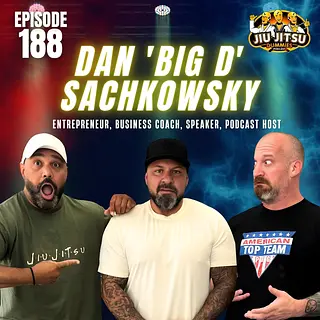
.webp)


