Speaker 1: We're rolling.
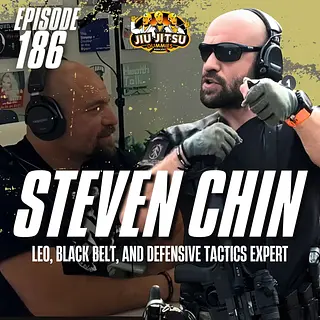
Speaker 2: Welcome back everyone. This is episode 186 of the Jiu-Jitsu Dummies Podcast. We're brought to you by Black Belt Digital Marketing. Anything you need to build your business on or offline, it's website design, SEO, Google Ads, graphic design, printing. We are doing really great with setting up LSA accounts, local service ad accounts for clients because they've made it extremely difficult. Reach out uh at bbdigitalmarketing.com or at Black Belt Digital Marketing on Instagram. We can do a free review of your entire online presence immediately, get you something within just a couple of days. My name is Milton Campus. I'm a black belt training out of South Florida. Uh today we have Stephen Chen joining us. Welcome, Stephen. We're going to bring you back in in a second. Uh don't forget to like, comment, save, share, do all those click, you know, all those buttons, subscribe. Uh we appreciate all your support. Uh again, um joining us today is law enforcement officer Stephen Chen. Uh he's the owner of Direct Action Training, right? And a and a Jiu-Jitsu black belt. Uh we're going to do a few shout-outs, so just be patient with us for a minute. I'm going to toss it to my uh my esteemed co-host Ben.
Speaker 2: Oh, that's me.
Speaker 1: For intros and uh and obviously uh Fight Tape, which uh is doing really well.
Speaker 2: Well, my name is Ben Stark. I'm a third-degree black belt from American Top Team and the
Speaker 1: Nice to meet you, Ben.
Speaker 2: Oh, it's a pleasure, sir. It's a pleasure, pleasure. I'm also the owner and operator of American Top Team Palm Beach Gardens. If you are in the North Palm Beach area and you want to train with the absolute best team around, come check out American Top Team Palm Beach Gardens for all of your martial arts and combat sports needs. Now, fighters, Jiu-Jitsueros, anyone that wraps their hands or gets boo-boos on their joints, you will need athletic tape, and I know exactly where you can get it. FightTape.us. Better prices, better quality. Ignore the big brands. And if you want it white-labeled, we can do that too. FightTape.us. Check us out.
Speaker 1: You reposted that damn packing video, didn't you?
Speaker 2: Oh, no, no, that's a new one.
Speaker 1: That's a new one. Is that a new one?
Speaker 2: Yeah, yeah. I refuse to reuse content.
Speaker 1: Can I tell you something?
Speaker 2: Sure.
Speaker 1: It drives you crazy that I put
Speaker 2: Nuts. Well, you need the
Speaker 1: There it is. I broke the rule. There it is.
Speaker 2: You need the AM ASMR. You need the
Speaker 1: It drives me nuts.
Speaker 2: Putting like packaging in there.
Speaker 1: I can't understand why you don't just grab one stack of tape and put it in there while you're putting one piece.
Speaker 2: Because I need a 17-second video and not a three-second video.
Speaker 1: But you know what? I watched the whole thing to the end.
Speaker 2: Yeah, it locks you in.
Speaker 1: But that ASMR is like, it drives me freaking nuts. You know, you know what's getting me to you know the little thing on the door that the door stop. Yeah. I I have to stop that thing when it's going.
Speaker 2: Really?
Speaker 1: Even though it's going to be like maybe three or four seconds, I have to stop that thing. It drives me nuts.
Speaker 2: Every time I hear that.
Speaker 1: I push the door into the wall. You know, I push it hard into the wall to get it to stop.
Speaker 2: That sound particular reminds me of like high school cafeteria like beatboxing. Like the dude with the pen.
Speaker 1: Oh, yeah. What? Oh, that the
Speaker 2: Yeah, yeah, yeah. Yeah, yeah. I flash back to high school every time I hear that.
Speaker 1: It's like shitty bass in a car.
Speaker 2: It's exactly what it sounds like.
Speaker 1: I watch it. I watch still watch it. I watch the whole thing and it's like nails on a chalkboard the entire time I watch it.
Speaker 2: Like, share, subscribe.
Speaker 1: All right, so uh we are also brought to you by Academysafe.org. Academy Safe is a nonprofit whose mission is to help clean up the martial arts by advocating for background checks, US Center for Safe Sports certifications, concussion training, and a and a host of other things. We have eight pillars uh that we uh certify or check with Academy owners and their staff members. That's the big part of what we're doing. We're not just getting uh an owner or one coach to do a background check. We're getting the entire staff. Ben happens to be a uh a member. Then we have a couple of guys that are just finishing up and they're going to be the CPR, right?
Speaker 2: Kurt just finished last Friday. He did his CPRs and everything. So you guys should have everything now.
Speaker 1: You know, like as an example, Kurt turned 18. We're not doing background checks on on kids. So once they hit 18, they're a staff member. We add them on. You're accredited on the website. You got your stickers that you that you can put throughout your facility. You got your coffee mug and your shirts and all that stuff, right? So, um, you know, we do this throughout the United States and Canada. Uh I am the founder and executive director of Academy Safe. Rob Ingram from McDojo Life. You know those like those funny videos, right? McDojo Life. Rob is our executive VP and together we're just trying to change the world, the way that people find and that martial arts Academy.
Speaker 2: The world.
Speaker 1: The world. Yeah.
Speaker 2: The world.
Speaker 1: You caught me say that, right?
Speaker 2: The world of martial arts at least.
Speaker 1: I'm going to tell you off air some of the things that cuz I don't want to give away the secrets, but you know how I am with that stuff. Like I don't want the whole world to know. But um we are I think that we're going to change the way that these organizations kind of interact. Right? Cuz every organization has its own, every discipline I should say has its like own organization. Jiu-Jitsu specifically doesn't really have anything. You can say IBJJF and I have a lot of respect for them. I know not everybody has their opinion on them and they're, you know, across the spectrum from, you know, really, really good to really, really shitty. Uh but there's nobody that's just like, you know, doing there's nobody doing it. It's not required to do a background check and you're dealing with kids, right? You know, so literally like, you know, the guy that drives up to the school to pick them up for the aftercare program, we know nothing about that guy. We don't know his driving record. We don't know about his personal record, any domestic nothing. There's no requirement. And the school doesn't the school, I don't know if maybe the schools do. I don't know that 100% that they require it, but just, right? Even if that guy's got a background check, you bring him to the school, we know nothing about anybody that they've just, you know, any of the coaches that are receiving those kids after school. We we know nothing about them. So, I think that what we're doing is going to really change the game. Um even, you know, we're talking to some some big affiliations and one of them announced that they're going to be doing background checks. Uh we were in talks with them to like, hey, we could do the we could do that for you. We were already in talks with them, but because they were talking to us and then what happened with Atos, they're like now they now they announced that they're they're doing background checks on all their staff members. So, hopefully they will at least work with us in some capacity and then get those people listed on let's get those academies and people listed on the on the website. So check us out at Academysafe.org. Uh if you're an individual coach, you can you can sign up. You don't need like if you just believe in this and you work at an academy, go on, purchase your package for the year. We'll get you through everything. Um you do not have to wait for the owner to do it. We'll list the academy and list you as a coach there, but it'll show that it's not accredited yet, but it'll show the things that we've certified, the things that you're you've done, including like your again, lineage check, US for Safe Sport, the background check.
Speaker 2: So I was coaching like 15 years before I opened my gym. And if you are a coach, if you are a fighter who makes your ends meet by coaching, forget what the gym does. Do it yourself.
Speaker 1: Yeah.
Speaker 2: One, it is a great resume piece. And two, you can charge more for your services because you have proven to be a higher quality.
Speaker 1: Not only like I go in and I want to like coach the adults program or the kids program. Cuz right people jump around, right? They might coach here for an hour and go some place else.
Speaker 2: I had a career time I coached at like five different gyms.
Speaker 1: But privates. Yeah. To go into a situation where you're like, I'm background check. I'm going to start privates, right? Now, I'm going to say this is the last thing I'll say about it though is like, and I still say, just never leave your kids alone with anybody.
Speaker 2: Yeah.
Speaker 1: You know, you bring them to class, stick around. That's it. Don't send them on on trips to any organizations, uh, you know, tournament, I think. Don't send them away. Go with them. If you can't go with them.
Speaker 2: I'm going to go on my daughter's dates.
Speaker 1: It's going to be great. I'm sure she's going to love that.
Speaker 2: What movie are we seeing, guys?
Speaker 1: Right in the middle, the popcorn.
Speaker 2: You two are great.
Speaker 1: Hey, hey, buddy. That's awesome. All right, last last but not least, thank you to our friends over at Flo and Roll. Hands down the best custom ghee and no-ghee gear in the business. Visit them on Instagram at Flo_n_Roll. Check out the custom designs they've created for academies and competitors across the country. Gym owners, stock up on your ghee, no-ghee kits at Floandroll.com today. Um, remember that you can ask about their pre-order program, which I think is like the the most awesome thing that they offer. So like you're starting in your gym, right? Oh my God, now I got to invest in all the ghee. Do I want everybody just ordering off of Amazon or do I want to give them a uniform? Well, for a few hundred dollars, he will design your ghee, put them on his website, gather a pre-sale order, right? They're not going to get them immediately. You're going to your students are going to order and when there's enough, then they'll place an order. You get the profit or you take that profit and you put it towards inventory, right? You only paid a couple hundred bucks. The orders that came in from the public pay for the rest. Right? So I think that's a really cool program. So, uh aside from that, if you order anything, if you just want to order your belts, your ghee, t-shirts, what have you, no-ghee kits, Floandroll.com, get 20% off with code JJ Day. All right? All right, that's it. We just paid the bills. All right. Stephen, once again, welcome. Uh you are a we could say you're your uh the department you work for. That's not a problem, right?
Speaker 2: Yeah, not a problem.
Speaker 1: Yeah, so you BSO. Broward Sheriff's uh office, right? Um and then you also own Direct Action Training.
Speaker 2: Direct Action Training.
Speaker 1: Direct Action Training. Uh where you are training I like looking at the website, you're training other law enforcement officers, but you'll train like an individual as well. Like somebody who just wants like to, you know, learn how to protect themselves. Right? We're not talking about just traditional Jiu-Jitsu. I you know, you've got weapons training. I saw you not like, right? Knife fighting, right?
Speaker 2: Yeah, most people know me as a knife guy.
Speaker 1: Really? Yeah. Well, we'll talk about it. So you're, you know, somebody can come in off the street or you can go and train a group of law enforcement officers, right? You're kind of doing it all, right?
Speaker 2: Yeah, very diverse. Uh so like I'm a marketing nightmare for those agencies. Uh marketing agencies because I just do so many things, right? Uh but I've been in the game for like two and a half decades. Uh you name a discipline, I did it at at one of its highest levels. So I just I've built uh quite quite a resume at this point. Done a lot of different things.
Speaker 1: Jiu-Jitsu for how many years, right?
Speaker 2: I mean, I started at 15. I'm uh 38 now. So I mean it's it's been a a long road. And uh along that I I did boxing, um, you know, um Brazilian Jiu-Jitsu, Muay Thai, wrestling, uh Pikiti Tursia Kali. Um so
Speaker 1: That's the
Speaker 2: All the Filipino martial arts. Yeah, so I've been in that space and just training for a very long time. I was um professional fighter for the first half of my my my life. So I was doing it like, you know, two, three times a day, six days a week. So that that was a big chunk of my life. When I got out of that, I got heavy into the weapons game cuz I realized that was my missing link, right? Like as far as the diversity of uh, you know, hand-to-hand, ground, stand-up, I kind of had that figured out, but I was like, well, weapons are a game changer. So every time I trained, I made sure I was the worst in the room at whatever it is I was doing, right? So when I was boxing, I was boxing with like world champions, you know what I mean? I was in there with um
Speaker 1: You literally you mean like you were the worst. You were
Speaker 2: Correct. I made sure I was the worst in the room.
Speaker 1: He wants to be the smallest.
Speaker 2: 100%. That's why I changed schools so many damn times.
Speaker 1: Yeah, we were talking about that before we started recording.
Speaker 2: I I was like just terrified of like not growing anymore. That was like my biggest fear. Like I was so performance driven. I I still am to this point in my life. So I didn't care about like the rank, the politics, any of that stuff. I hated it. I just cared about performance. And I just wanted to be better. And anybody who had anything to offer, I was like, yeah, let's do it. But that did get me hated in the community for a very long time. Uh but I'm so glad I did it cuz I wouldn't be who I am today. I wouldn't have the skill sets that I have today if I didn't do that. Like people always ask me today like what's your greatest skill set because I'm very diverse with all these disciplines, but I'm like it's it's exactly that. It's the diversity, the fact that take me anywhere and fight and I'm comfortable there.
Speaker 1: Yeah, you know. You know, I got we've got a couple of new white belts, tough like young, strong white belts. And I kind of just like had this epiphany. I was doing it without really realizing I was doing it. I didn't go into it going, today I'm going to do this thing. But I've been putting myself into they're both really strong. So I'm just putting myself into bad positions to see how they're going to react to it so that I get a different look from the guy that really knows how to do Jiu-Jitsu and like I kind of know what's going to what's going to come out. Yeah, right? Uh I had somebody land on my foot the other night, but somebody got rolled in in another roll and landed on my foot. But anyway, but like yesterday I was just like, oh yeah, keep on yeah, I'm like again, subconsciously I was purposely putting myself into bad positions because it's like, you know, I know what I'm going to do. Let me see what this spazzy white belt's going to do. And it's not, you know, I know everybody like hates spazzy white belts and you want to be careful. But I've I've been doing that. It I feel like it's uh it kind of ties into what you're saying, like being the worst guy in the room. I okay, look, so I'm going to put myself in a really bad position so that I have to fight out of this. As opposed to again, like two guys that know what, you know, everybody knows I'm going to throw the lockdown on them, you know, you know, so you know, right? So everybody knows you start to know everybody's game. But I I look, go ahead.
Speaker 2: Yeah, so I I was big on that. That was always like my one of my worst fears, you know, and like just growing up being in the game for a long time, that whole uh, you know, Lion's Den theory that we talked about with Ken Shamrock, you know, where we'd only train with his students and it left him believing he was better than he was, then he got into the ring or the cage and realized this is a problem. But, you know, you could build that false sense of confidence by never changing rooms and I saw that happen to him and I was like, well, I never want that to be me. So, I was changing rooms constantly. And uh I was best thing I could have done. I mean, it it it had its pros and cons, but I I wouldn't change it for anything.
Speaker 1: What you just described too is is what a lot of guys through I I went through this being at training 12 years, eight years at the same school, um like leg locks. My my coach was an old school guy. We trained mostly ghee. Even when we did no-ghee, there wasn't a lot of heel hooks. There wasn't a lot of like leg game like waist down stuff. And to go to other schools that have been training it and like to get teed up on with with leg locks and foot locks and ankle like I experienced it myself even over the last couple years. I'm just like, wow, I'm really deficient here. I knew we didn't train a lot, but, you know, again, we're we weren't all going after each other's feet. And um, you know, now I'm like, now I know what I'm
Speaker 2: Oh, 100%.
Speaker 1: I got to practice on, you know.
Speaker 2: Yeah, you just got to change rooms. And like leg locks are the best example of that. And like
Speaker 1: For a lot of people, that this is like this is the when I just explained is like the norm for the hobbyist that goes out and goes to the same school all the time and like, you know, the coach is just like, a lot of times it's cuz the coach isn't really proficient in it that they don't teach it, right?
Speaker 2: Correct. 100%.
Speaker 1: You like I I still I tell people, my game is my old coach's game. Cuz that's what he told us, you know.
Speaker 2: Yeah, you're a product of your environment.
Speaker 1: We stayed away from the legs a lot, you know. But
Speaker 2: I used to get so much crap for being a leg locker with 2001, 2002.
Speaker 1: What did they call you? A cobbler?
Speaker 2: They was they called me they called me a cobbler. Uh they called me a shoe peddler. Uh they were referring
Speaker 1: In in in Portuguese, were they saying it to you in Portuguese or were they saying it in English?
Speaker 2: Both.
Speaker 1: Cobbler, what what's the translation for cobbler?
Speaker 2: Oh, I don't know. And then the the the big one that sold stuck out to me was uh that leg locks were thieves' moves. Like this is the behavior of a rogue.
Speaker 1: You were before you walked in, he was telling the story if you want to tell it again, where you got your black belt in Brazil. I I'll let you tell the story, but you mentioned you did a
Speaker 2: Yeah, I I'm a big leg guy.
Speaker 1: You did a heel hook in the ghee on somebody and they were like, no, no, no, not here.
Speaker 2: They're like, you can't do that. I was like, I just did.
Speaker 1: I mean, it's it's banned across all rule sets. Minus high rollers. High rollers are the only event in the world that'll let you heel hook in the ghee. Yeah. So, yeah, he's like, you can't do that. Uh I was like, I just did, but I was like, okay, no problem. Uh I was like, are traditional foot locks fine? So, this this was uh like uh their best black belt. He put him out to me and um 20 seconds in, I get him in the heel hook. And then they're like, hey, you can't do that. I'm like, great, no problem. I was like, can I do traditional foot locks? He's like, yeah, no problem. 21 seconds later, I get him in a traditional foot lock. Same guy. And just now I'm burning through them, right? And I could see like the deficiency, right? In in this whole school. It's like, yeah, they're a black belt, but maybe a blue belt at best as far as leg locks goes. So, it was just uh I was like, oh, well, I'm just going to capitalize on this and it was just like, you know, leg lock field day to this thing. Um but, you know, I grew up with like that early days of Eddie Bravo, you know, like I was telling you earlier, I got to train with um with him quite a few times. Um and even Joe Rogan when he was a a a purple belt. You know, I remember the first time Joe Rogan tapped me and I was like, oh, I can't believe I got tapped by the fear factor guy. He's like, I can't believe you said that. You know what I mean? I was like, it's true.
Speaker 1: You said that to him?
Speaker 2: Yeah. I was like, he's like, why are you look so down, man? He's like, it's cool. You know, like we all get tapped. I was like, no, but I got tapped by the fear factor guy, dude. And he's like, oh.
Speaker 1: He either loves you or hates you right after that. Last time I rolled with him.
Speaker 2: Uh but it it was it was great.
Speaker 1: Were you there for Renato Laranja, the creation of Renato Laranja?
Speaker 2: No. The
Speaker 1: Are you familiar with him? He did CJI announcing. He's a Puerto Rican soap opera actor.
Speaker 2: Yeah.
Speaker 1: His name is literally like orange, the last name is orange.
Speaker 2: I I yeah. But that's not his real name. It's a character he made up with Joe to be this annoying guy who blew up.
Speaker 1: You know who you know Renato Laranja? He does, you know, he calls Ronda Rousey, Honda Rousey, like it's just a joke. It's an ongoing gimmick.
Speaker 2: Oh, so he he he hit the scene. Eddie Bravo and him set up a thing where he would come into Eddie Bravo's class with a black belt with nine stripes on it, interrupt every technique and Eddie would get frustrated and be like, you want some, bro? Come get some. And then Eddie Bravo went to sleep to a North South choke and that was the creation of Renato Laranja.
Speaker 1: Okay. All right, yeah.
Speaker 2: You know? Yeah, I remember the routine that you were talking about where he went to sleep.
Speaker 1: Yeah, yeah, he I that that
Speaker 2: It's surprising that he would even do that. Like
Speaker 1: That's the one that video was when I go, oh, this is a joke. Yeah, yeah. All right. I didn't cuz again, starting when I started.
Speaker 2: It wasn't the one where he chased the naked Joe Rogan out of the locker room.
Speaker 1: Oh, he even goes follows him out to the car.
Speaker 2: Down the street. Come on, Joe Rogan.
Speaker 1: Joe Rogan is just leaving. He's visibly like, all right, the joke's over. Like if it felt like, you know, knowing that it's a joke and then watching him he took it so far.
Speaker 2: I don't think he knew until after.
Speaker 1: Oh, you don't oh, really? Oh, is that oh, okay. So I'm thinking that maybe they knew each other. Oh, is that what it is?
Speaker 2: Maybe. They train at the same gym. I don't know.
Speaker 1: Yeah, yeah, yeah. That guy's that's
Speaker 2: Hilarious.
Speaker 1: Yeah, it's it's just it's when you know it, when like I I the CJ the CJI stuff did you watch CJI cuz like he's he does they give him a little segment.
Speaker 2: Yeah, I know who that is. Yeah, yeah, yeah.
Speaker 1: So it it's a little over the top, you know. It's really weird.
Speaker 2: It's supposed to be. But in a way, in a way that the kids say cringy, it is very real.
Speaker 1: Yeah, yeah, yeah, yeah. The funny thing is like the belt with like the
Speaker 2: Oh, God.
Speaker 1: Does he have it on both sides? Like the like the guy
Speaker 2: I think he's got like 37 stripes or something.
Speaker 1: Who's the other guy? Master Ken? Yeah. I saw Master Ken, you know who Master Ken is, right?
Speaker 2: Yeah.
Speaker 1: I saw a video the other day and I had to go like I had to wait, hold on. Did I see this right? He has his belt, but then he has a third.
Speaker 2: No, no, no, no.
Speaker 1: He has a third like belt.
Speaker 2: He has his belt and he has stripes along both sides and then he just has another belt folded under it with more stripes over it.
Speaker 1: Yeah, yeah, yeah. I I just it just looks like it's a third. What what would you call that? Like this just a belt, right? It looks like a third just Why are there three?
Speaker 2: I got more stripes.
Speaker 1: And then a whole another one with more stripes, which is freaking hilarious. That guy's an act you know that guy's an actor too. Yeah. He's been on a like he's always in like the war movies and like he's
Speaker 2: I think Master Ken might be the thing that that's popped him. He is massive.
Speaker 1: Yeah, yeah, yeah. That's a way.
Speaker 2: It's so spot on though. I mean, like it's not that far-fetched.
Speaker 1: At all.
Speaker 2: And that's what's so hilarious about it. Like foot fist way.
Speaker 1: What is that?
Speaker 2: Um the dude who made Eastbound and Down did a he's a karate instructor movie.
Speaker 1: Okay.
Speaker 2: Like you see it in the memes all the time. There's like a 80-year-old lady and a 60-year-old biker and he's like, careful. Miriam's dangerous. And the guy just like punches her in the face.
Speaker 1: I haven't seen that.
Speaker 2: Oh, God.
Speaker 1: You got to send me that. Just send me a a link or whatever that is.
Speaker 2: No problem.
Speaker 1: So yeah, I mean that that stuff is funny. Like I I don't know how I guess I don't know how they feel about it. I don't know how the Brazilians feel about getting made fun of like that, but I mean I think it's hilarious. You know, and it it is it is
Speaker 2: They have a good sense of humor most of the time.
Speaker 1: Really? I don't know. What do you think? You've been around for a while. I don't know how that
Speaker 2: It depends. Yeah, yeah, yeah.
Speaker 1: It depends on who you're talking to.
Speaker 2: On the day, who's saying it.
Speaker 1: I mean, it depends for everybody. You can tease me way more than someone I don't know can. I mean, you know, I think sometimes, you know, birds of a feather I well, not let me say birds of a feather just like some sometimes like, you know, they uh, you know, they close ranks. A little bit like with with Atos. Like a lot of the like Brazilians, other Brazilian stars were still, you know, having their back. Again, we don't know what happened. By the way, he's back. You saw the video? He's back. Andre Galvao is back running classes at at Atos. You know. I don't know. Thoughts about that?
Speaker 2: I don't believe in California.
Speaker 1: Yeah, well. I said, um, I mean again, you've been around for a while. I don't think I said that I feel like the affiliate system is broken. And I'm going to clarify that by saying cuz I I I posted something like in the midst of all that. I'm like, the affiliate system broken. Tell me it's not. Like challenging people to to to say something. I what I'm realizing is that they don't provide, there's there's no guidance from most of the HQ's. Like right now if up until this just happened, if you just said, prior to this happening with Andre Galvao, could you show me your protocol for somebody reporting an incident and how does it get to you in HQ? So you're in California, I'm in South Florida. I have an incident. What are the what is the protocol for reporting an incident? Like when people report stuff to Academy Safe now, I'm the guy that's getting it. And I the first thing in the message is, if you believe somebody's in danger, please dial 911. It's the first part of my my message, either a voice message or an email back. If somebody's in danger, please dial 911. Um, if you believe that somebody's going to be in danger in the future, please dial 911. And then I, you know, look, we're not a reporting agency. If you have information on one of our members, we can have a conversation and you can report them to us and then we'll take care of it. But we're not a reporting agency that can go out and just like, you know, look at any incident. We just can't. So, um, I don't believe that most like we're coming up with those protocols. We were never we never thought we were going to be some type of reporting agency. So, we're coming up with those protocols. We have a resources page that, you know, kind of says what to do. We've added, I think that every academy should do this. We added uh uh sex offender registries.
Speaker 2: Awesome.
Speaker 1: US, Canadian, and Interpol.
Speaker 2: Awesome.
Speaker 1: Right? Go to our resources page, check out your student list. Yeah. Right? Students become coaches, assistant coaches, non-paid, they're helpers and what could be happening. So, anyway, not to not to harp on that too much, but I don't think anybody could show what their protocols are cuz they don't exist.
Speaker 2: They don't exist. No, there's no checks and balances. There's no oversight. There never has been. And you also have like it's very clicky, you know, and uh a lot of this stuff just will get buried. Uh so it's great that it's like coming to light, you know. It's been in the industry since the beginning of time, but at least now it's actually getting out there and uh people are starting to do stuff about it.
Speaker 1: So like him coming back, I'm like, what are the new protocols? Can you show me what happens if somebody reports now? Because that girl, the first thing she said is she went to one of the owners. She went to his wife and she told her
Speaker 2: You're going to have to learn to deal with it.
Speaker 1: Grin and bear it. Grin and bear it, just, you know, you're going to have to deal with it.
Speaker 2: Or or is this the hey, it's been four months. Nothing's happened. Well, I guess we're back to business. You know, that could be just as equally the case.
Speaker 1: He said he went to he went to law he went to the police department. He goes, they didn't come to me. They didn't ask me. I wanted to let them know that I was available for
Speaker 2: What I've what I've learned from, you know, just criminal justice stuff, especially federally, they're not coming for you until they have the case.
Speaker 1: Yeah.
Speaker 2: Right? Why am I going to grab you and possibly mess it up procedurally or bureaucratically? I can just hang back. You're not going anywhere. You think you're fine. And it might take me two, three, four months. But when I am locked in, I'm going to come get you.
Speaker 1: Yeah, yeah.
Speaker 2: Yeah, 100%. They're they're longer cases for sure and they're work like that. So
Speaker 1: So tell us let's let's talk a little bit about um, you know, what you do with with BSO and what you know, we'll we'll tie that back into what you do as a business, right? This is your business. You have any partners?
Speaker 2: No, it's my business. So it it just made sense to fly my own flag and kind of do my own thing and um, you know, like you said, the company's open to military, law enforcement, and then, you know, other private security professionals, but I do open it up to the civilian side of the house as well. I'm just very selective as to who I work on that side of the house and what I'm teaching. Um just for, you know, operational security on some of the stuff that I'm teaching with military and law enforcement and whatnot. Uh but it's a very diverse company because I just have a lot of diverse skill sets. So I'll do a lot of different things, right? I'm uh working with a lot of corporations for like uh, you know, active killer response and being able to deal with that. And then um, you know, de-escalation programs for, you know, workplace violence. So I'll get into that side of the house too, which is a little bit outside of the realm of some of the more tactical stuff that you're see on the page.
Speaker 1: What's the difference between I know I saw this on your website. Actually, I'm looking at it right. I'm looking at my note. Um, you're not calling an active shooter. You're calling it active killer.
Speaker 2: Uh, so
Speaker 1: Or what what's the do you differentiate between those two things?
Speaker 2: The term has changed so much throughout the years, right? At this point, companies and uh organizations are kind of referring it to as emergency action plans. Um just because it it encompasses everything, right? Now, this could be all sorts of different things, right? This could be like a chemical, knife, shooter, uh there's many different methods of uh killing, right? So it went from active killer to active assailant, but now they're kind of encompass it in uh in emergency action plan, right? Which will kind of kind of break down a little bit of everything. And that that's the best way to go about it too is to have those protocols be a little bit more broad and diverse. Uh and then now you could kind of zone in on particular threats, but still encompass a little bit of everything.
Speaker 1: Okay. Now, any thoughts on that I went home yesterday, turned on the TV. We've got a they drove a car into a synagogue in Michigan. Um Old Dominion University shooter. They who was neutralized without getting shot? Does do we know what the ROTC guys did to that guy?
Speaker 2: Apparently 22 dudes beat that guy to death.
Speaker 1: Really? Yeah. Uh so
Speaker 2: Yeah.
Speaker 1: What are your thought what are your thoughts on what you know about the situation? I know you probably know as much as me, I'm guessing or maybe you're you're tuned in a little bit more to what's actually happened in in those two incidents.
Speaker 2: Still figuring out the details on those incidents. I also don't like to speak on these incidents when they're too fresh just cuz when more information comes out, uh it kind of changes everything. So it's a big part of what I do for the agency. It's just kind of backing up a little bit there. I'm the lead defensive tactics instructor for not just the sheriff's office, but the Southern region of Florida. So all the defensive tactics instructors when they have to get certified, they come through me and then I certify them, right? Cuz um I rewrote the defensive tactics curriculum.
Speaker 1: Are you saying just within the the the the sheriff's department or for anybody
Speaker 2: No, Southern region of Florida.
Speaker 1: So like that means that you've got something with Florida. Like Florida says the state of Florida says you go to this guy. You have to go through this.
Speaker 2: Correct. Okay. So the Florida Department of Law Enforcement, uh they they had a curriculum. When I first got into law enforcement, I saw like what they were teaching and it was just extremely outdated stuff. I was like, oh, no wonder you guys are getting your ass kicked every week. Like this thing hasn't been updated for a very long time. And I was like, why don't we update it? But there's a lot of red tape. They don't really want to take on that project. Um, I I did. Uh luckily, uh the people I were working with had the proper channels for me to be able to go through and help get that done. So I was um, you know, just one of the key players in rewriting that uh defensive tactics curriculum for the Florida Department of Law Enforcement. So I wrote that new curriculum. That got approved, brought them into the 21st century as far as the fight game goes. Uh and then became the lead defensive tactics instructor for the Southern region of Florida. So now I certify all these different DT instructors from different municipalities and uh
Speaker 1: How long how long have you been doing that? How long has that been going on where they're getting when they're getting certified by somebody because it feels like a lot of the the conversations, maybe not just in Florida, but we've had conversations with law enforcement outside of South Florida or Florida as a whole. And it doesn't feel like they're like some guy that did some Taekwondo when he was younger is now teaching defensive tactics. Like how long has that been going on down here? Cuz it didn't it doesn't feel like a lot of these guys should be teaching or should have been teaching.
Speaker 2: Correct. So that that's how it is. So I got in the game, I saw that, um because you're have certain agencies or departments that will, you know, uh they're put someone up to be able to be a general instructor or a defensive tactics instructor for their department. They'll go, they're they're do that class and then they're certified. Um but it's just, you know, it's a two-week class, right? That's not enough by any means to be, you know, a high caliber instructor teaching other people, right? Especially when lives depend on it. Uh but that's normally the standard. So they're try to find someone in their agency that has a little bit of experience. Most of the time it is that Taekwondo guy. And then they're just be like, hey, we're going to send you to DT instructor school. And then that's it. He comes back, he's certified and then now he's rolling out a program. Um that's that's the problem. Uh and that's what most agencies are are doing. So it's been a long process. First of all, to change it, I had to change the curriculum as to what was being taught. Now they have a much better curriculum. But now the hard part is, I don't have that much time with them because I certify them in the two weeks, but there's no follow-up to that program, right?
Speaker 1: That's what the problem. The continuing education is is is where it seems most departments are lacking with just their officers, not even like the instructors. You're talking instructors.
Speaker 2: I'm talking instructor, yeah.
Speaker 1: Okay, now that you certify that instructor after two weeks and now he's certifying a guy that's in the academy for X amount of months training a few hours a day, a week, I don't know exactly how much how much time they have, but then he's put out on the street and there's my dad was a cop that you're talking about, you know, three, four decades ago. There was no continuing ed at all.
Speaker 2: Yeah.
Speaker 1: You only had to like get certified with your weapon once a year. You had to qualify with your weapon. Like I believe it was once a year. There was no continuing ed, no health requirements. You know, it's the, you know, my dad was in shape, but, you know, the big fat guy in the donut, like the stereotypical cop, right? That's the thing because there was no requirements for that person to stay in shape or to to, you know, do anything defensive tactic wise. So you're talking about you only had two weeks with this guy. He might have a few months with somebody, again, for only a few hours a day, but then there's no there's maybe like one week day, eight hours with his officers.
Speaker 2: Yeah, each agency's different, right? So some agencies are going to train a little bit more than others. Um, so uh some agencies will require uh eight hours of defensive tactics annually, right? Um, some will do it every two years. Some every four years. Uh I know some agencies that haven't done it in like eight years and I'm like, why? And they're like, well, cuz people get injured. And I'm like, yeah, well, we're not baking cakes here. Look at what you're asking them to do on a daily basis. Yeah. We should be training them, right?
Speaker 1: What would have to be done for it to actually transition to if you are a police officer, you have to train regularly, weekly, bi-weekly, monthly.
Speaker 2: I mean, I'm I'm sitting here in my mind thinking about the military and I've and I have said this before, right? So our military, right? They're doing PT. I don't know I wasn't in the military, but
Speaker 1: Much more regular basis.
Speaker 2: Yeah, right? But that's what they do until, you know, there's they need to go to war. Let's just say, right? Like they're we need them to do take some action. A cop is doing this every single day. Five days a week, four days a week, whatever, you know, down here in Florida, it's different than New York. You know, usually did a five-day week, right? You know, eight hours. Down here, what do they do? Like three days, 10 hours, 12 hours and then they have like three three days off. You know, fire department does that as well, right? You know, like you work 24-hour shift and then you're off for three, four days. Um, these guys cops are going out there every day. This is like a the potential for something to happen is every single day. And they are the least trained. Again, on the continuing ed side, they are the least trained in almost every department. Even we had the guys on from uh Gwinnett County. Um, they have a Jiu-Jitsu program, but it's not required. So they're they're doing good and they're and they're, you know, again, we talked about like kind of breeding them out, like getting
Speaker 1: And either with the perks, they offer crazy perks just to come and work out for free.
Speaker 2: We were surprised when they said what they get. I was like, I might join. Like they're we'll pay them to come in and train, but it's still not a requirement. They get more money if they train. So, so I guess I I I understand the excuse. I don't agree with the excuse. I understand where, you know, there's only so many hours in the day and, um, you know, you got a kid, you got a family, you got, you know, your work life, you got your home life, you've got things that, you know, you got your honey-do list. But that should be priority.
Speaker 1: 100%.
Speaker 2: When you choose to be a law enforcement officer, like now, you should know that even if the department isn't providing these things or don't require them, that it's something that you should seek out. I would not want to be the fat guy in a lineup. I would not want to be the most out of shape around other officers.
Speaker 1: I feel targeted right now.
Speaker 2: Yeah. I like I sucked my stomach in when I said I don't want to be the fat guy. Um, right? You know, do you want to be that guy? You want to be like, you want to be the baddest guy. You want to try to be the baddest guy in the room. You know, you want to try to be the guy that people could depend on. I don't want to be the guy that shows up on a call and they're just like, hold on, don't don't hold on. We don't need you just yet.
Speaker 1: Exactly.
Speaker 2: And totally like be selfish. Like if you don't want to do it for the public, do it for your family, right? Like be selfish. Yeah. And bare bones, you should at least want to do it for that.
Speaker 1: The I don't want to die at work drive.
Speaker 2: And let's say, okay, so let's also say, we all know the stress relief, release that we get from martial arts and Jiu-Jitsu. Like I could be having the worst day ever and just go into a class for an hour and a half. You know, especially after the rolls, right? When you're done, you I forget all of the problems. Everything that I thought was a big deal, it's not a big deal. I was some guy was just trying to break my arm or choke me out. Somebody was trying to simulate murder on me.
Speaker 1: Friendship. Yeah, right? And everything goes away. It's like I could go in there going, man, I'm going to have to go back. I got to work a couple hours tonight. I got to do and I go home and I'm just like, chill. I'm doing it in the morning. Yeah. And they they don't things aren't things aren't such a big deal. So, you know, not only are you training yourself to be better the next time this happens, but you you're going to be, I think, I was a better husband. I was a better boyfriend before I got married. I was a better person. The way that I treat my employees, like all of that is different because after just like being in the world of Jiu-Jitsu and learning like this isn't that big of a this thing that I think is a big big deal is not such a big deal, right? It it takes that away from me. I think, right? It's like a uh what's that sketch? You know, it's like you erase everything, right? Yeah. For mental health for those that don't know the sketch, right? You know, there's so many things that have already been proven with not not just Jiu-Jitsu. Though Jiu-Jitsu does get a lot of credit, but like hard physical activity, period. PTSD, running, just anything. But like it it helps with you dealing with stuff. Like uh Jiu-Jitsu, the small study was done and it showed Jiu-Jitsu replaces drugs for addicts. And it works as a functional right. Basically, but it's like a healthy addiction. Like people that drink that start smoking, like you replace it with a different addiction. Like heroin addicts get on Red Bull. You're just you're just how it goes. But I know from myself, never having dealt with like law enforcement kind of PTSD, but just, you know, growing up in the 90s, shit gets pretty crazy. And you Florida's a wild place. Let's just be very frank. But they've even showed that uh strenuous physical activity, I guess if you can put it like, turns the volume down on the voices. Yeah. You know. It like it's that uh that drive home where you you drive all the way home and you don't even realize you didn't even turn on the radio. Like cuz you're just in like these good thoughts. Maybe you're thinking about the training or you just you're just going and it's 100% every day. The vibe um there there are kind of equivalent videos where a guy is like uh noise, noise, noise, noise, noise and then cuddles with his girlfriend and then it all goes away. Like that feeling that's kind of Jiu-Jitsu.
Speaker 2: Boobs do that for me too.
Speaker 1: Yeah, boobs do that for all of us. But right, but we know that Jiu-Jitsu is that that volume control for for a lot of us. I know for me, I feel way different.
Speaker 2: Anything combative, right? And and that's what I tell people like like just get into a combative art, right? Like Jiu-Jitsu's uh uh an avenue. Uh wrestling is a great avenue. Uh you know, boxing, Muay Thai, you know, these are all great avenues. Anything that's competitive uh combative, right? Um and competitive. Uh both those things are just going to help you very well, right? You got to have that fear and that danger of like I could get hurt doing this. Like this is that serious. And when that's on the table and you push through that, the more times you do push through that, the better human being you come, right? And the more stress you can handle. And the easier life becomes.
Speaker 1: So often times when I'm watching uh police videos, like the body cams and stuff, it seems that I'd say 40% of the time the the police officer is the one that's kind of like pushing the buttons as opposed to de-escalating, they're escalating. Those are just the ones that we're seeing because those are the ones that are interesting.
Speaker 2: It could be. Well, I mean, those are the ones that go viral. It's never something I'm following. It's just that pops up.
Speaker 1: They're definitely way more good interactions that are happening on a daily basis than than bad.
Speaker 2: 100%. In those instances, it's it's it surprises me cuz this is someone who has to deal with this regularly. It's not like it's the first stop they've done. They're like, you know, let's let's see what it's all about. Like, is it a legitimate like false confidence of having a weapon? So you're seeing a few things there, right? Part of it is like they're mouth-writing checks their ass can't cash, right? There's a little bit of fear going on. So it's like fake it till you make it and they're presenting themselves as something they're not to to hope that that's going to de-escalate the situation. But a lot of times, you know, that could backfire. Most of the time they get away with it. That's why they start doing it, right? Sometimes it's just them being jaded and uh disgruntled because there's just stresses of the job, right? Like that stuff wears on you.
Speaker 1: You as soon as your shift starts, you're like, I'm tired of shit.
Speaker 2: You just experience like life though, right? We're we're talking about the like just in general life, right? Go into a bar or a coffee shop or anything and that loud guy in the corner. We all know that that loud guy is probably the guy that doesn't know how to take care of himself, right? I know that I was that loud guy before I started training Jiu-Jitsu. I was yeah, I was a, you know, I thought I could fight. I had fights. I've won a bunch. And then I got on the mat and I'm like, that skinny guy can beat the shit out of me. You know, I did Muay Thai at my first school. I did Jiu-Jitsu. Like once you realize that, you know, just because he may not look in shape or he's just really long and skinny and no, that's the guy that you got to watch out for and then you kind of like, you know, it humbles you. Jiu-Jitsu humbled me absolutely. And now I'm like, if there's shit going on over there, unless it's somebody that I know or that, you know, okay, somebody's going to get a woman's going to get hurt. Okay, I might get involved. But if there are people arguing over there, I'm over here, man. I'm I'm going this way. I'm I don't I don't want to get involved with that. Cuz what's going to happen? That guy knew Jiu-Jitsu and he hurt this guy and if I have to help somebody, I'm there to help and I'll protect and, you know, if my friends, my family, right? I'm going to be there for them. But yeah, man, I used to be the loud mouth and getting, you know, hey, let's get that guy over. We had a one of the tenants in my building was walking his dog and a guy came down the middle of the two buildings. It's a very small lane between the buildings. Going really fast. It's supposed to be like 15 miles an hour. Come speeding down, parks the car, gets out. And the guy walking the dog, he's a tenant. Out of, you know, very nice guy, out of shape. And tells the guy, hey, why don't you slow down? The guy they get into a verbal altercation. The guy driving the car pulled a knife on him and started chasing him. This is the funny part. His son trains Jiu-Jitsu at my school right across. Little little boy. He called me to now, I come down to walk my dog. All the cops are there. The incident had just happened. He sees me and he calls me on the phone from where he is talking to the cops and they just got him waiting around and he's telling me the story. And he's like, yeah, man, my Jiu-Jitsu skills almost came out. What? What Jiu-Jitsu skills? You bring your son to Jiu-Jitsu and watch. You have no Jiu-Jitsu skills. At the end of that phone call, I said, listen, I hope that I see you on the on the mat for the adults class. I hope you stick around after you I told him that. He thought he had Jiu-Jitsu skills for actually reminds me the first time I got on the mat. My coach was like, hey, what do you know? What do you do? You know, and I'm like, well, I wrestled a little in high school and I'm like, I'm a huge UFC fan. And he just smiled and then just tied me into a pretzel for like a half hour. And I was just like, I loved it. I was I was in love. I was the guy like love it or hate it. I loved it immediately. But this guy thought like, no, next time shut your mouth. You don't know how to take care of yourself. I want to seeing him and having a conversation with him and I walk my dog at night down in Coral Springs by the by the city hall. I have my weapon with me every night. I I had no I feel like I can't stop a bullet. This guy gets, you know, we get into an altercation. I could get stabbed. I'm carrying my I'm I'm 12 years training Jiu-Jitsu. You have zero years training Jiu-Jitsu and I carry my weapon. I told him I said, I don't know why you're out here without a weapon. You need to you're walking your dog. You don't know who's going to come through here. We got a guy that's after a couple of different guys that sleep at the city hall on the benches at night. It's a very nice area in Coral Springs. There are two guys homeless guys that that sleep on the benches in the in the city hall park. Like you don't you're going to you're out here with nothing. I go, I don't let my wife. I don't let my daughter walk. I go, if you're going to walk the dog, you go downstairs. There's a dog run attached to the building. Do not go further than that. Don't leave this building. So, you think like again, it's that, you know, you watching Jiu-Jitsu and you think that you're going to be able to protect yourself. My Jiu-Jitsu skills almost came out. I was just like, you see it a lot. I haven't seen you in an adult class yet. I haven't seen you in any of the classes. He knows nothing about Jiu-Jitsu and he's out of shape on top of it. Sweet guys. Sweet guys. We're now talking like civilian, right? You train civilians as well. You said you're picky, but you train them. So, I've been a licensed gun owner, able to carry for over a decade. And I've never carried because we didn't have the avenues to train properly. I know how to use a gun. I can hit a stagnant target. I can clear all that. But I never had training on concealed carry, concealed draw, gun retention, uh sight or target acquisition from those positions. I I'm blessed. I've been lucky enough to start training in the last three, four weeks. But I'm realizing like, oh, I'm doing like one session a week and I'm gleaning great information. And even though I've attempted concealed draws on my own at home, you know, dry fire drills and stuff, like getting walked through, even just the step-by-step is such a dramatic difference. Like where I'm like, I'll be quick. I'm pretty I suck. I am slow. I can't get a good grip. So like, but even even for these things to come about, I do enough training. I get to the point where I'm comfortable carrying my weapon. What do I need to know as a civilian? A guy walking his dog runs into some asshole or a dude at the mall or some other shit starts popping off like it is in New York. Like as a civilian, what do I need to know before I draw my weapon? Before I I decide, well, firstly, if you can get the fuck out, obviously get the fuck out. I think that's another three-hour podcast, right? The answer to that is so long.
Speaker 2: Yeah.
Speaker 1: But in its most simple terms in Florida, right? Um, if you and or someone around you is in imminent danger, which is right now, right now, of great bodily harm and or death, you can use as much force necessary to stop the threat. That force has to pass objective reasonableness test, right?
Speaker 2: Like actually like distance as well, right? If he's 50 feet away, you can't say that you were in imminent danger. You're like, but not he's got a knife and he's over there. Oh, but they shoot him from 50 feet away. No good. Right? He's got a knife.
Speaker 1: You said something on the last podcast about like 20 feet or six feet.
Speaker 2: If you are undrawn, the guy with the knife at 25 feet is more likely to be successful than you. So this is this is funny. Like I said, I'm a big knife guy. My lineage in uh knife it goes as far back as Jiu-Jitsu, right? So it's there for like I said, make sure it's the worst guy in the room at whatever it is I was doing. So that uh originally started out at 21-foot rule and they've keep increasing it, right? Since then. Uh that was highlighted by uh Dan Inosanto. Dan Inosanto was a first-generation student of Grand Tuhon Leo Gaje Jr. I was a first-generation student of Grand Tuhon Leo Gaje Jr. So that tip of the spear as far as that goes. What that whole 21-foot rule was trying to say was your average person takes about two seconds for a draw stroke and to get shot on target. That 21-foot now 24, 27, 28 is all gone up too is saying that if you stay on the axe, the person could close that gap with a knife before you can get off the required number of rounds to put down a human body, which is average five or six will place rounds to the upper torso. So that's what that rule is showing. However, I don't need uh 21 feet in order to be able to deal with that knife, gun versus knife, right? Um, instructor Zero showed that with Doug Marcaida. Doug Marcaida is another first-generation student of Grand Tuhon Leo Gaje, right? So we all came up under that same lineage. Um, you're seeing in my videos, I've done it um in about three, four feet, right? In order to and then still been able to get my gun out and shoot. The difference is, I work in a circular fashion, right? So I have to redirect that knife, step laterally. Now I have time and space to get that gun out and start pumping shots. What the 21-foot rule saying is you cannot just draw and shoot and stay on the axe or back pedal in a linear line. But as soon as you side step, it shuts down that 21-foot rule. You can now do it at, you know, three feet. You don't need 21. The key is, you have to work in a circular lateral uh line, not a linear line. And that's really what that rule was showing. But it got lost in translation over the years. And then now people just think you need that amount of space or that amount of all right, I think it's a 21 feet I can shoot now. We don't we don't want that, right? That I mean that's that's the misconception of the rule like, oh, well, he's too far. I can't shoot or don't draw. Okay, he's he's passed a certain distance. I need to draw. Well, that rule was just showing that you can't draw and shoot and stop the person in time with the knife. Oh, I see what you mean. That was just like, you're not going to be able to do this. Correct. That's what that was trying to highlight. And then people translated into like, oh, once he hits 21 feet, then I can shoot him. Yeah, exactly. So, or that's good.
Speaker 1: That's good. Today, that's a complete misconception. Or is that now has it become a rule?
Speaker 2: So it's kind of like two different things. You're talking legalities of what distance is, you know, okay to shoot. And then also what is capable, right? Uh what they were showing was capability, saying that you can't draw your gun and shoot uh and stay on the axe with that amount of space before getting knifed up. So knife beats gun. Well, if I understand knife and knife tapping principles and Filipino martial arts and whatnot, I could do it in three feet, not 21 and still make my gun work because I understand capabilities of knife and I understand how to work this appropriately. So that's like that missing part of that rule. The other part that you're talking about is like legalities. Uh if someone is that far away, is that threat imminent? Am I in life or death, uh great bodily harm and or uh deadly force right now at that distance. That has to be able to pass objective reasonableness test, right?
Speaker 1: Okay. I get it. You understand that? You got that? Yeah.
Speaker 2: So it's like two separate conversations that we merged.
Speaker 1: Let me let me answer your question. I don't want to interrupt cuz we're going to have to we're going to have to start the wrap. Um, do you do I I understand that you're who you're training. Do you do just like individual, not individual, but group seminars for just maybe an organization that wants to work with you and and get people trained. For example, I don't know if you know who Seminar Stack is.
Speaker 2: No.
Speaker 1: Seminar Stack is uh is run by a woman whose husband got hit from behind in his cruiser at like 70 plus miles per hour and he got really jammed up and he's good now. They got into Jiu-Jitsu. They found Jiu-Jitsu as part of his therapy. Uh so they got into Jiu-Jitsu, but then they were like, this is amazing. We need to have more cops who get involved. And basically they're a for-profit organization, but what they do is they run seminars and then they might donate some of that money to nonprofits. So they did it with Academy. They also manage Adopt a Cop Charity.
Speaker 2: Excellent.
Speaker 1: Yeah. No, no, no. She does. Oh, she does. Oh, yeah, she does. Yeah, yeah. I'm sorry. Um, she works for, yeah. Um, we'll talk. Okay. Sorry. Um, so, so yes, so yeah, so the woman uh that runs the Seminar Stack is involved with Adopt a Cop. But what they do is they like they were even down here. They'll run seminars. They did a gun retention seminar, uh I think his name is Mike Bland. Do you know who Mike Bland is?
Speaker 2: No.
Speaker 1: Okay. So he did a gun retention uh seminar down at the Homestead. Um, what's his shooting range? Yeah, shooting range training center where they would did the Patriot games a couple weeks ago. Uh like maybe about a month ago. So I went down there, hung out with them. But what they do is they bring in people to do seminars and it's not just they found it because of Jiu-Jitsu, but now they'll do like again, gun retention, grappling, you know, um, uh have different cops come in uh uh Jason Repsh out in uh in uh uh the owner, one of the owners of uh Henzo Gracie Austin, uh comes out. I just uh again ran into him in Austin. Um, so they do these different seminars. I don't do you do those kind of seminars? Like if they had a group of like, hey, we got we've got the officers. We need you to come out and teach a seminar. Is that something that you would do?
Speaker 2: Yeah, yeah, 100%.
Speaker 1: I want to put you I'm asking cuz I'll put you I'll put you I'll just put you I'll put you guys together. I'll let them know, you know, it happens. I've not the first time. I've put them together with some other people. I'm like, I've I've, you know, interviewed somebody and I'm like, I think you really want to talk to this guy. You know, add some value. Especially with the knife stuff. I mean, I think that that's a very misunderstood weapon and misunderstood uh in the community. There's not a lot of people that know how to do it well. There's a lot of bad information out there. And uh that's something that I would love to clean up. That's one of my bigger projects right now. I'm actually designing a knife should be launched in the next three months. Oh, yeah. Uh it's something I've been working on for years. Just it's been my life's work. Um, but once that gets out there, I I'm really going to start kind of going after that knife community just because I don't like a lot of the stuff that I'm seeing out there with it right now.
Speaker 1: How long have you been on BSO? How many years?
Speaker 2: Nine years now.
Speaker 1: Nine years. Okay. Well you any other law enforcement department before that?
Speaker 2: No, no, I came into law enforcement late, man. I uh again, I grew up uh, you know, fight career.
Speaker 1: How old are you?
Speaker 2: Uh 38.
Speaker 1: Yeah. So I I came in uh super late. Um I I started out with the whole, you know, fight career. Then from there, I worked with a private military contracting company in teaching capacity and then I worked operationally. Uh was kind of to and from South America. Uh then from there, I opened up my company Direct Action Training and started to kind of teaching law enforcement, military, things like that. Most of the guys I was training were law enforcement. They're like, dude, your resume stacked. Why don't you like come over here and do this? I was like, sure, I'll give it a try. Got picked up by the sheriff's office pretty late in the game and then quickly rose through the ranks there and and and kind of started my law enforcement career. But uh I I always tell people I've lived like three separate lives, right? Between like the fight life and then like the contracting military contracting life and then now law enforcement, you know. There's on BSO uh specifically, there's no do they have like no age requirement? Cuz I know somebody that's like got on recently, trained with him at my last school. I forget his name, but you know, acquaintances. Um, it's like he looked like he was like in his 30s and he's like, no, I'm 50. I'm like, you just got on. He's like, yeah, I'm like, isn't there an age requirement? Is there no There is, but I think it's in the 60s. So yeah. So you're you're
Speaker 1: Can I go right to a desk job?
Speaker 2: No. No, you got to go through all the hoops. Everybody has to go through the hoops. Uh it's just the way that it is, you know. But I like I was able to accelerate pretty quickly because of my background training and experience. So I was able to get um, you know, the chance to go to SWAT school very very soon, get on the SWAT team very soon. They scooped me up in training uh relatively quickly. Uh and then just been able to kind of, you know, move into that like subject matter expert role for the agency. But uh, you know, I still had to go through all the hoops, but it was definitely more accelerated for me than most. Um, but uh, you know, they saw the potential in me and I thought I was going to hit a lot more red tape, but I actually didn't. They've been really good to me, you know. So, we're going to have to wrap. Go ahead and tell everybody where they can find you.com, Instagram.
Speaker 1: Yeah, so Instagram's easy, just @directactiontraining. Uh you could go ahead and find me there. Um for the website, it's directactiontrainingusa.com. That will also USA or USA?
Speaker 2: USA.
Speaker 1: There's a USA now? There's a .USA? No, uh .com. So directactiontrainingusa.com. Oh, I think I thought you said Did you say .USA? I'm messing up. I have a .US site and it messes with him every time. I can see that. Yeah. I I heard .US. Yeah, you stopped right there. I thought .US. I was like, wait a minute. What? Yeah, so no, it's directactiontrainingusa.com. Okay, my bad. Yeah. So we'll keep that traditional. Uh but yeah, that's the way to get back to uh, you know, all the social media you can get on there as well. Okay.
Speaker 2: Hey, fellow Jiu-Jitsu Dummies. Think about this. How well do you know the people who are training your kids? Does your academy run background checks on all staff members, not just the owner? That's why there's Academy Safe. We mandate those checks, plus crucial US Center for Safe Sport certification and concussion training. But we require even more. Our accredited gyms must also have defibrillators on premises, CPR, first aid, and AED certification, security cameras, verification of coach lineage and ranks, and business insurance. Go. Yes. No. Demand safety for your family. Find an accredited gym at Academysafe.org. Academy Safe, the highest standards in martial arts safety.
Speaker 1: Special thank you to the crew over at Flo and Roll for all their support. Flo and Roll is renowned for their incredible no-gi rash guards, shorts, and leggings. Flo and Roll has quickly become the premier custom apparel provider for academies big and small throughout the United States. Reach out today to discuss your custom order and ask about their incredible pre-order program. You can send an email to
[email protected] or visit their Instagram @Flo_n_Roll and shoot them a direct message. And yes, they can create an awesome custom gi for your academy as well. Visit Floandroll.com to check out their awesome designs and remember, you'll get 20% off your purchase of t-shirts, rash guards, or gis with code JJ Day.
Speaker 2: Is your business getting lost online? Black Belt Digital Marketing is a full-service digital marketing agency that helps you get found, get leads, and grow. We specialize in local and website SEO, so your business stands out when customers search. Our website SEO makes sure your site loads fast, ranks high, and stays ahead of AI-driven search, so customers find you first. More visibility, more clicks, more customers right when they're ready to buy. Grow your business online with Black Belt Digital Marketing. Visit bbdigitalmarketing.com or call 954-220-4932 today.
Speaker 1: And look, I we were a little short because we were a little rain delay. No worries. Um, if you ever want to come back, please like you said, you got your your uh designing a knife, like you got anything going on, please come back. If I forget, don't let me forget. I will put you in a in a I usually let the podcast come out so that they can see it. I'll be like, hey, I'm going to introduce you to this guy. Watch the episode. Um, right? You know, they're definitely open and then I'll put you guys together like in a text and let you take it from there. Um, you know, there could be seminar opportunities. They're in PA. Uh but they, you know, they came down for the Patriot games and they did some stuff down here. So they're, you know, they're and they're expanding and they're they're looking to do a lot of other stuff. I'll tell you a little bit more off air.
Speaker 2: Are you going to Pennsylvania?
Speaker 1: Um, I have no, I'm not going to up to Pennsylvania in April. But because of what's well, there's an April event that I can't go to cuz I'm going away with uh with the wife. And then um, there is the Abu Dhabi. I was supposed to go to Abu Dhabi, but we're at war. Yeah. We don't know what's going to happen there.
Speaker 2: Oh, you're going to go to actual Abu Dhabi.
Speaker 1: We were going to Abu Dhabi for to meet with the WKU during their worlds. Um, their annual world event. Um, skip it. It's yeah, well, they're moving the venue literally going to move to another country. They're in Germany. So they they're moving to another country. So I don't know if the the dates are also going to change, but that one was also during the August event. And then my daughter's also do around that time. So it's kind of like kind of kind of crazy. So, um, I show there there is a Seminar Stack event around that time. That that one's up in PA as well. So I I've gone up there and I've met with them down here. So they're really cool people. They're just trying to give back and and do something cool. But I think it would be a, you know, um, you know, you get on their list of, you know, potential, you know, seminar instructors and it's just, you know, good contact to have. They hey, you want to do this? Now, this is literally like Seminar Stack. They'll up in PA. They'll do a whole bunch of different seminars over a few days. So it's just like this seminar's going on. Maybe this other seminar's also going on or they're back to back. So gun retention, grappling, uh how to work with a partner, you know, uh, you know, cuffing with with a partner, things like that. So they just have all these different instructors come in. So that's the thing. Seminar Stack. They stack these seminars over the course of a uh um of a weekend. They also, um, I believe they have partnered, they've been tagging them. So I know that they were working on it with Subversive. There's a the grappling organization Subversive. I think they're actually going to be working with Subversive. If you follow them, follow @seminarstack. Um, they're actually tagging them and they're like, something cool is coming. And I know that they were working on doing something with them where Subversive would run the tournament or put on an event. Like, right? They have law enforcement guys doing in a tournament.
Speaker 2: That'll be excellent.
Speaker 1: So I think somehow either Subversive is going to be putting on something or being like do like a kind of tournament, you know, bracketed, you know, uh fight card essentially, but with law enforcement and first responders. And they do all first responders. It's not just law enforcement. It's first responders, military, things like that. Uh it's just, you know, hey, uh health, wellness, Jiu-Jitsu for these people that could, you know, that could we'll know benefit from it. Yes. So again, great it's a really good connection. Believe me. I'm I'm I love those guys. Uh so, uh we'll do that. Ben, you want to Oh, me? Do your outro?
Speaker 2: Ladies and gentlemen, boys and girls, children of all ages. If you are on social media, and I know you are unless you're too young and hip, cuz that's what I'm finding out with the kids today. They're not on Instagram. But if you are, check me out MMA Coach Ben on Instagram. I've been on a bit of a lull posting, but I'm back.
Speaker 1: You're on a lull? That's a that's your lull?
Speaker 2: A lull. Yeah. I've posted like one a week for the last like three months.
Speaker 1: Yeah, that's a lull. You've been keeping me active with the with the with the collabs. But check me out there. And of course, get your Fight Tape at FightTape.us.
Speaker 1: I got a mug for you. Oh, perfect. This is for you. Wow, thank you. My go-to coffee mug. It's a great mug. I have I have a t-shirt. I'm going to say do you wear I have a large. Do you wear large or medium? Yeah, large. Large. Good. All right. I got a t-shirt for you. Have has anyone ever told you how much you look like John Silva?
Speaker 2: Oh, I know. I get they say John Silva a lot.
Speaker 1: John Silva who? The guy who barks from the fighting nerds. I got you an Academy Safe t-shirt. It is a large. I love what you're doing. Throw it throw it on uh on the on the high if it's too big. Seriously though. Appreciate it, man. Super close. Yeah. I would that could be you. Super close. Oh, wow. Okay. Most people don't go, oh, wow. They go, yeah, I don't look like that guy. I can see it. Yeah. Or I get Woody Harrelson. I get Woody Harrelson. You look like you ate Jason Statham. All right, listen, we definitely got to go. I know there's somebody else got a podcast starting. Uh check us out at Jiu-Jitsu Dummies for all the ways to watch us and support. Thank you for watching and listening everybody. Peace. Peace, love Jiu-Jitsu.
.webp)


