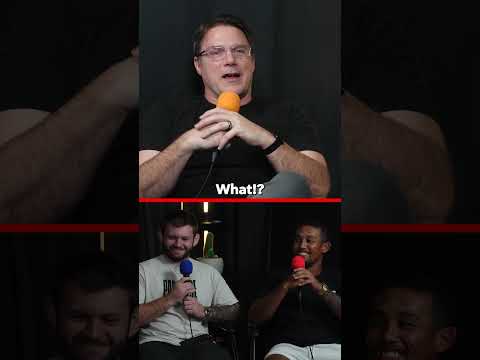
Don't forget to Like & Subscribe to GET SIMPLIFIED!In this episode, Doctor of Physical Therapy, Danny Spaulding explains ACL rehab & injury prevention in Jiu Jitsu.InstagramThe Podcast: @thesimplemanpodcast Come Train with Us: @simplemanmartialartsHosts:@bjjdamien@[email protected]@nickyryanbjjProducer:@allywolskiC4 :@c4energyhttps://glnk.io/44o9/bjjdamienCode: SIMPLEMAN for 15% off your order!Marek Health:🥼https://marekhealth.com Get a 10% discount use code SIMPLEMANSimple Man Merchwww.simplemanma.myshopify.comPronoia:https://www.pronoiabjj.com/Use promocode SIMPLEMAN for 10% off your entire order at checkoutPronoia Instagram: @pronoiabjjCarne Jerky:@carnejerky_Timestamps:00:00:00 Intro 🎙️00:00:30 Welcome Dr. Danny Spaulding 👨⚕️00:02:30 I Have Friends That Are Chiropractors 🦴00:05:27 Why Physical Therapy? 🤔00:09:15 Z Lock Discovery 🔒00:12:05 Combat Jiu Jitsu 🥋🥊00:13:40 Ground Contact Time ⏱️00:15:07 C4 – code SIMPLEMAN 15% off ⚡00:15:31 Marek Health – code SIMPLEMAN 10% off 🧪💊00:15:46 As They Say in Fast & Furious 🚗💨00:18:20 Jiu Jitsu is a Skill Dominant Sport 🧠🥋00:19:10 Most Important Attributes of a Grappler 💪00:21:20 D'arce & Bicep Size 💪🔒00:22:30 What’s the Matter? 🤨00:23:50 Most Common BJJ Injury 🚑00:26:20 The Most Athletic Athletes 🏃♂️🔥00:34:15 NickyRod Defends Motocross 🏍️00:38:41 Lifting for Jiu Jitsu 🏋️♂️🥋00:42:30 Grip Strength?? ✊00:44:38 Fatigued Decision Making 🥴🧠00:46:35 Worst Injury He's Ever Seen?! 😳00:48:45 What to Do After ACL Tear? 🦵🩹01:00:00 Cardio Training ❤️🔥01:11:50 Gay Cardio 🌈🏃♂️01:17:00 WHOOP ⌚01:20:02 @dr.dannyspaulding 📲01:20:31 See Ya! 👋
Transcript
Show transcript
You're listening to the simple man with Ethan Crelinsten, Nicky Rod and Damian Anderson. Oh. Stay a while if you know about the jiu-jitsu. If you don't, you can come too. This is B-Team.
Speaker 1: Guys, welcome back to another episode of the Simple Man podcast. I'm Damian.
Speaker 2: I'm Ethan.
Speaker 3: I'm Nicky Rod.
Speaker 1: Do we have to keep doing this?
Speaker 3: Every time.
Speaker 1: Yeah, yeah, every time because not everyone that that listens to us will know us. There we're going to get guys that want to listen to the guest and we have to introduce ourselves to them.
Speaker 3: I don't know about that.
Speaker 1: Okay. Well, who are you?
Speaker 3: I'm Okay, well I'm I'm Nicky Rod. I don't know. I next time I I might not answer. I might skip that part.
Speaker 1: Okay, that's fine. Well, we have a very special guest with us. Dr. Danny Spalding. He is our basically our physical physical therapist, physio. Um, you know, a lot of us have been injured in the sport on the team and you were the guy that we all went to to make sure that we got back to uh health. Health, yeah, full health, be able to to scrap and compete fully. So, yeah, if you want to give, you know, a better introduction, go right ahead.
Speaker 4: Sure. Yeah. I'm Dr. Danny Spalding. I'm a physical therapist. Uh, performance coach as well. Let's see. I've been working in physical therapy for close to 10 years, coaching before that, working mostly with athletes the whole time. Um, I'd say I really started working with Jiu-Jitsu a lot whenever um, we first met.
Speaker 2: Yep. Yep.
Speaker 4: And then it kind of like rolls from there.
Speaker 2: Snowballed from there.
Speaker 3: Yeah. You have any beef with chiropractics?
Speaker 4: Beef in what way?
Speaker 3: Believe in it?
Speaker 4: Believe in it? Um, I have friends that are chiropractors.
Speaker 3: Yeah, like if you saw one.
Speaker 1: And I hate them.
Speaker 3: Yeah, are you guys like
Speaker 4: It really depends. So, yeah, the chiropractic world, some of it can be um a little bit
Speaker 3: witchcraft.
Speaker 4: less science-based.
Speaker 3: Then uh
Speaker 1: Same, same thing.
Speaker 4: A little bit less science-based. Yeah. And um, I mean, the the the the good thing about it is people go see chiropractors when they're in pain and they get pain relief. But the more important thing is what they do whenever they experience the pain relief. And um, the fault of some chiropractors is that during that window of time where they're pain-free, they don't intervene any further where there's no movement or exercise prescription given. So no real change occurs.
Speaker 2: Continual rehabilitation to avoid.
Speaker 4: Yeah, whether that's like a software update or like physical tissue structural change. And so that envelope of time that that window of time that happens after like a, you know, an adjustment.
Speaker 2: Yeah, good.
Speaker 3: These people get degrees?
Speaker 4: Yeah. Absolutely.
Speaker 3: Seven years.
Speaker 4: Yeah, they get a doctorate in chiropractic.
Speaker 3: Oh, wow.
Speaker 4: Yeah, absolutely. There are a lot of great chiropractors who who do a lot of really good work. Don't get me wrong. I'd say it's a little bit more, it can be a little bit more divisive than uh physical therapy where um you might go see a chiropractor down the street and then another chiropractor down the street on the same street and it's two wildly different experiences. I'd say it's still that way with physical therapy, but it might be a little bit closer to the middle.
Speaker 1: So how do you differ from other physical therapists at, you know, as a performance coach, you know, obviously you're working with athletes. Uh, so maybe there's like physical therapy at Kessler or whatever. But all the athletes or high-level athletes want to go, you know, work with you. What makes you different compared to them? Different compared to other physical therapists?
Speaker 2: Just better in every single way. More handsome.
Speaker 4: Obviously. More better looking. I'll leave that up to you guys to say. I mean, I think there are probably a lot of ways in which I'm similar to other physical therapists. I'm not a magic worker by any means. Um, I think what makes me me is I really care about every client that walks in the door. Um, and I'm very heavily vested in their journey. And so like every time like during our, you know, path working together, like I've cared very heavily about seeing you get back to training, right? And that's that's it's that way with every client. And so I go on above and beyond to really have um a lot of care for each client and to really try to tailor the program around them. And so I don't think that necessarily makes me unique, but that's part of, you know, what makes makes me me, I guess.
Speaker 1: For sure.
Speaker 2: Can we I want to also like get into a little bit of like your origins, like how did you end up choosing physical therapy? Like you probably had a lot of, you know, I don't know, background like your origins leading up to this. Like what made you choose this field of
Speaker 3: I feel like a lot of these guys start in sports. Were you an athlete first and then it was like, this isn't working out.
Speaker 4: Yeah. I actually That's the yeah. I I tore my ACL. I tore my ACL and then I had physical therapy and I thought it was great. So I wanted to be one. No, that was not me.
Speaker 1: Is that actually? Is that it?
Speaker 4: No.
Speaker 1: Oh, okay. I thought I nailed it.
Speaker 2: See? I told you.
Speaker 4: No, that wasn't me.
Speaker 1: Okay, how did it go?
Speaker 4: Uh, actually, I didn't even apply to PT school coming out of high school. Actually, I was quite, I won't dive into the full story, but uh, I was like
Speaker 1: It's a dark and stormy night.
Speaker 4: Yeah, a rebellious high school kid. I played like most sports. None of them really organized. I played a lot of soccer, basketball, a lot of skateboarding and boxing. Those were my four things.
Speaker 1: Skateboarding?
Speaker 4: Yeah. Skateboarding and soccer probably uh were the main two.
Speaker 3: And so like park like park street?
Speaker 4: Yeah, street. I never really did much vert. Um
Speaker 3: Vert?
Speaker 2: Like vertical?
Speaker 4: Yeah, so like half pipes.
Speaker 2: Yeah.
Speaker 4: Yeah, mostly street.
Speaker 2: I know, it's for them that I'm I know what that means. Yeah, yeah.
Speaker 4: So like we would skate on a lot of like uh public school
Speaker 2: Nice.
Speaker 4: public school like grounds and get kicked out. Things like that. Yeah. And so out of high school, I didn't like play organized sports. I graduated. I applied to actually um auto mechanic school to work on like performance cars. Like NASCAR and F1. And I got into that and for whatever reason, I don't exactly remember, but I changed my mind. I'm like, I want to work with people. So I applied to paramedic school and got into that and then
Speaker 2: Got in, yeah.
Speaker 4: I probably got one semester into that, like the core curriculum, and then moved into exercise science because I wanted to um work more in like the performance side of working with people. So you're working on performance for cars and then you moved to performance for people. I guess so, yeah. I think the common thread is like problem solving is really what it comes down to. And then I really liked the exercise science field, but I'm like, I I want to I don't want to be a just a coach for the rest of my life. I want to work at a bigger scale than that. And coaching is great. I still coach to this day, but um, I wanted to work at a higher level, like a doctoral level, but the experiences that I had growing up with doctors was very minimal. We didn't go to the doctor unless we were dying. Um, but anytime we did, we saw a doctor probably for five minutes. I'm like, I don't feel like I have a relationship with a guy. I just go there and get medicine. And so knowing what I did know about physical therapy, there's more of an opportunity to build a relationship with your clients and make a true difference. And so, um, yeah, that's really what led me down that path.
Speaker 2: Yeah, well, I mean, you made a huge difference for me. Like I I, you know, came to I think I was like referred to Collective from like where I was doing physical therapy in Montreal for my ACL.
Speaker 4: Yeah, I remember that.
Speaker 2: And then uh, yeah, I came to Collective and then we ended up working together. I guess they just kind of pair you with someone. I don't know how that exactly worked, but
Speaker 4: At the time at Collective, um, it was a business partner and I and um, it was us two primary primarily seeing clients. And my business partner partner at the time was more on the leadership side and I was seeing more of the clients. Uh-huh. And I just I think that's primary primarily what drove that.
Speaker 2: Okay.
Speaker 4: And I think the person that you were introduced to like just directly referred you to me.
Speaker 2: Okay.
Speaker 4: Said, hey, this is your guy.
Speaker 2: Yeah. So yeah, then we started working together. We did a lot of a lot of great work there. I remember there was like like heavy integrated in my routine. Yeah, that was when I first landed in Austin, really.
Speaker 1: You tell everybody like what injury that was, what happened?
Speaker 2: Yeah, so uh I for sure said this a bunch of times on the podcast, but yeah, I tore my ACL at some point. I don't know exactly when it actually tore. Um
Speaker 3: Wasn't with this guy?
Speaker 2: No, that was different knee. I think.
Speaker 1: Was it the same leg?
Speaker 3: Piece of shit.
Speaker 1: Sorry.
Speaker 2: No, it was my right.
Speaker 1: That was Z-lock before we knew what Z-lock was.
Speaker 2: No, we knew what right there. That's the thing. Dude, that was a crazy That's another story.
Speaker 1: Yeah, it is a tangent.
Speaker 2: Tangent, tangent. So I I don't know. Okay, we'll get to that after, I guess, if we remember. But my ACL tore at some point. I don't know exactly when. It must have been some weird ankle lock toe hold thing. ACL tore and I'm just like, oh, my knee and ankle hurt. I'm going to chill. This was like when I was still in Montreal, not really even going to Jersey. And uh, or maybe it was when I was kind of going to Jersey. I don't know. Five years go by and then I tear my meniscus, like fucking around playing soccer in the gym. It was stupid. And then I go up to Montreal. Yeah, that was funny. I go up to Montreal. I get uh MRI and um it's a funny story about why I chose to get the MRI too, but doesn't matter. The ligament stuck to the skin. That's another story.
Speaker 1: You can bring it up.
Speaker 2: Nah, I don't.
Speaker 1: Don't say the name.
Speaker 2: No, I don't want to. I don't want to.
Speaker 1: I haven't heard this story. What is it?
Speaker 2: He met he saw a chiropractor. I saw
Speaker 1: Is that why you brought the chiropractor thing up?
Speaker 2: No, well, he brought it up. Not me.
Speaker 1: Or you you brought up the chiropractor.
Speaker 2: Yeah, yeah.
Speaker 1: Bring it up. A chiropractor.
Speaker 2: Doesn't matter, doesn't matter. Anyway, I fucking I'm like, okay, I need to go get an MRI. So I go to Montreal. I'm like, my knee is not getting better. It's like a week goes by, you know, usually a week goes by, you're like, okay, I can use my leg again. It was like not not healing. So I go back to Montreal, get an MRI and uh the meniscus was like really chewed up. And they're like, you also have no ACL. It's this it shows signs that it was it's been torn for a long time. It's not like a recent tear. And it was like dental floss. That's what they told me. It's non-existent. So what's happening is my knee was shifting, causing my MCL, sorry, my meniscus to tear. And they're like, if you don't fix that ACL, your meniscus is going to keep tearing and you're going to end up back here. So I'm like, all right, I get the ACL surgery. I got a uh quad tendon graft and a small meniscectomy. And uh yeah, then yeah, so I'm in Montreal for like, you know, recovering for like three or two months or something. Then I'm like, all right, time to go back. And then uh we link up at Collective and get to work. Yeah.
Speaker 1: Oh yeah. And you guys got to work and then how soon after ACL surgery did you compete? Cuz I think the first one was CGI or uh Combat Jiu-Jitsu.
Speaker 2: The first one back was Combat Jiu-Jitsu. Yeah.
Speaker 1: Yeah, yeah, yeah.
Speaker 2: And I remember
Speaker 1: You slapped the hell out of the guy.
Speaker 2: No, yeah. Dude, I mean, me, but this guy freaking gave me the knockout.
Speaker 1: Yeah. There so I knocked the guy out, but then you go up and uh you take his back and then it's quiet there.
Speaker 2: Yeah.
Speaker 1: And at first he's hitting him.
Speaker 2: But it's like awkward. I'm like, I'm like, I have to control because like you're so you're so wired to like control the back and no point in in my years of training do I do this. Yeah, even I was training for it in the gym, but I'm like, no, this feels wrong. So I'm like keeping my body close and just going like this. I'm like, this isn't fucking doing anything. So I go and I start making these fucking crazy sounds and
Speaker 1: He's like grunting and just the guy's like, oh, he's like
Speaker 2: Oh, it was so sick. It was fucking cathartic, man. It was incredible. And uh yeah, anyway.
Speaker 1: It's like those horror movies where they're stabbing someone and they start liking it.
Speaker 2: Exactly. I love it.
Speaker 1: Maybe we should try to do it. Try that.
Speaker 2: Stab someone?
Speaker 1: Yeah, yeah.
Speaker 2: Maybe.
Speaker 1: Maybe you'll like it.
Speaker 2: I don't condone it, but
Speaker 4: Yeah.
Speaker 2: No, you condone it.
Speaker 4: Maybe that's the flip that switched the flip for you.
Speaker 2: Maybe. Killer instinct. There we go. So, yeah, I fucking I'm
Speaker 1: So how soon after?
Speaker 2: I started training uh six months. I remember like I did one round five months in uh with your with Jay and everyone was like, you guys were watching, you're like, bro, stop. You guys are going crazy. And I was going bonkers with him and uh I'm like, okay, that was maybe dangerous, but that was five months in, like about five months. And then I pulled back a bit, waited like another month. We kept doing uh, you know,
Speaker 1: We were going pretty hard.
Speaker 2: And we're going, yeah, I was just trying to do as much as I could possibly do and my knee was fine and uh then yeah, competed eight months after after surgery.
Speaker 1: Eight months.
Speaker 2: Yeah, eight months. Long answer, but yeah. And uh won and then yeah, just kept working together, kept, you know, building like performance, strengthening the knee.
Speaker 3: You guys were doing one exercise, you and Nikki, and it's like you time like jump down from a box and you time
Speaker 4: Ground contact time.
Speaker 3: What is it?
Speaker 4: Ground contact time.
Speaker 3: Yeah, he came in and he was like, I would destroy you guys in ground contact time.
Speaker 2: Ground contact time.
Speaker 3: What am I talking about, Nikki? What exactly is it?
Speaker 4: So you drop off a ledge, right? And then there's a hurdle. You drop off the you have to drop off the the box. There's a 12-inch box.
Speaker 2: A box.
Speaker 4: And then you have to hit the ground and then jump over a hurdle. And then there's like a little device that has laser beams and it tracks how much time you spend on the ground before you jump.
Speaker 3: Nice.
Speaker 4: And so it's just really measuring like your
Speaker 2: How fast you get off the ground.
Speaker 4: reactive strength.
Speaker 3: I don't know what you told him, but he thinks he is has mastered this ground contact.
Speaker 2: I beat you all in ground contact time. I challenge you to ground contact.
Speaker 4: Uh I mean he's
Speaker 1: Well, to be clear, he did kind of master it and he beat me on it too.
Speaker 2: Shit.
Speaker 4: Yeah.
Speaker 3: Nice.
Speaker 4: Yeah.
Speaker 1: He wouldn't be.
Speaker 4: So he the first the first day, yeah, she beat me the second day.
Speaker 2: He forgot to preface with this.
Speaker 4: She yeah, she beat me the second time around. Yeah, yeah. The first day we did it.
Speaker 2: He's like, just this one time, just one time. It was once, it was one time.
Speaker 4: He got in fractions of a second. He got like his his fastest time was like 0.153. So it's like I don't yeah.
Speaker 2: Imagine like the laser's here, he he like jumped around the laser, you know?
Speaker 4: Yeah.
Speaker 3: If I wanted to, I wouldn't even touch the ground. That's how fast I'd be.
Speaker 2: You just float, levitate.
Speaker 3: I just I just did it now. You none of you even saw it.
Speaker 2: Boom.
Speaker 4: Yeah, yeah.
Speaker 2: Did it again.
Speaker 4: So he was very fast on that. He did he beat me by 1,000th of a second.
Speaker 1: A C4 and big plates.
Speaker 2: Ah, a C4 and heavy weights.
Speaker 1: And explosive traits.
Speaker 2: And some impressive rates.
Speaker 1: Strong like primates.
Speaker 2: You'll say, ah, great when your deadlift dominates.
Speaker 1: Was that good?
Speaker 2: No. It was incredible.
Speaker 1: Ah?
Speaker 2: Really bad.
Speaker 1: Nah.
Speaker 2: But this, this is good. Are you feeling stuck? Most guys just accept feeling stuck. Stress, low energy, bad sleep, like it's normal, but it's not. So stop feeling stuck, fix the root issues and start living like you used to.
Speaker 4: But like they say in Fast and Furious, winning's winning.
Speaker 2: Yeah. That's right.
Speaker 4: Right?
Speaker 2: Quarter mile.
Speaker 4: So
Speaker 1: All that.
Speaker 4: That's one metric that we that we checked.
Speaker 1: As they say in Fast and Furious, all about family.
Speaker 4: Yeah. And then we brought up and we were we were like, what do you think the other guys could get? And then he's like, well, I could beat him.
Speaker 2: I could beat him.
Speaker 1: Did you say that? You said that?
Speaker 2: He said this, I could beat him. I could beat him. Yeah, yeah. All right, bro.
Speaker 4: Yeah. I don't want to speak for him because he's not in the room. I don't like to do that, but
Speaker 1: It's okay. Well, we're aware that.
Speaker 2: Yeah, we know he's on that.
Speaker 4: Yeah, yeah.
Speaker 3: He like doesn't talk much, but when he came after that, that's like the first thing he said. He said I would kill you guys in ground clearance.
Speaker 2: Ground contact time.
Speaker 3: Ground contact time.
Speaker 2: You're no match for me.
Speaker 1: It was funny because uh when the clip got posted, it was like all of our faces and then he says ground contact time and you see me go, Yeah.
Speaker 2: Yeah, you're like
Speaker 1: What is this now?
Speaker 2: Okay.
Speaker 1: Okay, Nikki. So that's like that's one metric that we can we can measure. There are plenty others. I mean, I I I am confident and we can just everyone do it. I'm I'm pretty confident that based on what I've seen, he would probably be top two.
Speaker 2: Top two?
Speaker 1: But we'll see.
Speaker 2: Who's number one?
Speaker 1: The black man.
Speaker 3: The blackletics.
Speaker 2: The lightest black man. Yeah, that's tough.
Speaker 1: All right, no, be honest, who who did you think it was going to be?
Speaker 4: Well,
Speaker 2: Come on. If you don't
Speaker 3: Cuz Nicky Rod's not touching the ground.
Speaker 4: Well, I'm the I mean, I am the I am the heaviest, but I'm also the fastest.
Speaker 1: Well, I also haven't like worked with you directly, so I haven't really seen you move on that.
Speaker 3: Oh, you haven't worked with all of us in terms of
Speaker 1: Yeah, that's true.
Speaker 4: Yeah.
Speaker 1: Who's faster, me or Ethan, you think?
Speaker 2: Me, me, me.
Speaker 4: I it's hard to say to be honest. I think it would be I think it would be like a coin toss between you two.
Speaker 1: He's black.
Speaker 2: Dude, he's black.
Speaker 1: This guy over here.
Speaker 2: Juletics.
Speaker 1: Think about think about what said that never. No, but Ethan Ethan is pretty quick.
Speaker 2: Quick? No, he's strong. He's not quick.
Speaker 1: I'm quick.
Speaker 2: I'm quick, strong and quick and smart and handsome too.
Speaker 1: Dude, think about the Danny.
Speaker 2: And rich.
Speaker 1: Think about the Filipinos, Manny Pacquiao, some of the fastest punchers.
Speaker 2: I know.
Speaker 1: And Usain Bolt.
Speaker 2: Mordecai Richler. He wrote like what book did he write? The Schindler's list or some shit? I don't know. I don't know. I'm fucking off.
Speaker 1: Oh, whatever. I don't think uh Oh, we should all do it and we'll see.
Speaker 2: We'll do it.
Speaker 1: We should we should.
Speaker 2: Yeah, yeah.
Speaker 4: But yeah, we were talking about like putting together like a a grappler because you know like the NFL combine.
Speaker 1: Yeah.
Speaker 4: Like a grappler combine.
Speaker 1: Grappler combine.
Speaker 4: Like different performance tests to see where everyone ranks.
Speaker 1: I'll do it. It's like we're doing like there's not a lot of superior athletes in this sport. These are the few.
Speaker 2: I was about to say that.
Speaker 4: I've come to notice. I've come to notice.
Speaker 2: Jiu-jitsu has some of the least athletic athletes.
Speaker 4: Well, it's more yeah. Well, I mean, because it's such a skill dominant sport.
Speaker 2: Exactly.
Speaker 4: It's all about your fucking brain.
Speaker 2: And you can overcome your lack of limitations.
Speaker 1: And then when you have both, like us, it's different.
Speaker 3: And yeah, that matters it's the length of the match matters as well. Like in a six-minute match, the athletic guy is going to do better as opposed to a 15 or a 30-minute match.
Speaker 2: Length does matter.
Speaker 1: Yeah.
Speaker 2: Yeah.
Speaker 1: How you can use the time.
Speaker 2: It's how you use the length of the match.
Speaker 3: The motion in the the transitions, the shape of the match.
Speaker 4: So if you were to if you were to make like a super team and you were going to say, I'm going to rank these guys not on their jiu-jitsu skill, but on physical attributes, what three attributes would you put at the top?
Speaker 3: For for grappling?
Speaker 4: Yeah.
Speaker 3: I would say uh stationary stagnant strength, stationary strength.
Speaker 2: Isometric.
Speaker 3: Isometric strength.
Speaker 2: Stationary stagnation.
Speaker 3: Yeah. Isometric strength. Um say maybe some flexibility.
Speaker 2: Hip flexibility.
Speaker 3: Hip flexibility.
Speaker 2: Hip flexibility also matters the most.
Speaker 3: like length, lankiness. I'd rather
Speaker 1: Oh, but that's not athleticism or would you consider that?
Speaker 2: Oh, is that does that count as what you're talking about?
Speaker 4: It counts. It counts.
Speaker 3: I would say uh then the hip the hip to arm length uh ratio. Skinny hips and long arms or maybe length of torso.
Speaker 2: What's a nice a nice physique.
Speaker 3: Small torso, short torso.
Speaker 2: Short torso and long arms.
Speaker 3: Yeah.
Speaker 2: Nice set of tits.
Speaker 3: Yeah. Beautiful long hair.
Speaker 1: Wait, what are we what was it again?
Speaker 2: Nice birthing hips.
Speaker 3: Skinny hips, short torso, long long arms.
Speaker 2: Oh yeah.
Speaker 1: It's like the perfect body.
Speaker 2: It's like those video games where you can like make your character different shapes and stuff.
Speaker 1: Yeah.
Speaker 2: I definitely think transvestites. They just kill it in the female.
Speaker 1: Dude, they'd fuck them up, man.
Speaker 2: We could just we could just identify.
Speaker 1: Still smother milk mama's milk with uh double Ds, like dude.
Speaker 2: Sign me up.
Speaker 1: Big old bag of tits.
Speaker 2: Oh no. All right, anyway. Uh attributes.
Speaker 1: Flexibility and then I do think like wingspan and leg span matters.
Speaker 3: That's what I was saying. Short small torso, long long arms.
Speaker 2: Length. Lank.
Speaker 1: Lank.
Speaker 2: Oh, lank, yeah.
Speaker 1: Lank.
Speaker 2: Lank.
Speaker 1: Mikey's the opposite. Mikey's like long torso, short legs.
Speaker 4: So like two two grapplers in the same weight class but one with skinnier longer arms versus more muscular shorter arms, you would pick the lankier guy.
Speaker 3: I think often times, often times.
Speaker 1: If if they're equal.
Speaker 3: All things equal.
Speaker 1: All things equal, yeah, I think.
Speaker 3: I have long strong arms. I built this over 10 years.
Speaker 2: I have long frail arms, but they're so long.
Speaker 1: I guess actually it really depends on they could they could be the same technically, but stylistically, the longer person has to play more of an outside, you know, back taking game or triangle game versus like the smaller guy can be more inside position.
Speaker 3: It's like a stocky.
Speaker 1: Yeah.
Speaker 3: I was talking to Jay about this the other day. It was like cuz he was like, I was darcing him. He was like, why is your darce getting so well? And he mentioned like the size of my biceps. I was like, I think this matters, right? The size of the biceps is more difficult to actually acquire the darce, but it's it's it's it secures once you get it. Hold on. It secures position uh better. So like if I'm controlling front head, it's bigger biceps, so it's harder to back out, but it's also more difficult to actually lock it in.
Speaker 1: So it's harder for you, but easier as well.
Speaker 3: Exactly.
Speaker 2: So you're saying easier to control, harder harder to finish because of the bicep.
Speaker 3: Whereas like Rotolo has small arms, they can slap it on real quick. Me, I have to control first, but I have better control because of the the I can close that gap better.
Speaker 2: Why can you is it because you close the gap better because your biceps are enormous?
Speaker 3: There's less space.
Speaker 2: When I'm talking to setting in my
Speaker 4: Your biceps occupy this occupy the space.
Speaker 3: Yeah. You can't you can't uh create or destroy mass.
Speaker 2: Yeah, like our last guest told us.
Speaker 3: Matter.
Speaker 2: Yeah.
Speaker 3: Matter.
Speaker 4: It is only transferred.
Speaker 2: Yeah, but well, mass too. I mean.
Speaker 3: No, no, no.
Speaker 2: Unless it's a black hole.
Speaker 3: You can't destroy mass.
Speaker 2: The black hole they like it's kind of just goes away.
Speaker 3: Mass it's
Speaker 1: The the thing is he's like, oh, black hole, it just shrinks the the the singularity.
Speaker 2: The amount of matter.
Speaker 1: Are mass and matter the same basically?
Speaker 2: Well, mass is a measure mass is a measure of matter.
Speaker 1: Measure of matter.
Speaker 2: It's a volume of matter.
Speaker 1: And it matters.
Speaker 2: It's a matter of fact.
Speaker 4: It's a unit of measure.
Speaker 2: It's a unit of measurement of matter.
Speaker 4: of matter. Yeah.
Speaker 2: Oh, I guess you're right. You can't destroy mass, I guess.
Speaker 1: What's the matter?
Speaker 2: Nothing.
Speaker 1: So, okay, here.
Speaker 2: You can shrink mass, huh?
Speaker 4: No, you just change.
Speaker 2: You can shrink mass, but it makes it more dense because it's occupying less space.
Speaker 1: So it ends up being the same.
Speaker 2: No, but you can shrink the volume of mass.
Speaker 1: The volume can change.
Speaker 2: Yeah.
Speaker 1: But the mass is the same.
Speaker 2: Is that not the same as shrinking mass?
Speaker 1: No.
Speaker 2: Okay, imagine remember when he said the sun could shrink to a black hole?
Speaker 1: Yes.
Speaker 2: The volume shrinks, but it weighs the same.
Speaker 1: Yeah, but the volume is mass.
Speaker 2: Is volume not the same as mass?
Speaker 1: No, volume is not mass.
Speaker 2: Can we chat GPT? Can we Google chat GPT? Is volume the same as mass? Question mark.
Speaker 1: It's okay. I'll let the internet to say.
Speaker 2: It's fine. It's fine.
Speaker 1: Everything's fine.
Speaker 2: Let the internet tell me.
Speaker 1: I just want to know.
Speaker 2: Let the internet tell me I'm wrong. It's fine.
Speaker 1: Your friends are telling you.
Speaker 2: Yeah, well, okay.
Speaker 1: You trust us.
Speaker 2: You guys are right a lot of times. Maybe we're wrong.
Speaker 1: What's the answer?
Speaker 2: Mass is how much matter something contains, volume is how much space something takes.
Speaker 1: I need a yes or no.
Speaker 2: No.
Speaker 1: Thanks. Okay. So
Speaker 2: You're fired. You're not fired. You're not fired. You're hired.
Speaker 1: So dealing with jiu-jitsu athletes, what's the most common injury you see from us? I feel
Speaker 2: The ego.
Speaker 1: There's that.
Speaker 2: There's no physio for that one.
Speaker 1: That's a part of injuries for sure. Dude, I really feel like jiu-jitsu is such an injury heavy sport. I don't see the same amount of injuries in striking to be honest.
Speaker 2: You get the injuries up here.
Speaker 1: If you're training intelligently, you're you're your body's always
Speaker 3: You see it up a lot like catastrophic injuries, motocross guys.
Speaker 1: Okay, okay, but
Speaker 3: They get smashed, man.
Speaker 1: Jiu-jitsu, jiu-jitsu. What's the most common jiu-jitsu injury?
Speaker 4: Uh, the most common uh
Speaker 2: Dreaded. Sorry.
Speaker 1: What?
Speaker 2: Sorry, nothing.
Speaker 4: Most common injury in jiu-jitsu that you've seen. Yeah.
Speaker 2: The most common injured body parts that I see is knees, elbows, ankles. Knees, elbows, ankles. Like in that order? Yeah. Knees, it's like ACL, meniscus. Yeah. MCL, LCL. Yeah. Yeah. Knee. And then elbow. I mean, it's the sport of like cranking joints past their end range, so. Yeah. A lot of ruptured ligaments.
Speaker 1: Fucking hell.
Speaker 2: And then ankles, everyone's cranking on ankles and you kind of I feel like everyone kind of lets ankle locks go a little.
Speaker 3: The ankles are pretty robust robust.
Speaker 2: Yeah, they can take a little beating, you know?
Speaker 1: Well, I I don't think they're actually robust. I think they break, but we can we can operate we can operate still without full stability. Like I think
Speaker 3: I have full like calcification around my ankles.
Speaker 1: Calcification?
Speaker 4: What makes you say that?
Speaker 3: Well, I maybe the the calcification is the wrong word, but they're three times as big as they've ever been.
Speaker 1: They're just permanently that size.
Speaker 3: For years.
Speaker 1: If we were to transition to like football or female football or basketball where we constantly pivot, our ankles would be shot. But in
Speaker 2: Speak for yourself, dude.
Speaker 1: Okay. Oh, you mean if we needed to do that.
Speaker 2: If we don't need the stability as much.
Speaker 4: Well, you're pivoting quite a bit in MMA, right?
Speaker 1: Not as much as not as much as a full sprint.
Speaker 2: Not as much as like a field sport.
Speaker 1: Yeah, yeah, that's the thing. And um I will say my feet are in constant pain. But
Speaker 2: Really?
Speaker 1: your kicking elbows.
Speaker 2: It's from kicking stuff.
Speaker 1: It's from kicking. It's not from uh it's not like my ankles.
Speaker 2: My ankles have been fucking shish kebabbed over the years, but like they're they're okay.
Speaker 1: They don't hurt?
Speaker 2: No. Can you sprint and and pivot? I can, but probably to a much lesser ability than if I didn't have my ankles.
Speaker 1: Probably have a bad ground contact time.
Speaker 2: You think the best athletes in the world are NFL players? Do I think so?
Speaker 3: Yeah, the highest level of athleticism is like NFL guys.
Speaker 4: The highest level of athleticism. Cuz when I think about like like the top like the reaction time and like agility, I'm thinking of like a Saquon Barkley or or someone of that level that can like in an instant go from like sprinting in one direction to jumping to back to cutting, back to full sprinting.
Speaker 2: At like 200 and something pounds, right?
Speaker 3: And 200 miles an hour.
Speaker 2: 200 miles an hour.
Speaker 4: Some of the some of the best athletes that I have seen have been in the NFL, yeah. working with some of those guys directly. And then even in in the NFL, there's like skill guys and then there's like non-skill guys and the skill guys are like, you know, DBs, receivers, things like that. People that have to constantly receive information and make decisions on the fly while operating at their highest. Yeah, cuz I I like I I watch NFL sometimes and I don't really care about the teams, but sometimes it's pretty amazing to see the actual the physical capabilities of some of these how they're moving their body. Yeah, it's it's it's uh it's wild to see like what humans are capable of.
Speaker 4: Yeah, I mean it's hard to say. I don't think I mean, I think an American football player would be up there, but like anytime you evaluate a sport for athleticism and essentially the qualities of a sport fall into four quadrants. There's like the the physical, the psychological or mental, tactical, and then the technical aspect. Right? And so to any sport, there's like a psychological component, like their confidence, you know, how quickly they can bounce back from, you know, taking a beating or like in the match itself, how quick how quickly they can, you know, lose a play or lose a position and think of something on the fly and um, you know,
Speaker 2: Fire it back.
Speaker 1: Stay positive.
Speaker 4: Exactly. Yeah, yeah. Or if a move gets hit on you, like remaining calm.
Speaker 2: Yeah.
Speaker 4: Yeah, so that's like psychological. And then there's technical, like you've obviously like been against guys that are very technical, but they're not maybe not be they might not be very physical.
Speaker 2: They're a dog.
Speaker 4: Yeah. So there's like, you know, the technique and then there's the tactics, like the planning, the execution, how they could just basically analyze what you're going to do before you even do it sort of thing. And then there's the physical component, which is like the the fancy thing, right? The strength, their body fat, how fast they can run, how high they can jump. And so like looking at sports through those lenses, football, American football is definitely up there because certain guys have to express all those things at a very high level. But then you look at other sports that also have to express things like that at a very high very high level, right?
Speaker 2: Like what?
Speaker 4: Like MMA. MMA is very high up there.
Speaker 2: Tell me about it.
Speaker 4: No, it's not as high as jiu-jitsu though.
Speaker 2: It is because it's you kind of have to express all those qualities at the same time. Whereas like, so to speak on that for a second, like in football, right, you have a team around you. So you can receive information from your teammate. Maybe you slip back 5%.
Speaker 1: Someone catches up 5%.
Speaker 4: Someone picks up that, right?
Speaker 1: Yeah, yeah.
Speaker 2: But in the gladiator, the gladiatorial.
Speaker 4: And in the MMA, it's just you and the other guy and you're receiving information constantly, right? And so all those things are just on a much higher display. And uh if there's a discrepancy between you and your opponent, it's much more visible.
Speaker 1: That is true.
Speaker 4: So I would say like top level MMA fighters are definitely going to be up there. Probably a much more heavy favor in like the mental aspect in that. Like obviously all the other physical, but like if a guy a guy can have all those like strength, athleticism, tactics, whatever, but like the mind.
Speaker 2: Dude, like bro, your brain is like your biggest weapon in there.
Speaker 1: I I really yeah, the the psychological portion in MMA.
Speaker 2: It's like 80%.
Speaker 1: Dude, some of these guys are not that good.
Speaker 2: The more I watch it, the more I think it matters more and more. Like I see guys that are like, how do they get this far? It's they're just like fearless dogs. They don't get tired because they're not nervous, they're not scared of shit. They just go out there and they perform way better than I I would think they're going to perform.
Speaker 4: Yeah, and there's there's such a rabbit hole too because some guys also like some guys are like the quiet performers, so they show up on game day or match day and they have no headphones on and they're just like, I'm ready. And it's just like internal motivation. And then some guys need like the music at its highest.
Speaker 2: Yeah. All the whatever.
Speaker 3: See what I was saying?
Speaker 1: I was saying this when like whenever I compete, I see somebody listening to music. I'm like, he's looking for an escape. Like he he's not he's not as prepared as he.
Speaker 2: It's not it's not from within. Maybe they they need external.
Speaker 1: Exactly.
Speaker 2: You could see it's true though what you said like you could see a guy tie his shoelace and be like, I'm going to fuck him up.
Speaker 1: That is true.
Speaker 2: Look at how unathletically he tied that shoelace.
Speaker 1: Yeah, yeah.
Speaker 2: Look, he doesn't know the loopty loop and pull method.
Speaker 1: He doesn't the bunny ears.
Speaker 2: Oh, you're a bunny ear too. He's still doing bunny ears in 2026.
Speaker 1: Go ahead and write the check.
Speaker 2: He's tying his shoes like fuck.
Speaker 4: Yeah, so all those things matter for sure. All those things, all those things matter. I think your original question is like, who's the best athlete in the world? I mean, I'd be a prick if I sat here and said that I knew the answer. I don't think that I know. I think that there are I think it would be really be hard to say. It really would be.
Speaker 2: Probably just let's talk chalk it up to jiu-jitsu athletes. I I'd say that, you know. No, I'm joking.
Speaker 1: Dude, you know uh
Speaker 3: Who do you think are the the best athletes in the world? Let's go.
Speaker 1: I mean, I I think NFL are the best guys. I mean, some people say basketball, but it's just kind of a pussy sport to play. And
Speaker 2: Why is that?
Speaker 1: Cuz they're just bouncing a they all think they're tough. They're just bouncing a ball.
Speaker 2: I mean, every sport that's not a combat sport, they think they're tough.
Speaker 1: Uh, a football, a general football player would beat the shit out of a regular basketball player. Absolutely.
Speaker 2: I mean, I think
Speaker 1: What about like a LeBron James versus like
Speaker 2: No, we're saying the strongest football player versus the strongest NBA player. Come on.
Speaker 1: Of course.
Speaker 2: We're taking the best of the best.
Speaker 1: What about Shaq? I still take the strongest linebacker. Fuck, get the fuck out of here. Come on.
Speaker 2: I agree. I agree. I do agree.
Speaker 1: But now we they they're great in the athleticism that they need to perform. I think if you take that same person, like the NFL linebacker
Speaker 2: And ask them to carry a long-term relationship.
Speaker 1: They cannot. It's like, okay, is he going to be able to to elevate invert into cross ashi garami? Like they have no leg ability. They can they can
Speaker 2: But we can't do what they do.
Speaker 3: I think they they can they can learn. Like the the best NFL players that are actually smart and real athletic or real athletes, like they have the ability to learn.
Speaker 2: Yeah, like just someone just someone just like standing here that's just like good athlete can acquire many movement skills. So they can they can be they can pick up MMA quickly, but they can also do another sport and learn it pretty quickly. And that's someone who has like they the bandwidth to absorb that, learn the skill.
Speaker 4: Yeah, they have they're they're they have the ability to like pick up technical skills rather quickly.
Speaker 1: We learned how to play pickleball yesterday.
Speaker 2: Yeah.
Speaker 1: And we were extremely good at it right away.
Speaker 3: We're actually not bad for being our first time. We played these guys that were that were like
Speaker 1: Oh, you played other people?
Speaker 3: Yeah, yeah.
Speaker 2: No, we just we didn't even have rackets.
Speaker 3: We played yeah, we played other people and they they've been playing for like months and we did pretty good for our first time.
Speaker 2: We did pretty good. We did pretty good.
Speaker 1: Yeah.
Speaker 2: Exceptional.
Speaker 3: Um, I'm I'm kind of a I'm an all-around athlete as well. I've grew up doing doing a bunch of sports. So uh I
Speaker 1: What'd you do?
Speaker 3: I mean, I I mean, I played just about every sport. I did a little bit of soccer, baseball, uh basketball, and then stuck with wrestling. And then um sports on the side, like I grew up like riding dirt bikes and jumping jet skis and things like that. So uh a little bit of BMX too, but skateboarding as well. Just have fun.
Speaker 2: I don't think motocross guys are are athletes.
Speaker 1: Bro, that shit's All right, all right. You this motocross I'm not going to lie. Listen, motocross might be the hardest sport in the world. I I promise you. Okay, think about it like this, right? So you have this machine, right? That in in a couple seconds can go from zero to, you know, 60 miles an hour. Now, now, good technique, you are only the toes are on the on the pegs. elbows wide, ass is back over the over the rear tire. So you have this I'm serious, you have this this posture that you need to keep in. Knees are pinching the entire time, squeezing the bike. And then in addition to that, you're also thinking, okay, what rut am I going to jump off of and then land in? And then while I'm in the air, I have to choose which gear I'm I'm I'm going to land in. I have to choose where the nose is going to be. Does it need to be higher? Does the nose need to be lower? And then it's a 15-minute sprint.
Speaker 2: Okay, I I I see that. I'm going to just make a blanket statement with no evidence. I believe that basketball players are better athletes than motocross riders.
Speaker 1: What are you determining like how do you
Speaker 2: I'm not saying I'm not saying I don't motocross guys aren't the best athletes. I'm not saying that.
Speaker 1: Oh, that's all I was saying.
Speaker 2: No, but you said I said difficult.
Speaker 1: You said something about difficulty.
Speaker 2: I said difficulty?
Speaker 1: Yeah, yeah. I thought you said that they're the best athletes.
Speaker 2: Yeah, he said they're the best athletes in the world.
Speaker 1: You said something about uh difficulty. I'm saying I'm saying motocross might be the most difficult sport in the world. Difficult, not the best athlete. That's that's that's
Speaker 2: Have them get in a fight.
Speaker 1: They're small, they're all small guys. They're small and skinny and they're not big.
Speaker 2: They got to be able to stick to the bike.
Speaker 1: Yeah, yeah.
Speaker 2: Well, anyways, I just in terms of athleticism, what would you determine like what describes athleticism?
Speaker 1: You just said this. The other four.
Speaker 2: That's the four quadrants? That's so psychological is an athletic athletic.
Speaker 4: It's an aspect of sport and athleticism.
Speaker 2: Okay, what about physical? What I'm thinking uh physical athleticism then, not mental. What
Speaker 4: Like how do you define like we're all we're all saying like who's the most athletic person in in what sport do you need to be the most athletic? Like I would think like psychology aside, what would you say? How do you first, how do you define athleticism is what you're
Speaker 1: Is it like power to body weight ratio? Is it the ability to move the body? Is it the ability
Speaker 2: Ground contact time.
Speaker 1: That's an aspect of it. Fuck.
Speaker 2: So yeah, what uh I mean, can we answer?
Speaker 1: So the original question?
Speaker 2: Yeah, what what determines physical athleticism?
Speaker 4: I think it's just your ability to express skill really is what it comes down to.
Speaker 1: What is like your own skill?
Speaker 4: Skill in the context of the sport. And then behind that are all the physical attributes needed to participate in it.
Speaker 2: I guess yeah, it comes down to like how how much you can express the skill.
Speaker 4: Yeah, so like the hardest physical sport out there would probably be something that requires the most of all the different physical attributes at the same time.
Speaker 2: Could be MMA.
Speaker 1: Well, I mean, could be I mean the strongman competition as well.
Speaker 4: I think MMA would be up there. I don't think strongman would win if we were only looking at one aspect of physical athleticism.
Speaker 1: Well, I mean it's it's it's endurance as well. I mean, these guys are
Speaker 4: Absolutely.
Speaker 1: What about psychological?
Speaker 2: You got to be like, I have to move this.
Speaker 4: Lift up.
Speaker 2: Yeah, it's not really like you don't you don't have to out tactic.
Speaker 4: Well, look look at it this way. If you were if I was going to say, hey, let's let's form a uh let's go play seven on seven football, right? And let's go just on this field. Do we know how big the field's going to be or might vary? It would vary. So the field itself might vary. We don't know the opponents. We don't know their plays. Whenever you do strongman, you know the events more or less. You know what the layout's going to be. You can pre-plan those events.
Speaker 2: So I guess the tactics happen like months in advance of like how you prepare.
Speaker 4: Exactly.
Speaker 2: And CrossFitters are pretty athletic as well.
Speaker 4: Oh, for sure. They have to be athletic.
Speaker 2: Yeah.
Speaker 4: Yeah, CrossFitters are absolutely athletic. They they're probably going to be up there in in terms of how much physical athleticism is required of them.
Speaker 2: But like where's the tactics in in CrossFit?
Speaker 4: Well, CrossFit is a very skill-dependent sport because weightlifting itself is very skill-dependent. So like the best weightlifters out there go years practicing with very lightweight or an open barbell to acquire the skill first before they put any real weight on there because it's a very skill dominant thing. Whereas like powerlifting is very non-skilled, it's still a skilled sport, but it's not as skill dominant because uh, you know, there's less joints they have to move across and the bar path is, you know, I say I would say more simplified as compared to like a snatch or a power clean.
Speaker 2: So less variables then.
Speaker 4: Yeah, okay. Right. So it's less of a skill dominant thing.
Speaker 2: Um, this is kind of like on the lifting side of things. What would you say is the best lift for jiu-jitsu that will translate most towards making you feel stronger than your opponent? Like if I were to do one lift for jiu-jitsu, what would it be?
Speaker 4: Uh, I don't necessarily like the question because
Speaker 2: Oh, fuck, I'm so sorry.
Speaker 4: You don't necessarily you don't have to mimic your sport in the gym as much as you might think. You just need to train the qualities that are important. So like what qualities do you think are most important for jiu-jitsu?
Speaker 1: Uh, I mean, besides the brain, natural characteristics or natural abilities, right? I would
Speaker 2: What physical qualities?
Speaker 1: I think pulling. I think pulling is the best.
Speaker 4: Yeah.
Speaker 1: So like strength, pulling strength.
Speaker 2: Grip strength.
Speaker 1: Pulling strength, isometric pulling retractions. I think that's
Speaker 2: Yeah.
Speaker 1: His name and things just
Speaker 2: No, I'm I'm serious.
Speaker 1: I believe.
Speaker 2: What's wrong with this guy?
Speaker 1: Nothing, I'm sorry.
Speaker 2: He's retarded.
Speaker 1: I'm sorry. I'm sorry. Go on.
Speaker 2: What do you think? What do you think?
Speaker 1: Yeah, your turn.
Speaker 2: Yeah, you say something.
Speaker 1: I I would actually agree. If I were to if I were to say it was
Speaker 2: What were you snickering for then? Just what we can't that's a hard R.
Speaker 1: I was just laughing. I'm sorry.
Speaker 2: Don't do it anymore.
Speaker 1: It's not a joke.
Speaker 2: Yeah.
Speaker 1: Control yourself.
Speaker 2: Sorry, sorry. I would I would if I were to have to say one lift, I would kind of go
Speaker 1: Deadlift.
Speaker 2: Deadlift.
Speaker 1: He just called it.
Speaker 2: I would kind of go to deadlift, yeah.
Speaker 1: Or hammer strength row. Either deadlift or Zercher squat.
Speaker 2: Or curl.
Speaker 1: Squat.
Speaker 2: Is it Zercher or Zercher?
Speaker 4: Zercher.
Speaker 2: Zercher.
Speaker 4: I go Zercher.
Speaker 2: I would curl in different ways. Don't worry about it. Curl. Hurry hard. Um
Speaker 1: Curl your hair.
Speaker 2: I didn't believe that for a while, but I think deadlift probably is a very important lift to if if you want to feel stronger than your opponent.
Speaker 1: I'm just saying, yeah, like if I
Speaker 2: Just one, just one.
Speaker 1: if I had to only do one lift in this magical scenario, I would say the one lift that would get me to a point like if I went from being able to lift X amount of weight to like three or two times even that amount of weight, I would feel the most difference in strength relative to someone all variables being equal. He's equal skill, equal size.
Speaker 2: There's like doubling your bicep curl.
Speaker 1: Exactly.
Speaker 2: Doubling your bench.
Speaker 1: Yeah, or maybe even doubling my squat.
Speaker 2: I think deadlift is probably more important.
Speaker 1: I think deadlift.
Speaker 2: Just because it's a it's a it's your back. So it gets your legs and your back.
Speaker 1: But the reason I'm like like maybe Zercher is better is because it's like a hybrid of deadlift and squat because like it's still your back, but it's also like more like a, I don't know, hip thrust, leg thing. I'm I'm wondering you're the expert in this. I'm wondering if you would
Speaker 4: Yeah, I'm curious about you guys's opinions. I mean, if we had to if you put a gun to my head and said pick one lift,
Speaker 1: I shoot me in the head. Cuz I wouldn't do it. No one can tell me what to do.
Speaker 4: Yeah, I mean, I I it would probably be some version of a deadlift.
Speaker 1: It would be a deadlift.
Speaker 4: Yeah.
Speaker 1: Okay, that settles it.
Speaker 2: How convenient.
Speaker 1: Yeah. Um, yeah, yeah. Yeah, I'd say deadlift because it takes a lot of grip strength too. You're building crazy grip. Like you're picking up 400, 500 pounds off the mat with your fucking.
Speaker 2: You think grip strength really matters in jiu-jitsu?
Speaker 1: Yeah, I think so.
Speaker 2: Makes a huge difference.
Speaker 1: Huge difference?
Speaker 2: Huge difference.
Speaker 1: Bro, I'm training with
Speaker 2: Imagine if anybody could just push your hands and you just not just don't you're not
Speaker 4: Yeah, grip strength definitely matters up to a point. Like there's a point of like diminishing returns.
Speaker 1: Yeah, it's like a thing.
Speaker 4: So you want to be strong enough and then once you get your maximal grip strength up there, you want to have good grip endurance. You want to be able to hold your peak strength for long periods of time.
Speaker 2: It's like a bell curve.
Speaker 1: Like imagine, all right, you have really strong grip strength or, you know, weak grip strength and then they're going to separate the grips. It's like, okay, like rear body lock. As they go to separate your grips, you off balance them.
Speaker 2: Yeah, there's definitely technical but all things equal. Well, I don't know if that check pans out. But wait.
Speaker 1: It matters.
Speaker 2: It matters. I think it matters.
Speaker 1: So would you would you prefer to have higher grip strength or a higher row? What would you choose?
Speaker 2: Well, I mean, inherently that would help. If you can hold more weight, you can pull more weight. That would make your grip strength stronger.
Speaker 1: Also, yeah, if your grip is too weak to row that amount of weight, like your grip is going to increase if you're rowing that much fucking weight.
Speaker 2: Yes, but that's
Speaker 1: Arbitrarily.
Speaker 2: Okay, row.
Speaker 1: Okay. And so answer your question, it doesn't matter.
Speaker 2: What about increasing your grip strength or increasing your bench press?
Speaker 1: Uh, I mean, I'm not I'm not a fan of the whole pushing. I'm more of a puller.
Speaker 2: I know.
Speaker 1: You know?
Speaker 2: I know. You love to pull us closer, don't you?
Speaker 1: I do. You guys like you'll get off of me.
Speaker 2: Me too.
Speaker 1: Yeah, we should stop pushing each other away so much.
Speaker 4: If you had to pick one, sure.
Speaker 1: Really, you should do it all.
Speaker 2: You should do it all. We're not saying like just do this one, but yeah, I think I think overall pulling is more important than pushing, especially when we're talking about like emotional bonds and friendships.
Speaker 4: Yeah.
Speaker 2: You know?
Speaker 1: Nicky Rod, Nicky Nicky Wad.
Speaker 2: Nicky Wad is white.
Speaker 1: Nicky Wad is white all along. Um, and you need grip to pull.
Speaker 4: Yeah.
Speaker 1: So put that in your pipe and smoke it.
Speaker 4: Yeah.
Speaker 1: Yeah.
Speaker 2: Okay, so
Speaker 4: Maximal strength is important, cardio is very important.
Speaker 2: Cardio.
Speaker 4: Oh, mobility is very important.
Speaker 2: Cardio might be number number uno for me.
Speaker 1: I I believe number one.
Speaker 2: If it's not like a muscle.
Speaker 1: Especially in the pros are all on the long match for sure.
Speaker 4: Yeah, I would I would edge out cardio is a little bit more important than strength.
Speaker 1: Yeah, you can deadlift however much weight you want, but if you can't do that, you know, six minutes into the match.
Speaker 4: Cuz if you get fatigued, fatigue
Speaker 1: Six minutes in, you become a pussy when you're tired.
Speaker 4: Yeah.
Speaker 1: Better fuck it.
Speaker 4: And it affects your decision making and then you start playing not to lose instead of playing to win. Yeah.
Speaker 1: I wonder uh I think we were talking about it a little bit um when we were getting my my arm healed up. I would I was getting bored on the assault bike. So then I was playing chess and you're like, oh, that's actually really good to to uh work on decision making while fatigued. Is that
Speaker 2: I was losing every game. Fool's mate again. Fuck.
Speaker 1: So, uh can you how do you increase that? Is it just by getting tired and doing things or like is there a way that you like to train your athletes to to to make better decisions when fatigued?
Speaker 4: And increase what specifically?
Speaker 1: And increase their decision
Speaker 2: Like decision making abilities while fatigued.
Speaker 1: Yeah.
Speaker 2: Correct correct decision making. Yeah, because you can make decisions, but they can be the wrong one.
Speaker 4: Yeah, I mean, we would just call that cognitive training and you want to you I mean, you want to take them to some level of fatigue and then have them have to make some sort of like reaction or skill.
Speaker 2: What's your social security number?
Speaker 4: Exactly.
Speaker 2: What are the last four digits on your guy?
Speaker 4: We didn't progress to that point yet, but we would have. Yeah. Sorry.
Speaker 1: So how uh is there like a zone that their heart rate should be at and then you start asking questions or having them perform certain tasks?
Speaker 4: Not necessarily. I don't think it has to be that specific. They have to be at some level of fatigue. You can be in zone two. You probably want to at least like when you're close to a match, start peaking to some point where you're under kind of like a a lot of fatigue and then you're having to do some sort of like um reaction-based or reaction-based test. Right? Where it's like three colors blank and you have to pick a certain one and then the lights go off and you they blank again and you have to only pick the right color. Right?
Speaker 1: What while you're tired, while you're fatigued?
Speaker 4: Yeah. So different just like mental tests under under physical fatigue. And then there are ways that you can make that more specific too, right? So like you can have someone do intervals to a certain amount of time at a certain effort level and do like a reaction test in during the rest periods.
Speaker 1: What's the worst injury you've seen in your time so far? If there is one that comes to mind or is it like, you know, a fully torn ligament is a fully torn ligament, you know?
Speaker 4: Um, I'd say the a really frustrating one for for what, jiu-jitsu athletes or just in general?
Speaker 1: Uh, just in general. Yeah, just in general.
Speaker 2: Some guy loses his head. Couldn't get that back on.
Speaker 1: Didn't make it.
Speaker 2: All right.
Speaker 4: I mean, ACL tears are are a big one because they take you out for a full year most of the time.
Speaker 1: Fuck my arm. I was out for my arm for a year.
Speaker 4: Yeah.
Speaker 1: Year? I mean, I got hurt in March. I fought in February. Yeah, basically a year.
Speaker 2: Oh, but you're able to train before you.
Speaker 1: Yeah, I was training, but yeah.
Speaker 2: Yeah, whatever.
Speaker 1: Yeah.
Speaker 4: I'd say athletes that are dealing with like some sort of chronic back pain, that tends to be more frustrating because it tends to kind of be a little bit more ambiguous where like an ACL tear, a lot of times they they get surgery and then the rehab process more or less is pretty straightforward and what they need to do and how if they're working with someone who knows how to get them back to their sport, it's a little bit more straightforward. And then back pain, it's like a little bit more up and down. It's like I do some things one day and it flares up and then I get scared to do them again and then I stop, take a break and now it's been a month since I've done my sport.
Speaker 2: Like you don't want to necessarily push it like you can with an ACL because it might make it worse and you don't want to.
Speaker 4: Yeah. So for the athlete themselves, that one tends to be like a big weight, like mentally that one's hard to come back from.
Speaker 2: Um, I would I would get a lot of questions uh just from other jiu-jitsu athletes, like they're constantly wondering the process. I it's maybe too long of a process to like kind of summarize in one one spot here, but like the ACL rehab process. Like is there can we kind of narrow it down to like a few stages that could maybe give people out there who have torn like hurt their knee and they find out, oh, I tore my ACL, what do I do? Cuz I get a lot of questions like this, so I'm wondering if you can maybe give something to these guys.
Speaker 4: With surgical, non-surgical or is it
Speaker 2: Uh, let's say they hurt their knee in training, they go get an MRI, ACL tear. What would you say is the the like best process?
Speaker 1: What percent? Like 25, 50%? Does it matters?
Speaker 2: Like it's they could get surgery.
Speaker 1: You could always get surgery if it's torn a little bit.
Speaker 2: Like the doctor's recommending surgery.
Speaker 1: Unclear. Yeah.
Speaker 2: The doctor would recommend surgery because they want to make money. Maybe.
Speaker 1: So call it a 50% tear. I'll fix your question.
Speaker 2: Okay, thank you.
Speaker 1: So say it's a 50% uh ACL tear and this guy's like, I don't want to get surgery. What would you recommend?
Speaker 4: I mean, if they don't want to get surgery, everything they're going to be a lot of things that go into that that factor into that decision, like their level of confidence, what level of sport they want to get back to, their level of fitness before the injury. Um, I mean, those there's going to be a lot of things that go into it. I'd say the um likelihood that they'll have a successful outcome is more likely to be surgical.
Speaker 2: Okay, so you're it's lean towards surgery. Like if it's 50%.
Speaker 1: Are we able to are we able to grow back ligaments here? Cuz I hear like yes and nos from social media.
Speaker 4: Yeah, it's it's a little bit uh a little bit in a gray area still. There are technically ACL copers where there's a specific um there's specific criteria they have to meet and they have to be basically in a brace locked at a certain degree for a period of time and those torn fibers can approximate and heal. We have seen spontaneous ACL healing. But then it's like, what are we going to like wait and see? Like what if I have a match in six months? Like am I going to like cross my fingers and hope I'm not sure.
Speaker 2: What's your thoughts on like the stem cells and stuff? Have you done in regards to what?
Speaker 1: Like things like that, like healing ACLs. Have you done any diving into that?
Speaker 4: Uh, I mean, objectively, not I mean, removing my opinion from it, objectively, we haven't seen any clear evidence that suggests that it would help ACL healing. And I've had a lot of clients that spend the money and time on it and they either fall into two buckets where it's I spent the money and time on it and for me, I saw no positive benefit, but having tried everything I can is helpful for me. Or they spent the money and time on it, had no benefit and they're frustrated that it didn't help at all.
Speaker 2: Yeah.
Speaker 1: So you've never had clients that tried it and saw benefit?
Speaker 4: Well, it's hard to say because then we what that's an in of one experiment there. Like I I didn't see that person in a separate world where they didn't get it, right?
Speaker 2: Yeah, it's you can't compare it to something like there's so many variables. You have nothing to.
Speaker 4: Yeah.
Speaker 2: But I think Nikki was technically uh like fell into the coper thing. Like right, his quad was like keeping it.
Speaker 4: Well, we I mean, before if we look back at when he got his first surgery and then his ACL tear and then what led him to get the second one, I guess technically you could say that he coped, but then looking at his his last few performances before he got the surgery, you're like, was he really at his best?
Speaker 1: Couldn't cope.
Speaker 2: I think there was other stuff. He also didn't have to lock his leg in place for like to like that never happened.
Speaker 1: No. I didn't know that was a thing to.
Speaker 2: Yeah, I just I just found that about.
Speaker 1: Yeah.
Speaker 4: Yeah, I mean, my point is there is like getting back to jiu-jitsu at a high level is going to demand a lot of the knee. So like the chance of a successful outcome for that context specifically is probably going to be surgical and then you need to start sports physical therapy immediately.
Speaker 2: So I guess to answer those guys' questions, like if you kind of have a pretty bad knee injury, turns out to be an ACL tear, like a better option for you to just not wait and hope you're a coper, hope it's spontaneously, just get the surgery and then heavy rehab focus.
Speaker 4: More likely than not.
Speaker 2: Yeah.
Speaker 4: More likely than not. Because like if I don't know, someone who just works like a
Speaker 2: 9 to 5.
Speaker 4: a 9 to 5 and they just want to get back to that, technically they could probably, you know, go without surgery, right? But they would still need to do all the PT things that are important, like build their conditioning back up, mobility, strength.
Speaker 2: Yeah. But they're not going to be taking an end range like in when you're training.
Speaker 4: Exactly. Yeah. It's like what are you going to like if they were put in some sort of ankle lock and it stressed their knee, it's probably going to feel like it's hypermobile. And then it might damage other things like the meniscus.
Speaker 2: That yeah, I know all about that. So I guess uh like a follow-up to that. So now that they have had the ACL surgery, is there like a kind of like a general guideline we can give to those people to like, you know, obviously you rehab, you get a physical therapist and you follow what they're doing, but like is there like a you've dealt with a lot of ACL surgery rehabs. Like what would you say is the you know, underlying process of this if we can just kind of summarize it.
Speaker 4: Well, definitely do prehab if you can where you're still
Speaker 2: Before you're going into surgery.
Speaker 4: strengthening and regaining your full range of motion before you even go under the knife. Visit with a physical therapist before you even go into surgery so they can take all these measurements beforehand. Like I just met with a jiu-jitsu athlete who matches this specific instance where I saw him, we did an eval before ACL, he knew he was going to go do an ACL reconstruction. He practices jiu-jitsu. This week he had a surgery. I saw him days after the surgery and then we matched it up to his pre-surgery, you know, range of motion and strength.
Speaker 2: That guy's on the ball.
Speaker 4: Yeah.
Speaker 2: Or girl, I don't know.
Speaker 4: A guy. And then so like the phases essentially break down into like you get the so you do prehab, you get the surgery, and then immediately you're doing like immediate post-op, like immediate post-op phase, which is like phase one. And you're trying to essentially regain your quad control. It's like essentially any swelling inside of the knee joint can shut down your quad control. There's like a feedback loop from the joint to the brain, it can shut down your quad activation.
Speaker 2: Even like a tiny bit of swelling will like turn off your muscle essentially.
Speaker 4: So even if you were to like give 100% effort, that quad is just not not going to fire not firing as strongly as the other one. So we want to regain that, we want to reduce swelling, we want to restore full extension. Early on, restoring full extension is the priority. Um, and did I already say swelling?
Speaker 2: Swelling.
Speaker 4: Yeah. And then we want to get restore normal walking as soon as possible.
Speaker 2: Normal walking, you said?
Speaker 4: Normal walking. So a lot of times they'll come in with like two crutches, limping and
Speaker 2: Limping and
Speaker 4: we want to get them to essentially resume their normal walking behaviors like as soon as possible because like I mean, as humans, we've been able to live to 2025 for a reason. We thrive and survive. And so our bodies will find ways to still move despite the pain. And so our brain will undergo like a little bit of a software update and okay, we're going to not put as much weight here. We're going to touch down with our toe or the outside of our foot instead. And we want to more or less kind of like uh, you know, update those processes as soon as we can to get them walking like the nervous like instead of like limping and walking in this like weird way, you have to restore not walking as if you didn't have this injury and like a normal foot pattern.
Speaker 4: And sometimes it's not immediately. We Yeah. There can be a lot of things that go into ACL surgery. Sometimes they had also like a meniscus debridement or maybe their LCL was ruptured or MCL. And so we have to maybe be like limited weight bearing for a period of time. So that timeline might be pushed back a little bit, but essentially that is the end goal in that initial phase is to restore normal walking.
Speaker 2: Yeah, I did that a little too soon. I uh had to go back in. I like this was like way before we ever met. I was I don't know if I ever told you this. Like I had to go back in for a second.
Speaker 4: I think you told me after at toward the end of our course of rehab.
Speaker 2: Yeah, yeah. I like uh got the quad tendon and um I was hearing that I need to restore normal walking. Like I was hearing another version of that. And it wasn't really hurting. So
Speaker 1: Cuz you're on pain meds.
Speaker 2: Well, actually, I took pain meds only the first day and then I stopped taking them.
Speaker 1: Really?
Speaker 2: Yeah, I'm like, I don't want to take pain meds. Like it
Speaker 1: After the first day only.
Speaker 2: The first day, the first day it hurt a lot. Like excruciating.
Speaker 1: Dude, I needed my pain meds.
Speaker 2: The first day, yeah. But then day two, I was like, okay, day three, I'm like, okay, this is kind of all right.
Speaker 1: No Advil, ibuprofen?
Speaker 2: Nothing. I'm like, natural, I'm going to do this.
Speaker 1: Good shit. Good shit.
Speaker 2: And uh so then I started walking. I'm like, I'm texting my surgeon, he's like, look, if you can and it doesn't hurt, do it. And uh yeah, I was walking obviously like too much.
Speaker 4: No crutches?
Speaker 2: I with one crutch. I was like, but even I wasn't doing it. Like I was
Speaker 4: Yeah.
Speaker 2: That was dumb. It was dumb.
Speaker 4: With a brace or no brace?
Speaker 2: Uh, with a brace, but yeah, you know. It was stupid. And anyway, so I got like internal bleeding from the where they segmented the quad tendon and my knee swelled up like a fucking tit and I had to go back in to get it stitched, but yeah. Anyway.
Speaker 1: But anyways, you were saying, okay, that's the first stage. Um, what are the following stages after you regain control? Also, uh, you know, you're you're helping Nikki out with his knee. Like what where is he at in in that um in these stages so far?
Speaker 4: Yeah, so after like that phase one, like kind of like the initial like the immediate post-op, more or less, we're kind of racing to build strength and it starts to look like regressed forms of like gym like weight training because we're starting to build back, you know, a lot of single leg movements, calf raises, you know, hamstring bridges, things like that. Yeah, you're trying to resume, you're trying to just build back that strength. We want to get we want to get back to 70% quad strength as compared to the other side and then hamstring is the same thing. Um, and so we're just trying to build a lot of strength in phase two and at the end of phase two, the criteria we want to meet is like that 70% quad strength compared side to side, hamstring side to side. We want full range. Uh, I mean, walking normally and then we do some other um like hop testing and things like that that essentially give us the okay to start like plyometrics, running and jumping.
Speaker 2: Pivoting, change direction and all that.
Speaker 1: Stuff you're going to need to do when you get back to training.
Speaker 4: Yeah, more or less. Yeah, we start we start we start small and then we ramp up in that third phase. And then I I would say like kind of phase four is more or less like return to competition level. Yeah, phase three, a lot of times for jiu-jitsu athletes, that's when we start returning to like drilling with a trusted partner.
Speaker 2: Yeah.
Speaker 4: And certain blocks of time, very structured like, okay, drill one hour twice a week and then increase that to three times a week and then increase your total volume of time from there.
Speaker 2: Sounds sounds pretty like reliable, tried and true. It's like you're progressively overloading it and little by little in the safe way until you could get back to what you were before the surgery, before the injury.
Speaker 4: Yeah.
Speaker 2: And that's it. We obviously, you know, athleticism is one thing, kind of jiu-jitsu athletes, maybe some can get away with, but at the highest level, you can't get away with it. There's no like world champs that are just blatantly unathletic. Another thing they are not is they all have insane endurance. Like you could maybe you throw off a few.
Speaker 1: Who what athletes?
Speaker 2: For jiu-jitsu. Yeah, like you look at the Rotolos, Tackett, Dante.
Speaker 1: It's also a high uh number of guys using and abusing steroids.
Speaker 2: Sure.
Speaker 1: That's a huge effect.
Speaker 2: Rotolos, no, Rotolos not.
Speaker 1: No, but uh the heavier guys that are using gear, it copes for the level of the lack of athleticism.
Speaker 2: Yes, I I'm not going to argue that. But so I guess my question is like maybe because like earlier I was saying what the best if you were to do one thing lifting wise to make yourself stronger than your opponent, all variables equal, what would a like a cardiovascular training session or maybe like a week long thing be like if I want if I want like Mirab level Mirab Dvalishvili level cardio but in jiu-jitsu, like how do I get that?
Speaker 4: Uh, long-winded question, sorry.
Speaker 2: Yeah. So, I mean, you want to train cardio outside of your sport for sure. And we would call that energy systems training. And the reason why I say that is your energy energy systems can be broken into essentially three different parts.
Speaker 1: Three energy systems you want to work on.
Speaker 4: Yeah, it's like the the it the the how should I say this?
Speaker 1: Nuclear, hydro.
Speaker 2: Yeah.
Speaker 1: Sorry.
Speaker 4: No, no, no, like the the low and slow energy system is the one that is really built for endurance, but it doesn't burn very hot. So it's very sustaining, but it's not very high energy. There's not like a lot of energy cost to use that one either. And then there's one that's kind of in the middle that requires a little bit more energy put in to get
Speaker 2: Like half anaerobic, half aerobic.
Speaker 4: Yeah.
Speaker 2: type of
Speaker 4: More or less, yeah, glycolytic. It requires like, you know, some glycolysis, like the use of glycogen from our muscles and our liver to utilize. And then there's the the fast burning and the high the high powered one. And you want to train all those energy systems through the week. You're probably going to get a lot of energy systems training in your sport, but you're not doing it for the you're not doing your sport to train your energy system. You're doing it to train your skill, right? And then the more advanced you become in your sport, you're going to be more efficient and so you're going to be able to like scrap with like a lower heart rate because you've just been doing it for so long as compared to like a new learner, their heart rate's probably going to be no matter what cardio they do, they're going to be
Speaker 2: Yeah, even if they're like extremely in good shape, they're just going to be so inefficient that they're going to get tired.
Speaker 4: Exactly, because it's like a new thing.
Speaker 2: So, yeah, so like all things equal, let's say like a clone of myself, I need to train those energy systems because we're the same level of efficiency and everything, same weight, same strength. I need to train those three systems to improve those three phases of my energy uh
Speaker 4: Yeah.
Speaker 2: I don't know.
Speaker 4: We'll do like a no context given version and then we'll do a context given version where I'll give you like a specific program for one of you guys. So like in general, for like any jiu-jitsu athlete, you should probably do at least one session of like they would say like most you would hear zone you hear zone two all the time.
Speaker 2: Yeah, zone two, zone two.
Speaker 4: Like low and slow, more active recovery, low heart rate for a long period of time. You want to do one session of that a week.
Speaker 1: Uh, how long is like one session should it be?
Speaker 4: I mean, I'd say at the very least, at least 20 minutes. And then more is going to be better. And the benefit of zone two, by the way, isn't that it's like magical. It's that it requires very little recovery resources so you can do a ton of volume of it, right?
Speaker 2: So you could do an hour, 40 minutes.
Speaker 4: Yeah, the best runners in the world, most of their training is zone two. Like the fastest runners in the world because they can just do so much.
Speaker 2: The marathon or the sprinters?
Speaker 4: Marathoners.
Speaker 2: Okay, yeah.
Speaker 4: Yeah, marathoners. Because they can just do so much training volume of it and it doesn't require a lot to recover from that. So they can do it, you know, four or five times a week and two hour blocks at a time. You don't have to do that. But I would say at least one session of like a lower intensity, like a steady pace conditioning, maybe like on a rower for 30 minutes and you're just tracking you're staying at like a like a on an RPE scale, like rate of perceived exertion, one to 10, 10 being max effort, one being like the easiest. You're staying at like a like a three to five for like 30 minutes and you're seeing how many meters you get in that 30 minutes and you want to see that climb over time while staying at the same level of exertion, but you end up getting more meters, so it's like it feels easier.
Speaker 4: Yeah. And then you want to do kind of like more of like the the mid-range, not like sprints, kind of like this burns, I can maybe hold it for 30 minutes if I had to, but it really sucks.
Speaker 2: Yeah.
Speaker 4: And that more or less is like what a lot of people would call like your like threshold pace. You're starting to require more of your higher level energy systems. You want to do like longer intervals of that, like maybe once a week, right? Where you're doing like three 10-minute intervals with
Speaker 2: Wow.
Speaker 4: you know, two minutes of rest in between.
Speaker 2: Okay, okay, wow.
Speaker 4: And then one session
Speaker 2: Three 10 minutes. So so like by three 10-minute intervals, you mean like three essentially sets of a 10-minute zone three exertion?
Speaker 4: Yeah, like a 10 on two off sort of thing. And it it's highly variable. I'm just
Speaker 2: Yeah, yeah, it's just one example.
Speaker 4: Yeah, for sure.
Speaker 2: Yeah.
Speaker 4: So like you probably could hold it for longer if you absolutely needed to, but it's it it's your heart rate's up and it's and it's tough. So like kind of like that mid-range longer interval type session once a week. Um, and then more like repeat sprints. So like think like an air bike, absolutely max effort, you're dumping it all out there for 15 seconds and then you rest for like 45 seconds to a minute and a half.
Speaker 2: Oh, sick.
Speaker 4: And the main thing you're aiming for there is you want to see your wattage, like your power output, you want to you want to see that sustain as high as you can for that 15 seconds.
Speaker 2: And then over months of consistently doing it, that wattage will like you'll put you'll output more, I'm assuming.
Speaker 4: Yeah, like you'll you'll be able to maintain a higher output during that block of time.
Speaker 2: Yeah.
Speaker 1: So now, uh, sorry.
Speaker 2: No, no, go.
Speaker 1: So for the sprints, so like 15 second sprints, 45 to even like a minute and a half off, and then you sprint again. How many sets in like an arbitrary um, you know, the high uh arbitrary workout should we be doing? How many sets of that should we be doing?
Speaker 4: I mean, you can do as little as like a 10-minute little session of that.
Speaker 2: Of like 15 on, 45 off.
Speaker 4: Yeah.
Speaker 2: For 10 minutes straight.
Speaker 4: Where you where you're doing like four rounds of 15, 45, take a two-minute rest and then you do a second set of that. Right? So you're the first one is a four-minute block, two minutes of rest and then another four-minute block. And you can you can get like a lot out of that kind of like bare minimum. It only takes you 10 minutes a week. You'll be able to get a lot out of that for sure.
Speaker 2: That's a concentrated 10 minutes, yeah.
Speaker 4: Yeah, could you get more if you did more? For sure. It would definitely require more, you know, recovery resources. And then from that, we would need to get some context like how many days a week are you training jiu-jitsu, right? How many days a week are you
Speaker 2: Because that's going to take out from your like HP level over the week. You're going to need to recover.
Speaker 4: Exactly. And so like, for instance, for you, how many days a week are you training jiu-jitsu?
Speaker 1: Uh, six.
Speaker 4: Six? Okay. And how do you think about your training in terms of like, when you think of your training week, am I doing are you doing like a day high intensity, then a low?
Speaker 1: Two two hard days out of the six and the rest are to build build skill and work positions. Nice. I would say if um hard days, I'm at a five out of five. The easier days are like I'm at a two or three out of five.
Speaker 4: I mean, that that's great, yeah.
Speaker 1: Yeah. And then um I don't really get into hard cardio until pre-comp. I would just do like some cardio along with lots of like lifting for rehabilitation or lifting a little bit to just engage the muscles and get a little bit stronger, I guess. Um, and then twice a week when um pre-comp, twice a week, really, really hard cardio. Yeah. mimicking a match. So I'll do like if it's a 15-minute match, I'll do a 15-minute match like on the skier or some kind of CrossFit circuit. Um, and yeah, just try to put push as hard as I can.
Speaker 2: You you always keep that 15 minutes like that
Speaker 1: Well, if it's I mean, I mimic it. So if it's like I have a five five minute, one minute rest, I'm going to do three fives, you know, for a 15 minute match.
Speaker 2: So whatever the match is going to be.
Speaker 1: Try to recover as much as possible within the minute, but I'm trying to make that cardio session way, way harder than the actual match.
Speaker 2: So for the five minutes, are you going like as fast as you can or is it like maybe you sprint hard for 20 seconds, take 10 seconds off?
Speaker 1: It's it's more so the longest the longest scrambles in jiu-jitsu typically don't last more than 60 seconds. A typical scramble of a really high level match is like 45 seconds. So I'll sprint for about 45 seconds, recover the rest of the minute, and then start my sprints again. So I'll do that for five minutes and then here I'll recover for one minute and then go back go back on. So it's kind of it's kind of how I do it because I mean, yeah, that's that's just what what my research shows is 45 to 60 second scramble is like kind of the the end uh what fuck you laughing at?
Speaker 2: She was laughing. I don't know.
Speaker 1: Okay.
Speaker 2: I wasn't laughing.
Speaker 1: Okay.
Speaker 2: As soon as you said research.
Speaker 1: I like it. Yeah, yeah. Sick.
Speaker 2: Why what what else do you call studying your sport? It's called research.
Speaker 1: Research.
Speaker 2: Okay.
Speaker 1: I see you know how to smile.
Speaker 2: That's what I said though. What would you call it?
Speaker 1: I think it's research.
Speaker 2: Okay.
Speaker 1: So you got a you got a problem with you.
Speaker 2: I don't have a problem with you.
Speaker 1: I'll pick a bone.
Speaker 2: We got a bone to pick.
Speaker 1: I don't have no bones to pick. It's okay.
Speaker 2: This is Damian.
Speaker 1: Just trying to
Speaker 4: Yeah, so I mean, so that's yeah, those those scrambles uh it it lines up with like kind of what you were saying.
Speaker 1: Sick.
Speaker 4: I think. Yeah.
Speaker 2: Hey, I didn't laugh. I was listening intently.
Speaker 1: Thank you, thank you.
Speaker 2: I was listening intently.
Speaker 1: No, I was. I was very very interested about it.
Speaker 2: Prove it.
Speaker 1: I listened.
Speaker 2: Say every word.
Speaker 1: Research.
Speaker 2: Research, yeah. Research.
Speaker 1: I think we're trying to tie it into your training schedule, right?
Speaker 2: Yeah.
Speaker 1: Like apply it to your context.
Speaker 4: Yeah. I mean, so I think that's a good way to go about it, especially as you're like peaking up for like an event, trying to have it resemble the demands of what you're training for. I'd say like for you, like that's a good way to approach your your skill training by the way. Like two hard days and then four like very skill dominant days where you're more or less trying to improve specific things in your game, not necessarily training at your max effort. So then for you, like you could probably get a lot out of on your hard jiu-jitsu days, also doing a hard sprint day.
Speaker 1: Yeah.
Speaker 4: Right? Like on one of those. And then on your other very hard jiu-jitsu day, do like a hard lower body day. You want to kind of stack your physiological stresses in the same day.
Speaker 1: So you get more recovery.
Speaker 4: Exactly.
Speaker 1: Okay, yeah.
Speaker 2: So you're not like taking your your the day after something hard and doing another hard thing. So you have a day to recover from all the hard things of yesterday.
Speaker 4: Yeah. Yeah. And then like on your easy days, doing like if you want to do and have time to do the easier cardio, do it on that day or do all your like upper body gym training on those easier jiu-jitsu days as well.
Speaker 1: Yeah, I agree. I mean, that's typically how I do it on a comp day or high intensity day, I'll do my hard cardio on on those days. Yeah, cuz mainly for the recovery thing.
Speaker 2: Yeah.
Speaker 1: You're usually doing two of those during camp.
Speaker 2: During camp, yeah, yeah, for sure.
Speaker 1: Beginning in the week and the end of the week.
Speaker 2: Out of camp, no real hard like to or anything, no hard.
Speaker 1: Nah, it sucks.
Speaker 2: It does suck. I told you.
Speaker 1: It does suck.
Speaker 2: I'd so much rather lift as heavy as I possibly can and just chill than do like cardio.
Speaker 1: Also, the Tabata is not that bad. Like it's it's really, really difficult cardio wise, but it's not that bad recovery wise because it's only a like a four-minute sprint.
Speaker 2: Yeah. But it's tough. It's a tough four minutes.
Speaker 1: It's a suck. It's a suck.
Speaker 2: When you're like climbing that mountain to get on the bike and just deciding you're going to do it.
Speaker 4: Yeah, it shouldn't be that way. It should be absolutely max effort.
Speaker 2: Yeah. Yeah. It's like there's like in your stomach, you're like, fuck, man, here it goes.
Speaker 1: Yeah.
Speaker 2: Oh, it's hard.
Speaker 1: You can mosey under the gym, bench, squat as heavy as you can. I'm like, yeah, whatever.
Speaker 2: Whatever.
Speaker 1: Four minutes of hell, dude.
Speaker 2: But four fucking minutes of that shit. You want to tell him about gay cardio?
Speaker 1: Oh yeah, gay cardio.
Speaker 2: Yeah, tomorrow's supposed to be the gay cardio. Um, you want in?
Speaker 1: You want in?
Speaker 2: We got a seat for you.
Speaker 1: A fourth person would actually make it more difficult because we would just add burpees. Like 10 burpees.
Speaker 2: We could add burpees. Oh yeah, I mean, we're out of machines.
Speaker 1: Well, I'd jump in if I wasn't going to Barcelona.
Speaker 2: We make Nikki do it with us.
Speaker 1: How convenient.
Speaker 2: Let's make Nikki do gay cardio with us.
Speaker 1: Yeah, good luck.
Speaker 2: Oh, he's teaching. All right, um, cornering tomorrow.
Speaker 1: How convenient. So what makes it gay cardio?
Speaker 2: It's just um
Speaker 1: Do you know how it goes?
Speaker 2: Okay, so I'll tell you. So okay, um, first off, starts with three gay men. No. It's uh you grab three machines, skier, uh rower and the assault bike.
Speaker 1: The butt fucker.
Speaker 2: Skier, rower and the assault bike. We all start uh at the same time. We do this for 15 minutes. The goal is to finish uh 10 calories on each on each bike or on each machine. As soon as you're done, um you have to finish, you want to finish as soon as possible so you can get off and then call your friend gay while they're still on the bike. So it creates this angst where like you want to finish first so you can call this guy gay. But then you don't want to finish last so you're getting called gay. So you're like you're stuck in this uh this transitional pivotal pivotal moment, you know? Um so yeah.
Speaker 1: I always finish first.
Speaker 2: It's terrifying. Especially when you have Nikki Rod on the machine.
Speaker 1: Bro, dude, so Nikki Rod was chasing me.
Speaker 2: I was about to say the hard thing about that is you'll most likely always be first because
Speaker 1: That's why I love it.
Speaker 2: the higher body weight. He's also the most hetero as you can, you know, unfortunately. So this guy's on the the assault bike. I'm on the uh skier and he's making a fucking category five hurricane.
Speaker 1: It takes me two seconds to get 10 calories on the assault bike.
Speaker 2: It's ridiculous. And I see this gust of wind, you know, my cheeks are rippling. He's blow through it. Yeah. And then he's screaming you're gay. I'm like, this is fucking bullshit.
Speaker 1: It did I mean, his heart your BPM was like 204, 210.
Speaker 2: It was crazy.
Speaker 1: It was 206.
Speaker 2: Yeah, it's crazy.
Speaker 4: Yeah, it essentially turns into like a VO2 max session.
Speaker 2: Yeah.
Speaker 1: We're doing it for like 15 minutes.
Speaker 4: Even though it's intervals, like you never your heart rate never really has chance to recover, so it's up there the whole time.
Speaker 2: It was brutal. 15 minutes is an eternity for that heart rate. Holy crap.
Speaker 1: It's so weird because it's like the first three or four minutes or maybe even three minutes, you're like, I don't think I can make it to 15 minutes. And then you just you forget about everything. You just try to go.
Speaker 2: You're gay, you're gay, you're gay, you're gay.
Speaker 1: Oh shit, I'm not, I'm not, I'm not. Yeah.
Speaker 2: Bro, when we we trained for 50 fucking minutes straight. Like nearly the end.
Speaker 1: You guys weren't supposed to go that hard.
Speaker 2: It's a 50 minute session.
Speaker 1: Well, so this was uh this was uh so in the Mondays, we do like a long drill session. You're supposed to slowly increase intensity. These guys did like five minutes of warm up and 45 of just kill each other.
Speaker 2: We were warm. We took a couple collar ties.
Speaker 1: We're going get after it. Whatever.
Speaker 2: And yeah, what I was going to say is like the thing of autopilot, like about I remember looking up, it was like 25 minutes left. I'm like, fuck, all right, well, I'm not going to quit.
Speaker 1: I I looked
Speaker 2: And then there's there's just like you'll do something and I'll just like react like whatever the hell my arms, legs do. I'm like, oh, now's my chance to counter. And then we're just autopilot, bro. We're just in the the matrix.
Speaker 1: I didn't even know that the timer was working. I thought you were like going on your phone or something.
Speaker 2: No, I set it to countdown.
Speaker 1: Yeah, yeah.
Speaker 2: Fucking hell, that was rough.
Speaker 1: It was good. I mean, you guys that's the way you're supposed to do it. You know, you get a good like 10, 15 minute warm up. You guys skipped that part and then you start scrapping.
Speaker 2: We didn't. We were warm.
Speaker 1: Dude, I mean, you got to think like it's good like zone three, you guys probably a little bit higher for that duration, but
Speaker 2: That was for that workout. For the 50 the 50 minute drill session.
Speaker 1: I think that long is probably zone three. It probably zone three.
Speaker 2: I wish I I couldn't wear my whoop that day, but I
Speaker 1: You probably killed like 800 calories.
Speaker 2: I mean, definitely touched zone four, zone five for a bit, but it's like you're going for so long, you can't actually get to zone five for 50 minutes.
Speaker 1: You can't sustain that.
Speaker 2: Well, I can. Maybe you can't. Speak for yourself.
Speaker 1: Let's see. I want to I wonder.
Speaker 4: Yeah. I mean, jiu-jitsu is mostly aerobic with like spurts of like getting into the higher heart rate zone whenever you have scrambles and things like that.
Speaker 2: Five minutes in zone four today. Wow. That was that's good.
Speaker 1: That's good.
Speaker 2: Yeah. The hard part about whoop is it tends to have like a level of inaccuracy. The chest strap is always going to be best, but you can't really wear that.
Speaker 1: It's hard.
Speaker 2: You can't do it.
Speaker 1: Yeah.
Speaker 2: I mean, I see RBY wear it a lot. Maybe not for wrestling, but like in his other workouts, I always see him.
Speaker 1: I I tried it with yeah, other workouts you could do it. But like I tried it jiu-jitsu, man, it gets
Speaker 2: Oh. Gets in the way.
Speaker 1: It ends up on your waist. It gets destroyed too.
Speaker 2: It gets torn down, ripped up. Yeah, you can't.
Speaker 1: Even the the thing here, it gets
Speaker 2: That one too.
Speaker 1: I'm interested to see how the mouth guard one goes.
Speaker 2: Oh, yeah.
Speaker 1: I had that. I'm not even going to call them out. No.
Speaker 2: Yeah. Oh, maybe.
Speaker 1: I'll try that. Yeah. Something to hold these
Speaker 2: The thing is I don't like the the mouth guard one because you have to keep it in your mouth and it's only for the the uh
Speaker 1: You got to keep your mouth closed.
Speaker 2: Not your mouth closed, but it's only for the session. You can't take it out to like drink water or anything. And it's only for the session. You can't like with whoop, at least
Speaker 1: What do you mean? You can't take it so just keep it in for the session. You wear a mouth guard anyway.
Speaker 2: Yeah, yeah, but then you only get it for the session. And then it's like what happens after, like, you know? It's only you only get it for that session.
Speaker 1: Yeah, then you just wear the whoop.
Speaker 4: Well, that's the most important time to use it.
Speaker 2: But then it doesn't track like your your sleep or your recovery or
Speaker 1: I guess it depends what you want to wear it for.
Speaker 2: I feel like I I don't know. Maybe it's interesting. I don't think that
Speaker 1: But this seems this has been pretty uh accurate. I mean, I think at least you're in jiu-jitsu.
Speaker 2: I it's accurate in my other um cardio workouts. I know because like I like sometimes I'll test it on the uh you know, they have like the sensors on the treadmill or the stair master or whatever. It's like identical. Like it'll say 55, 55, it'll go up 56. It's like Yeah. spot on. So I'm assuming they can't both be perfectly inaccurate.
Speaker 4: Well, it's most accurate whenever your arm is just still. Anytime you introduce any sort of movement, even if you're gripping hard, that's going to Yeah. that's going to change the level of accuracy.
Speaker 1: Yeah, dude, sometimes I when I was wearing the whoop, sometimes I'd just be like walking my dog and be like, all in zone five. I was like, this is ridiculous.
Speaker 2: Does it it did that for a little bit for me, but then it never did it again. Did it continue to do that?
Speaker 1: Oh, it did it all the time. And then I then I bought a uh a Garmin like watch and be like, yeah, I'm at like 64 BPM and then my whoop is like, I'm at 185. It's like, what's going on?
Speaker 2: The tattoo?
Speaker 1: No, no, I wore it on the on the left. That's so weird.
Speaker 2: Oh, actually, I wore the whoop on the right, but upside down, so it was
Speaker 1: Oh, so it was like a
Speaker 2: Yeah, yeah, no tattoo.
Speaker 1: tattoo spot. I don't know. It did it for like one week and I was like, oh, same thing's happening, but then it just I don't know, stopped doing it.
Speaker 1: Yeah, I had to get a backup cuz I was like, this is I hope I'm not there.
Speaker 2: Our fucking LDL.
Speaker 1: You know about our LDL issues? Have I ever have we told you about this?
Speaker 2: Dude, our brain is all cholesterol. What
Speaker 1: It's true, it is.
Speaker 2: What are we doing here?
Speaker 1: We got we need it. Big brains. That's why.
Speaker 2: Come on.
Speaker 1: We got blood work. Shout out Meric Health. Thank you for the blood work. And uh they were telling us about how our LDL or bad cholesterol levels were like we were hitting high scores. It was like insane. Like world records.
Speaker 2: Dude, I think it's good. All the best athletes that in in our gym have high LDL and they eat like Mateo, crazy LDL and he eats super clean. He's super lean.
Speaker 1: He has high LDL? I didn't know.
Speaker 2: Yeah, he eats super clean.
Speaker 1: It's a genetic, it's definitely a a big genetic thing. Um, and I was when my LDL was tested and it was like through the roof, I was fine. I was feeling like I was in the I was preparing for a competition.
Speaker 2: I don't think you feel a difference.
Speaker 1: I did notice uh and I don't know, there's obviously a million variables, but like as soon as I changed my diet, my resting heart rate plummeted. Like instantly.
Speaker 2: You just ate more uh vegetables kind of deal, less red meat.
Speaker 1: It was yeah, I went like one week eating almost zero red meat. It was just like the only protein was like chicken, fish and I honestly fucking sucks. Like I miss I was having a rib eye like every night almost.
Speaker 2: You already told me that part.
Speaker 1: Yeah.
Speaker 2: Well, let's wrap this up. I got I got to go get Lou.
Speaker 1: All right. Time to hit the old dusty trail. Dude, Dr. Danny Spalding, thank you so much for your time, man. We've uh we've learned a lot. I'm sure our listeners have learned a lot. Um
Speaker 2: You got any plugs?
Speaker 1: Yeah.
Speaker 2: Any plugs? Social media? Where can they find you? Where can they uh yeah.
Speaker 4: Uh, Instagram, Dr. Danny Spalding.
Speaker 2: All right, cool.
Speaker 1: Hell yeah. And then uh for our viewers that watch all the way to the end, we always like to have the guest tell them to leave a uh an emoji in the comments so we know that they watched all the way to the end. So what emoji should our viewers post? Uh eggplant.
Speaker 2: Eggplant.
Speaker 1: Okay. So, if you guys watch to the end, please leave an eggplant emoji in the comments so we know that you watched all the way to the end.
Speaker 2: Eggplant emoji.
Speaker 1: You've been simplified.


.jpg)