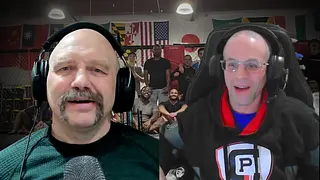
How to create a professional environment and a welcoming gym culture at your BJJ school, and what people do wrong, with Josh Peters. Josh is a 3rd degree black belt in BJJ, who has competed in Brazilian Jiu Jitsu, Muay Thai, Sanda, Sambo, kickboxing and Mixed Martial Arts. He runs combatprinciplesmma.com in Burtonsville Maryland.
Follow Josh on Instagram at instagram.com/joshcpmma and/or on Facebook at facebook.com/combatprinciplesmma.
Speaker 1: Hey there, I'm Stefan Testing and this is the strenuous life podcast. Mr. Josh Peters, welcome back to the podcast.
Speaker 2: I'm I'm honored to be here. It's it's not every day you get to have conversations with people you look up to in your martial arts journey, so thank you.
Speaker 1: Okay, you're you're already sucking up for a third, fourth and fifth uh appearance.
Speaker 2: Let's not go crazy.
Speaker 1: I can resist everything except flattery. You send me your trophy from the very first tournament you did as a white belt and then make me the winner of that white belt tournament. I you know, you can be my co-host for the rest of the podcast.
Speaker 2: I think I you know what, that's an interesting question. Uh because I started with Kung Fu, Dennis Brown in '88. I think Capital Classics was the first, it might have been the first tournament. You know, I've been hitting the head a lot. Uh my uh boxing coach in college once told me, he goes, I'm going to tell you something, it isn't really a compliment, you have a good chin. Well, there's only one way you find that out. You get hit a lot. Yep. So, I used to um enjoy being a bit of a tank and that's kind of dumb when you have to compete up three or four weight classes regularly.
Speaker 1: Yeah, okay, well, you're a Kung Fu champion.
Speaker 2: Awesome. Awesome. And uh you have uh ingratiated yourself to me for life.
Speaker 1: Speaking of ingratiation and dubious tactics, I wanted to talk about gym culture with you because you've been running a gym for 20 odd years and you were involved in gyms before that as well. And sometimes gyms can get toxic, right? By how we would define it anyway, like a place that I wouldn't want to train at. So, what have you had to watch out for as you're running a gym to keep the vision of the gym culture congruent with what you want it to be?
Speaker 2: Yeah, so, you know, for my my first gym that I went to, the Kung Fu school at Dennis Brown's, it was a very African-American central. I was I was the absolute minority in all the classes. I was usually 90, 95% African-American. So it's very interesting to be the minority in something and not just a Chinese culture, but, you know, Kung Fu culture from the '60s and '70s was very entrenched in sort of the sort of the pro-black movement and that was very much ingrained in how Dennis Brown ran the gym. So to see that was interesting. And then in Taekwondo, which was a bit more Korean militant, my first two instructors were straight out of Korean military. Uh my my Taekwondo, my first Taekwondo coach was uh a combatives instructor in in Vietnam for the United States with his Taekwondo background. And sort of that structure and having written expectations. Um, you know, most Jiu-Jitsu gyms, I don't most people have no idea why they get promoted except if they're just winning a bunch of tournaments. They're like, oh, obviously I'm beating people, so I should at least be that belt. But Taekwondo, Kung Fu, you know, a lot of them, you know actually what you need to do for each belt. For as much trash as we might be able to talk about them, you know why you get to that next belt. Hell, if even as shitty as you paid your 25 or 50 bucks for the stripe or the belt or whatever.
Speaker 1: At least there's a standard. Jiu-Jitsu, there's you exist. Like, you know, you get the black belt and you get a stripe just for breathing, which is wild.
Speaker 2: So, I took that from some more traditional cultures than my background in education because I can't tell a parent, well, just keep showing up, eventually you'll get, you know, your child will get A's. And then, um, for my first coach, I kind of looked at what he did and said, now I have perfect examples of what not to do and I can just do the opposite.
Speaker 1: What did he do that you don't didn't want to repeat?
Speaker 2: Oh, don't sleep with all your female students. Show up to teach. You know, that's a that's a pretty big one. You know, you actually show up reliably to coach your students. Go up when they compete, show up when they go to fights. Um, train with them when they're getting ready for competitions or just in general. There are times I would get a call while I was there. I'm not coming in. Josh, you teach the class. Like when I was like a two-stripe blue belt and I didn't know jack for shit. This guy's like a fourth degree black belt with 200 something, you know, competition wins as like before he was even 18. You know, Carlson Gracie black belt, Andre Panero from that lineage. Who the hell am I to teach? You know, you're your blue belt. It's like, and so, you know, show up to work, keep the place clean, have a culture of cleanliness. Um, something I think, you know, I come from that Carlson lineage, which was the more laid back, but let's beat each other up type of thing, as you've discussed in your podcasts. But sometimes being a little too laissez-faire about cleanliness is bad. So, clean the mats once or twice a day, especially if you're, you know,
Speaker 1: Radical. Radical. I I bet you believe in germs.
Speaker 2: I know. I I believe in these crazy things like germs and disease and tell people just like in any government building, if you have a fever, don't show up.
Speaker 1: If you're covered in ringworm circles, don't go train. Or better yet, have active staff infections.
Speaker 2: Exactly. And like, so thankfully I never got staff, but I got ringworm a couple times. I didn't even know what it was. So like, we teach our students what these diseases are when they start out. You know, this is what you can look for. This is these are like, you know, fortunately I have a couple doctors that trained at my gym who also somehow believe in disease and, you know, medical science, you know, whatever that is nowadays. So, having that education, I've posted rules like, don't come in here smelling of any sort of smoke. You know, I have no issues with marijuana, but especially if I have children in there, you cannot come in smelling like a dispensary. Don't come in drunk. Trim your nails. It always to me was obvious, like, I'm doing something where I'm grabbing people, I should have my nails trimmed. But one of my students once got slashed by someone's toenails and needed to get needles into his stomach. It got infected. So, you know, having posted rules and expectations, I think, has that in and I am a non-traditionalist. I'm not big on the whole bowing thing, but having structure, go up, if you're late to class, hey, let the instructor know. Try, you know, so having your rituals and routines in the education speak of what's expected and how things are supposed to proceed makes a big difference. And then, you know, you lead by example. Like, I have no problem with people meet and they form relationships at the gym. One of my best friends met his girlfriend through Jiu-Jitsu and now his wife. I, you know, I performed their marriage. But it's not a breeding ground, especially for instructors. Like, you know, the old Monica Lewinsky situation. There is a complete indifference of power. And we we have very frank discussions.
Speaker 1: I'm not even saying that an instructor should necessarily date a student, but Jesus, you better be careful about that. It better not be part of a pattern and it better be
Speaker 2: Especially if you're married already.
Speaker 1: Oh, well, yeah. Okay.
Speaker 2: Yeah. Key difference. Yeah, you know, there's and it's also like, you know, single and if a girl comes up to me and it is through her volition and we have discussions about that. But if I'm someone's instructor, I'm in absolutely no ethical position to pursue one of my students. Not just that, also, I need bills paid more than I need any sort of intimate relationship. 99% of my students, I think, are people who I would always have over and we get together, we hang out, but, you know, I feel that need to set that standard from there. I mean, Jesus Christ, telling people to shower, take your goddamn stuff home. I'm a little side story, just about, you know, cleanliness in the gym. And you also come from a traditional martial arts background, which is pretty regimented, right? You know, you got called out if you happened to be a mess, right?
Speaker 1: Yeah.
Speaker 2: Well, for a while, I was just being very lenient with people forgetting things at the gym. And I was telling them, listen, you better get rid of it because I'm going to throw them out at the end of the week. At one point, it got so bad, I opened up the gym the next morning to teach my like, my uh at the time, a 6:00 a.m. class. I almost vomited. It was a much smaller space I have now and just the funk hit me. I gave people the end of the week. They still didn't believe me. So, I got a a metal can, gasoline, and I lit all their stuff on fire on Facebook Live. And then all of a sudden people were like, oh my God, that's my jacket. This is what I'm like, well, you didn't give a shit about it because it's been here forever. And that's when they finally realized I am crazy enough to go to that extreme. And it was so gross, I didn't want to donate it. I didn't want to like destroy my dryer, my washer and dryer cleaning this stuff. So, you know, you have just expectations that you set out and I have a I have different Facebook chats and the staff we are in constant communication throughout the week, bringing up issues and I make I don't have much of anything that indicates this is Josh's gym. I have it structured as a round table, so anyone is free to voice their opinion. I I have a suggestion box. I have all sorts of things. I believe in communication. I also have a separate group chat for just the women in the gym. One on Instagram and one now on Facebook because people use different stuff that I'm not in at all. I formed it and then kicked myself out. So, there's something that they're not comfortable with, but they're not maybe comfortable bringing to it to a male. They have their other female um teammates that they can discuss it with.
Speaker 1: I'm in agreement so far with everything that you've said, especially regarding hygiene and communication and things like, you know, radical ideas like actually showing up to teach as opposed to just going on vacation without making any arrangements for who's going to be teaching and just assuming that somehow magically classes will still happen, which I've seen.
Speaker 2: Or just randomly vanishing.
Speaker 1: Yeah. Uh, what about managing bro culture and this and bullying? Because that is something that I've seen at gyms where it's it's almost promoted, right? It's the king of the hill, dog eat dog, and it's not about helping other people grow, it's about essentially establishing dominance. I mean, of course, there's going to be rivalry. If you and I are training and you caught me twice last training session and I didn't catch you at all, of course, I'm going to be gunning for you and that is part of why we all get better at Jiu-Jitsu. But at the same time, there's people who take it out on weaker or less coordinated or less advanced people and they basically use them as punching bags, which I don't think is right and I'm assuming you don't think it's right either.
Speaker 2: No, it's you know, so there's always going to be a my friend Jason Roe, he runs Triangles Everywhere, which is the LGBTQIA and the other letters uh Jiu-Jitsu meetups. I've hosted them at my gym a couple times. He even said there's he's a uh Henzo black belt originally, although because of everything there, he doesn't claim that much anymore. Well, he said there's always going to be a thuggish nature to Jiu-Jitsu. Even just the way we are. We come, I'm going to grab you and yoke you up. There's always going to be that rougher element per se. But I think if you structure things from the very beginning, you know, at first it was like my gym started with me, my friend Nick and like two other people. And we also realized like and I'm not huge as if you're if you're watching, you can see. If not, I I am now up to 119 pounds. I think that's like what, 54 kilos?
Speaker 1: Uh, I'm Canadian and we're strange. We do body weight in pounds and most other things in metric. So,
Speaker 2: That's why you're so cold up there. We've quickly realized, well, you know, if we also just want to train because this started out when our our first coach didn't have classes on Thursday. So, we would just go to my old Taekwondo space and try to replicate whatever the hell we were being shown. And we got people. We also realized, well, if we just beat these people up, they're not going to want to come back and we're not going to have anyone to train with. So, like when I work with someone in the beginning, unless I can sense immediately like I'm in danger, I let them beat me up. You know, they pass my guard, they smash me and go for an arm bar and I'll walk them through it. And then we always pair up older students with newer students or less experienced students so that they can also have a chance to teach and instruct them. And I tell them like your job is to help them grow and part of your growth is learning how to explain things. Because no matter how good you are, you can be a 25-year-old world champion, Marcelo Garcia, whatever. Hopefully, at one point in your life, you'll be 65 years old. That 25-year-old white belt's going to beat the brakes off of you and you're not going to be anything you can do to stop it because you're just old, you're injured by the gentle art. But you should be able to instruct someone. You should be able to say like, well, instead of having to just yank on it, this is what you you move your hips this way or you put your arms that way. So, we institute at the gym a culture of part of your path towards your black belt is teaching and instructing the other students. And I have white belts who who come in and see something or they do something at a tournament and I let them do it. And, you know, say, hey, why don't you come show that move you did? Because I do believe anyone can learn from anything. You know, I've rolled with the white belts and people who didn't know anything, but they did something so ridiculous that I was like, oh, that kind of worked. What were you thinking? And I'll ask them questions. So, also by leading from the front, my students will see me ask questions of people. Can you show me what you did? Well, why why did you do that? What was your thinking? What was whatever?
Speaker 1: Yeah, that that leading from the front is so critical. I started in a very traditional martial arts background. Of course, I did Judo when I was young and then I got very heavily into Kung Fu where you might be able to get away with asking the head instructor one question a month.
Speaker 2: Yeah.
Speaker 1: And that was pushing it. And then it was such a relief to come into the JKD environment with uh Danny Inosanto at the time because you had to here you had this guy who had trained with the legendary Bruce Lee and had trained at every martial art under the sun and was incredibly gifted and talented and knowledgeable and his name was Dan. Right? It was first name basis at the time. And that was really leading from the front and encouraging questions and encouraging interaction. And people who haven't trained in a traditional martial art,
Speaker 2: Mhm.
Speaker 1: Don't understand how constrained those traditional martial arts often are around hierarchy and around not sharing information and jealously guarding it. You you see a little bit of it some Jiu-Jitsu schools where it's like, you don't you can't ask your your fellow students any questions. You can't have them show you anything because you're going to get bad habits. Uh, you can only ask the instructor. What what about that bad habits thing? Have you run into that?
Speaker 2: Oh, don't.
Speaker 1: Don't don't learn from white belts or blue belts.
Speaker 2: Bad habits. You know, some of that like, a bad habit is showing up late when you have control over your time management. A bad habit is showing up smelling. But if we're worried about what is effective, the bad habits will work themselves out eventually. Now, some people might need to be pointed out that what they're doing isn't as efficient or not as uh strong of a movement. But the bad habits get worked out. And for every bad habit, we both could probably name at least one or two situations which that bad habit is the correct answer. Right? There's a talk about about mount escapes. What was Marcelo Garcia's primary mount escape? Bridging, shoving his arms up and bridging and rolling you over like that. Which is what we all yell at every white belt not to do. What are you going to you're going to tell Marcelo he's wrong? You know, so like,
Speaker 1: Yeah. Or or take a look at how turtle has become such a big part of the game, especially in ADCC.
Speaker 2: Yeah, because of the rules. Like now we have a rules like for ADCC to put someone down, they have to be on their back so that scramble the turtle that you generally only see in folk style or freestyle wrestling because you avoid the points there or you flatten out because you know, the the rules will push that. So, I have my own rants about turtle. I don't consider it a guard. I don't consider anything where you're not able to be truly offensive or really block yourself a guard. It's a position. It is a thing. But that that's a different thing. So, I think through the system it works itself out through exposure. Now, some people learn differently. Sometimes you need to point something out like, if you someone's their whole response is just to, you know, do the dead cat thing. Stick their arms and legs in there. All right, that might not be the best thing to do. But I think when you ask more, why are you doing that or is this working? It can work itself out and then, you know, teach a man to fish as opposed to catching the fish. Like, it it might take a little longer, but it works itself out. And great, let your white belts. Like, at some point, two people got together, didn't know a goddamn thing. Someone probably threw or pushed someone to the ground and said, oh, let me try that again. And they'll discover it. Now, we have more information now because it's been refined over thousands of years of just human conflict, but we still can learn, you know, I guess through the ecological approach and we can demonstrate things, but then we have to let people make mistakes. Um, my dad has his PhD in physics and he would tell me, a good day in the lab would be able to like a 72-hour run when he was working on his doctorate. My mom would say like, yeah, if I didn't see him for like three days, I knew that was a good day. And he said, a lot of it was just failure. And we learn more from the failures. Like, that's kind of how science works, right? We have this equation. We put it through every rigorous test to see how it could fail and if it still works, it's there. But it's we you we fall upwards in science through failure.
Speaker 1: I've discovered 999 ways not to make a light bulb.
Speaker 2: Exactly, not to make one. Yeah. So, I'm not as concerned with that. If it becomes obvious to me that what they're doing is very intentional and is very unsuccessful, then I work that out. Like, I have one student who's I would be labeled moderate to severe on the autism spectrum. But even he like, I he was he goes like six class six to seven classes a week. Like, he's in the gym. And our wrestling coach, who is like a lot of wrestling coaches, a little rougher around the edges and is not doling out compliments. He goes, when the hell did he get athletic? And he did it by failing a whole bunch and doing some of the most ridiculous things I've ever seen in my life.
Speaker 1: Yeah. It's funny how things that are considered absolutely ridiculous can then suddenly permeate a sport, right? I mean, the high bar jump would be the classic example when in the old days you used to scissor kick your way over the high bar.
Speaker 2: Yes.
Speaker 1: And then when Fosbury came along and flopped over backwards, people were laughing at him. But when he won, I think it was a Did he win an Olympic medal with it? I think he won an Olympic medal with it.
Speaker 2: I believe so, yeah. I'm the wrong person to ask. I am horrible with that type of data.
Speaker 1: Sure. But but still, it's now become the gold standard of how to jump over a high bar. Backwards and facing, you know, belly to the sky and arching your way over the bar. It's not intuitive. But somebody, somebody did it wrong and then eventually it became the standard. What's what's a good example of somebody doing something wrong in Jiu-Jitsu Jiu-Jitsu that has now become the standard? I'm not sure that Marcelo escape has become the standard, although it's indubitably works.
Speaker 2: It's an interesting question. Something that was I mean, you could make the whole thing of foot locks. Like, I won my second tournament at white belt with a straight ankle lock and I got a shoe thrown at me saying it's bullshit. But like, in a way that was not standard. It was a thing, but, you know, you're even you're a generation and a half ahead of me.
Speaker 1: Well, the foot lock thing, I mean, that was it was seen as effective, but it it was it was culturally punished. And so, yeah, that whole like getting booed for doing a a foot lock or uh, well, I've never heard of people getting shoes thrown at them for doing a foot lock, but that was definitely culturally punished. And there's always like, you know, what's legal but not necessarily sporting. And that for a long time was legal but not sporting.
Speaker 2: Or spider guard. Spider guard was the original 50/50. Remember what you can do nothing but stall from it. And now it's like the foundation of modern open guard. They went from butterfly to spider. So, that's a really interesting question. I'm going to have to think about that. Like, what is something we do now that is considered fundamentally wrong? Like, Jiu-Jitsu are generally always taught, shoot with your head on the stomach so you can't get guillotined. But you see now time and time in MMA, good wrestler gets the guy up and they turn the person over and they're not getting guillotined every time they shoot a double leg.
Speaker 1: Yeah. I think one weird example might be the inside funk roll where you basically hook inside the guy's thigh and roll to your belly and pull him over top of you and then stand up. It definitely works in MMA. It definitely works in folk style wrestling. Whether or not it'll work in Jiu-Jitsu is an open question, I think, because the odds of ending up in some weird reverse closed guard or weird upside down reverse triangle are reasonably high.
Speaker 2: Yes. Because that's how they end up like there and they then they have to posture up and push pull the legs to make them roll over. Oh, you know what? No, the Ezekiel choke inside of someone's guard. What what was the old thing? Well, oh, that's don't attack someone inside their guard. You're just going to get submitted. And then Jiu-Jitsu's very tacit acknowledgment was, oh, but yeah, man, you're going to fight some black belt Judo guy who's just going to do it to you. We we don't want to say it works or it's the right thing, but goddamn, it's happened to me and I've seen it happen to people much better than me by a very solid Judo guy who could just stave off that arm bar just long enough to, you know, choke the dog out of someone.
Speaker 1: Yeah, I I've not been caught by that yet, knock on wood. But I I've seen very good people get caught by it and I've used it on people and it's uh it's amazing. As you start getting close to that, you find out exactly how strong your opponent is. Maybe they've been holding back on you. And then all of a sudden, boom, they're going to use 100% of their strength to get out of it.
Speaker 2: Yep. The Judo club I used to go to at Georgetown, they had a world-class Judo club that um after about three months of Jiu-Jitsu, I was like, you know what? I really have to learn some like real stand-up stuff. And they had, I mean, they would get routinely some of the top people from all over the world cycling through. And they had uh a guy from Russia who was like, he was ranked like fourth or fifth in the world at the time and I'm like, okay, you know, but I'm a blue belt in Jiu-Jitsu. I know what I'm doing and then
Speaker 1: He Ezekiel choked you or he got you?
Speaker 2: Oh, yeah, he Ezekiel choked me to hell and back. I mean, it happened so fast because I'm like, oh, I'm fine. He's reaching in. I'm going to go for an arm bar. And then before I knew it, I was halfway unconscious.
Speaker 1: So, in addition to running a club, you've also decided to start running for office. So, what's that about?
Speaker 2: So, you know, we're talking about gym culture and trying to make a conducive place for people to learn because it's, you know, an academy. And well, the culture of what's happening now. Um, I have a number of friends who've been dodged or fired because, you know, just working at the government. One who is I'm not going to say it because there's some pending lawsuits trying to get their their back. But people who've been fired for like either having to prosecute or work on January 6th cases or they work on ethics proposals or at NIH.
Speaker 1: Hang on here. So, they were involved in some capacity doing investigations into January 6th or prosecuting January 6th and then they got fired because they'd worked on those files?
Speaker 2: Yeah, because they were assigned it.
Speaker 1: So, they didn't have a choice. They didn't like
Speaker 2: No, they're following orders. You know, just as you do when your boss says to do this. And it wasn't like it was an unethical ass. And, you know, no good deed goes unpunished.
Speaker 1: So, it'd be like a nurse going to a hospital and being told to, hey, this is your patient. And then that patient uh then you get then you get punished for treating that patient.
Speaker 2: Yes, 100%. You know, for doing their jobs. And I've had, I think, five people now that I know that from that similar or just they got come in. I had a one of my black belts worked on um doing ethic reviews of grant proposals at NIH. He switched careers, a woodworker, switched careers, got his masters, you know, just a super hard-working guy, everything by the book. He was shoved out of a building. So, they're
Speaker 1: Hopefully on the ground floor, not Russian style.
Speaker 2: Yeah, yeah, but yeah. Not not quite that, but, you know, these people were drummed out. They were sometimes given five minutes to collect everything. I have one of my students studies black holes at Goddard and they've had a whole bunch of research that was destroyed. Physically destroyed over the break. Over on the break, uh the government shut down.
Speaker 1: I I'm confused here. We're talking black hole physics research.
Speaker 2: Yes.
Speaker 1: So, why was their stuff targeted and this isn't political.
Speaker 2: They weren't told. They did this in the cover of night basically while they weren't in the building because of the government shut down. And they're non-essential, so they didn't have to be there. And they people come back to find sometimes a decade's worth of research. You know, something could be hundreds of millions of dollars just obliterated just because. Because there's no real rhyme or reason to what DOJ did with, you know, Elon Musk going in with a chainsaw. You know, compared to what happened with Clinton, he had a 10% reduction in force over two years and it was very methodical. I'm sure some people got hurt. No one likes being fired. But it wasn't just wholesale, we don't like you. I don't know how you're going to justify this idiocracy, but that's what happened. So, that I have a student who has a deportation case. He's done everything right. He's tried to apply for citizenship. You know, he's sponsored. I've watched personally now ICE rounding up people and the way they go about it. And I think the urgency of the situation called on me to do more than complain on Facebook or donate to someone's campaign or something. I so, I come from a a long family of activists. My grandmother attended the last women's suffrage march when she was like five or six years old. Um, my grandparents met at a Communist Party meeting, even though my my um grandfather helped worked on designing some of the guns on the World War II ship and then he was blacklisted because he was American enough to work for us, but not American enough to appreciate after. My dad and my grandmother were at the March on Washington. And I looked at them. They my my grandparents were poor. My parents didn't grow up with a lot of money. If they were willing to put their lives on the line in some of these cases, who am I to sit on the on the side? Like, I am was born into a position of privilege being now between lower and middle class. Figuring out how the gym's doing that month. You know, I'm I'm in a position of relative comfort. And my skin color and who I am gives me a certain amount of protection. I think it'd be wrong of me not to utilize that to try to help my community.
Speaker 1: You know that somebody is going to be losing their mind about you, a descendant of communists, uh, going into office. But at the same time, they're going to be saying, well, it's not fair to hold Elon Musk's parentage and his own Nazi father against him. The sins of the father are not visited upon the child. Except in your case, they will be.
Speaker 2: Yeah, it's it's absurd. And, you know, listen, obviously I'm not a complete communist. I run a business. I I run a business to make money to, you know, because I like having a roof over my head and I like being able to eat a meal now and then. But, you know, I I I do believe that we have a charge to help each other. Like, goodness gracious, what's happening to this country? The just the part of the design of Project 2025, now 2026, is the whole just mess of noise. It's hard to keep track of between Trump trying to start World War III and then dismantling our healthcare industry and destroying research. I can't like, there was one cure for breast cancer that was they predicted was months away that got destroyed. That now that might go back 20 or 30 years. You know, to watch all this and to say, what can I do? And, you know, the truth be told as a county council is what I'm running for. Just above city council. There's not a whole lot I can do to try to um be a bull work against the administration, but I can do something local. If I can try to make someone's these lives better in the face of like, you know, federal withholding of funds and everything else, then I think I have a duty to try and do that.
Speaker 1: So, yeah, the other podcast that I'm heavily involved with is the Fighting Matters podcast with Steve Quan and Jesse Walker and Mike Mahaffey and Jeff Shaw. And one question that always comes up is what can be done? And so, what do you think that somebody who's not running for some level of office somewhere, whether it's the uh the school board or the the the county council or the city council, is something that can be done. Uh, what else?
Speaker 2: So, I'm going to preface this that these views are mine. And I'm going to try to stop it someone's what I believe, what I'm and to try to have people understand what I'm advocating for. One, running for political position is not for everyone. And that's okay. I am not meant to be a physicist. I cannot do math the way my dad does. You know, so you have to find your thing. So, one, everyone does have the, I think, responsibility to be vocal in their government. Your representatives should know who you are. Write them physically. Don't just send emails, but you got to send physical mail. You got to be in communication.
Speaker 1: Well, why physical mail? Why is that better than an email?
Speaker 2: Physical mail theoretically ends up in someone's hand. And, you know, email, who knows even email if they're going to I think if they might see it. But I think taking that time to write it in is very important. Calling them, commenting on legislation on US government. All pending legislation has a comment section that you can comment on. Um, I'll send you the link for that later. I think that's important to be included for people to do. So, read the legislation, listen to C-SPAN, listen to the hearings. Don't just rely on MSNBC or Fox or whatever to get interpretations. If you have the time, listen to the at least part of these hearings. I grew up right outside of Washington D.C. I am a political wonk. You know, that's just part of the culture of growing up right outside D.C. So, I enjoy listening to C-SPAN. I I don't want someone's interpretation. Organize. It's very important. One person doing something is okay, it's good. I'll never discredit effort, period. So, let me preface everything that. But if you can organize into groups, groups historically have always carried more power.
Speaker 1: So, what kind of group are we talking about?
Speaker 2: It could be anything. Even if it's just say 20 of your friends. We're going to call ourselves the the Friends for Science. And we write into our local representatives every week. Or we call. And you donate money, donate time. If there's a politician you like, inform people about them. Communicate. Like, a big part of county council, I think I'd represent like 9,000 people. I need to um 6,000 votes to win. A little bit more than win the um the uh general election. So, I knock on doors. I try every weekend to make 3 to 400 contacts of just, hi, I'm Josh. I'm running for county council. Here's some information on my campaign. Do you have any questions? How can I help you? Right? So, communicate with people and stay informed, right? You and know where you're getting your news sources from. Um, I think Ground News, and by the way, I'm not sponsored by anyone, but from what I understand, Ground News does a pretty good job of disseminating information sources and saying which way they lean and you can compare headlines.
Speaker 1: I've heard lots of podcasters I listen to advocate Ground News, but I admit I've never done it. So, what's the process? You want to find out about, I don't know, let's say the Renee Good shooting.
Speaker 2: Yeah.
Speaker 1: And you go to Ground News, how does that work?
Speaker 2: So, I only use it a little bit. Again, I I just I I try to stay just on like just like AP News or Reuters, which I some people are going to say lean one way because they are just pretty much factual reporting, which facts now have political bias, I guess. But it will say this event and list different headlines from like left to right or right to left and you can see the different wording, how they skew and then, you know, I believe it will also compare the articles. You can look at the wording and how they describe things. Protester, agitator,
Speaker 1: Paid commie bastard.
Speaker 2: Exactly, right? So, look at that. So, one, and be informed. You know, and running for office, I force myself to not get exhausted. I it because it can be very overwhelming now with everything. But don't when you are overheated and, you know, the engine needs to cool off. Then also knowing how to protest effectively. I think marching and protests are good. They're important. They're I mean, they're fundamental to the existence of this country. But only if it leads to other action. That protest needs voter registration drives. Pushing for a certain candidate or policy, showing up at your town hall meetings, showing up at meetings for your local representatives. Those are important. I'll say where I'm falling short. I use Amazon still and and Amazon's web uh was their their their cloud storage is what Palantir uses for their storage. And I think that's probably one of the most dangerous companies around. Try to take your money out of places that that support things you don't. And then learn first aid, learn how to use emergency signals, and I think also learn how to defend yourself. And I am not I am not advocating for violence. But name me one social movement that violence hasn't been necessary from the union fights in the 1880s and 1890s to the Stonewall riots to the civil rights movement. Everything else. You this day and age, what's going on in Minnesota, you must be prepared for violence and to meet violence. I think the first try to always meet violence with non-violence. I I I really want to be clear on this. But I think it's a responsible in Maryland. F-laws crazy. It's I it takes me seven days I can get a shotgun. There's no there's no background check. I don't need a licensing or permitting for it. So, for long guns in Maryland, you can to defend yourself. You're probably seeing some of the neighborhoods in Minnesota being left alone because it's the resident it's open carry there. They are going out openly carrying patrolling their neighborhoods for people looking to abduct people. Just as um African-Americans had sometimes had to have armed groups to show up to the voting polls shortly after the civil the voting rights act.
Speaker 1: The alliance that's beginning to happen between some veterans groups and the Black Panthers of all people is bizarre and makes total sense. I did not see that one coming. Uh, but that is it's I think a natural reaction to the overstepping. This this podcast, if if you're listening for Jiu-Jitsu purposes, you can just finish now because I think we're going to go down the political rabbit hole.
Speaker 2: I'll try maybe to bring it back. Because and you know what? And also with your business, we had a discussion amongst our staff. We will not train ICE agents. And no, and know for what you're comfortable with. Just as I would not let
Speaker 1: You wouldn't let a neo-Nazi?
Speaker 2: No, I had to kick a guy out once because he had like a bunch of pending rape allegations. Now, allegations are not proof. But when there's sometimes more than one, guys, maybe you need to let handle this before you come back here. But I don't need that possibility or that danger to my other female students who go there. So, you know, if we're going to do that cross it with the gym culture, sometimes you have to be careful about who you let in through the doors. I it's one guy and now the only other guy I ever had to kick out was a very hurt individual who to anyone watching, I this is going to it's it sounds ridiculous saying this as it is for you to hear it. He once told me I have to be a child molester because I was an elementary school teacher and the American education system was a cult set up by lesbian nuns to turn boys gay.
Speaker 1: Sorry.
Speaker 2: So, digest that.
Speaker 1: Oh my God.
Speaker 2: And he said this completely in earnest. You know, normally you want to hit someone like that. I was it was so out of the, you know, just out of the ballpark that I was like, oh, now I'm actually fascinated. I want to hear more. And I can tell this person was very hurt and it was coming from something else. But I couldn't have that person around. You know, just what he says to me, and that's cool. You know, I was also a Jiu-Jitsu referee and I, you know, having taught elementary school, you learn to be a good punching bag sometimes. I don't need my students being punching bags in that sort.
Speaker 1: You've only had to kick out two people in more than 20 years.
Speaker 2: Yeah, I'm generally speaking, the culture has filtered out the people that shouldn't be here. Just like what Frederick Douglass says, it may be moral, it may be moral, it may be physical, but it must be a struggle. And it must be organized. And it must be something where people have come together saying, you know, what are we going to advocate for? How are we going to protect each other? Be it through running through office, be it through checking in on your neighbors even. Giving a call, being aware of someone's missing for a little bit.
Speaker 1: It would be nice if this community, by which I mean the Jiu-Jitsu and MMA community, were to rise to this challenge. I mean, all of these guys training would describe themselves as warriors. A warrior just running around taking care of his own self-interest or banding together with a couple other guys, they're not called warriors, they're called brigands. They're they're called pirates, they're called
Speaker 2: Mercenaries or whatever.
Speaker 1: Mercenaries. So, a warrior fundamentally protects a community of people who essentially can't protect themselves. So, you know, it in theory anyway, it'd be nice to see this community go that way. And I'm not ruling it out. It just hasn't for the most part happened yet. I mean, there are pockets of resistance and I do see more and more people I would have characterized as extreme right-wing a year ago, two years ago, were beginning to say, hang on, what the fuck is going on here?
Speaker 2: Well, they're getting hurt.
Speaker 1: Precisely.
Speaker 2: You know, it goes back to why I think economic boycotting is probably one of the most effective tools you have, especially against a monolith like a state or federal government. Like, Marjorie Taylor Greene, it's a perfect example. She was all about this until it bit her in the ass. Like, you know, on Reddit, the most active thread is, I didn't think the leopard would claw my face off or bite my whatever it is.
Speaker 1: I didn't think the leopards would eat my face.
Speaker 2: Yeah, exactly, right? So, finally now, I think some of these schools are being hurt because, oh, my students are missing. You know, which is horrible, but human beings are human beings and unfortunately, I think sometimes we have to get hurt a little bit to care. And I think there's always going to be a conservative bent in combat sports in general. There's one thing uh what uh Alec Baldwin said, he like, I respect your opinion unless your opinion is that I don't have the right to exist. I definitely have more conservative students at my gym. But I'll always for the right that believe differently than I do. You know, it's all within reason. Obviously, if they're going to espouse something bigoted or something, that's different. Diversity of opinions is important. It's why Abraham Lincoln had um people from the opposite party in his cabinet. He said it's better to have your enemies inside your tent pissing out than outside your tent pissing in.
Speaker 1: Oh, I've never heard that Abraham Lincoln quote. Is he like the new Mark Twain where you can attribute any quote to Abraham Lincoln?
Speaker 2: Uh, I maybe, but no, this one's actually is written. I I saw it at the American History Museum. So, I say to be armed and be ready because I don't know how it's perceived in Canada or as much abroad, but it feels like a powder keg here.
Speaker 1: Oh, it certainly smells like a powder keg from up here. I mean, we are I'm speaking as a Canadian. We are the apartment above the meth lab and have been for some time.
Speaker 2: Indeed.
Speaker 1: How many times has the orange rapist threatened to uh annex, invade or seize Canada now? And it's it's not a joke, right? I mean, Venezuela, he's he's pushing a yeah, I don't know when this is going to air exactly, but this morning I posted something on Instagram essentially about how Trump is courting the possibility of World War III to cover up the Epstein allegations. As of this point, it's been a month since the Epstein Transparency Act kicked in and all the Epstein files, not just the ones that they want.
Speaker 2: Yeah.
Speaker 1: They were all supposed to be released covering only the names of the victims. It's still not out, but in that interim, let's see, Maduro got snatched. The the Greenland conflict is heating up. Trump is saying that because he didn't get he's telling Norway that because he didn't get the Nobel Peace Prize that he's going to essentially attack Greenland and Denmark. Uh Colombia has also been threatened. Have I lost track of anybody? I don't know if there's been any saber rattling against Canada.
Speaker 2: So, Cuba, that's right.
Speaker 1: So,
Speaker 2: And my conspiracy is, yeah. I was and my conspiracy part of this because he is close with Putin. Attacking or even escalating this against Norway could dissolve NATO.
Speaker 1: 100%. This is a Christmas present in January for for Putin.
Speaker 2: I mean, I I'm not the first to talk about this. I'm just repeating what I what I think is a reasonable analysis that basically China, Russia and the United States have reached some kind of tacit agreement where we don't give a fuck about sovereignty. Russia, you can go ahead and grab Ukraine. Uh, United States, you can go ahead and grab anything you want in North America. And uh China, you can grab Taiwan, you can grab Africa, you can do whatever you want. Right? These are spheres of influence. You do you and the rule of law doesn't matter. It's just the law of the jungle, whoever's stronger.
Speaker 1: So,
Speaker 2: 100%. And that's return to like 1700s imperialism where you had the Spanish Armada or the British Navy and they were able to because no one it's not because they didn't give a shit, nor did they even say anything because of ethical reasons. Like, the whole religious stuff was all a cover-up for just economics.
Speaker 1: But at least they pretended.
Speaker 2: They pretended. Yeah.
Speaker 1: At least they pretended. Now there's not even a pretense. We need Greenland because we need Greenland. We need Venezuela. Like, you take a look at what Trump's cabinet was saying about Venezuela. Oh, we need to do it because Maduro's a drug dealer. Oh, we need to do it because they had an illegal election. Trump is saying something different. We need to do it because of the oil.
Speaker 2: Yep.
Speaker 1: Okay, so
Speaker 2: Oh, now just the drugs. It was the same verbage as going into Iraq the first time where we need to do it because of weapons of mass destruction. They were calling the drugs weapons of mass WMDs basically. It was it was almost line by line, stage by stage, the same justification for Iraq. And you know, and it's again, I'll be either one of us is going to argue Maduro is a good guy. No one's saying that. But for a guy who campaigned on non on not getting into nation building. Like, literally said, I am not we're going to get out of the business of nation building.
Speaker 1: Peace president.
Speaker 2: Yeah, peace. Yeah. And it it's mind-boggling and then by four votes in the Senate, they stopped the resolution to limit his um military uh powers in Venezuela. So, it it's like culturally it really feels like as we become more and more divided and, you know, the algorithms of social media and news run on divisiveness because good news just doesn't sell due to, you know, our reptilian brains. It gets amplified and it's it's it's very scary. You know, I'm, you know, it's like I was talking with my uh with my parents like, I'm kind of glad my grandmother died before all this happened so she wouldn't see a lot of her life's work dissolved because she was very active in peace and like non-nuclear proliferation and other peace movements really until like the last seven years of her life.
Speaker 1: Yeah. Well, the nuclear proliferation. I mean, I'm being assured by pundits on the internet that there's no way that the invasion of Greenland could lead to World War III. There's just no way. I mean, America could beat up and dominate any European country. And, you know, nobody thought that a single bullet to the head of Archduke Ferdinand in Sarajevo would lead to World War I.
Speaker 2: Yep.
Speaker 1: And Hitler didn't think that invading Poland would lead to World War II. He was shocked when Britain and France declared war on him because he'd gotten away with it. He'd gotten away with the Sudetenland and Czechoslovakia. He'd gotten away with annexing Austria. He'd gotten away with a whole lot. And like, now you're drawing a line in the sand?
Speaker 2: It's terrifying. And who's going to and the problem now, like, one like, you know, even one or two bombs is enough to pretty much change life on the entire planet because of how strong they are. We have artillery shells that are stronger than Hiroshima and Nagasaki. United States is probably the single most powerful military, at least unit for unit in the world. Even we see in Russia, obviously, you know, Ukraine has done a hell of a job fighting them partly with, you know, weapons from us and from other countries. But who's to say if we have someone like Trump in office who just says, fuck it. Like, he's throwing out so many other international norms and not even to say a lot of these norms were necessarily good because they led to like sort of economic slavery like what you see in the Congo. But it kept things away from Doomsday to an extent.
Speaker 1: Well, this is the president who needed who was asking, why can't we just nuke a hurricane in the Gulf Coast? And presumably had to be talked out of nuking a hurricane. So,
Speaker 2: I don't know what to tell you. It's like the same guy who wants the Maha movement, all that is also host everyone with McDonald's. You know, this is not the administration to look for intellectual um uh continuity and consistency. But again, this is why I think at a local level, what's happened in the United States fundamentally started after um Brown versus Board of Education. Once that and then abortion with Roe v. Wade, what the conservative movement and the Heritage Foundation started focusing on them were other sorts of civil liberties like abortion, school boards. Uh, Clinton's labor secretary wrote in 1993, I believe, that we have lost with the passing of NAFTA, we've lost the working party as Democrats because we're treating them as consumers and not producers. And so, Democrats also really, you know, really, really screwed things up with NAFTA and not having mechanisms in place to help retrain or retool our economy for what was going to be created. And Republicans while this is going on were getting into school board, getting into county, city councils, getting into governors, getting into the more local things to build up this base from the, you know, we always talk Democrats are grassroots. Well, it was this 40-year grassroots or 50-year grassroots project to build up to what enabled the election of Trump. First and a second time. And Democrats were a big part were asleep at the wheel just assuming that the Rust Belt uh Democrats would just go along with things who tend to be more socially conservative and are a little wary of some of the Democratic policies and not courting them. So, besides this, I think it's going to take probably more than my lifetime a long plan to recoup power from the ground up. I'm afraid of martial law being declared by the end of um July for the midterms in November. We'll see if that happens. I hope I am wrong. I think something like my election probably won't be messed with too much, but the person in charge of election security in the United States is a J6er. So, you know, we're out of control.
Speaker 1: I see it as a given. I mean, they already tried. They already tried storming the capital. They already tried claiming voter fraud. They already tried creating boards of fake electors. All this, if you go, if you go read the Jack Smith indictments, it's clear as day. If you take the Jack Smith indictments and you actually read them, because they're all available online, and then compare it to what actually happened, it's crystal clear. The odds of them not trying it again are zero. The difference now is instead of a bunch of proud boys and oath keepers, uh, cosplaying militia and storming the capital, they've now got a private militia.
Speaker 2: Yeah.
Speaker 1: It's it's
Speaker 2: Which is ICE, which is more funding. It is, I think, ICE would be the 16th most funded military in the world when they compared it. Like, it's has more funding than the FBI and CIA. I was at a UFC event and they're running advertises to work for ICE. As you know, they know what they're doing in terms of the who they're targeting and in the demographics of what they're going after. So, maybe another thing, also, sign up to be an election observer. You know, it you got to fight to say like the whole they go high, we go low, the fuck anymore. You've got to, you know, one of my friends, his pastor once said, if you turn both cheeks, you get two black eyes. So, you got to be ready to fight. You got to be ready to get in the trenches and be yelled at or or or possibly worse, unfortunately. You know, I really please anyone listening to me, I am not advocating for violence. I can't say this enough. I because a civil war now would make the the civil war in 1800s look like a school ground fight. We have so much more readily available destruction available to us. And it's such a much more greater armed population with weapons that someone from the civil war would look at and just think it's make-believe. So, but I think, you know, we have to be able to
Speaker 1: Yeah, we've gone from flintlocks to AR-15s.
Speaker 2: Yeah, we can just
Speaker 1: We've we've gone from cannon to drones that come out of the sky.
Speaker 2: The Albert Einstein said, I don't know what World War III will be fought with, but World War IV will be fought with sticks and stones. I hope we're able to find a peaceful resolution. I don't know, even this would be the greatest stress test of American democracy we'll ever face. For any asshole who's going to say, well, we're we're a constitutional republic, you can explain the difference in the comments. I'm waiting. So, I hope, but, you know, be vocal, be vigilant, be involved.
Speaker 1: Well, it sounds like your martial arts training is kind of coming in handy here to make you more pugnacious or at least give you some faith in your ability to fight. And in a totally different arena.
Speaker 2: I've got my ass kicked before. What's one more? You know, it's at the end of the day, what are we learning it for? You know, obviously there's the physical and mental benefits, but it's hopefully to be able to stand up for what you believe in. And you believe if you believe in something, you should be willing to at least welcome some sort of risk.
Speaker 1: Yeah. And standing up to bullies, I think
Speaker 2: Yes. Oh, back to the bullying. So, like, on that culture, right? So, point it out. Now, we talk a lot of shit at our academy. Now, I'm going to tell you, we'll tell you, you're going to have to develop a bit of a thick skin here because we can be pretty brutal. And they all all my students know, I'm fair game as well. If I can dish it, I can take it. And I'm, you know, I'm a child of the '80s. Me and my friends would have sleepovers telling your mama jokes for three hours at a time and just absolute horrible things. But it was all in jest. But you deal with people like, I have one student, I didn't kick him out. He kind of left on his own. It was the very thankful for. All the physical gifts in the world. But he would go and just try to beat the brakes off of people who aren't as physical as him and would run from the better students. So, a bully, like a dictator, one of the greatest weapons you have is humor. Most bullies are incredibly thin-skinned. And at least why we're not having execution of comics in the United States. You call the bullies out. You call whether it's a public figure or someone that you're going to say, you know, listen. Because I do like to give people the the chance to reform, to change. I think that's, you know, theoretically be part of the martial arts process, even though sometimes I think we both have said that sometimes you just become a better bully with Jiu-Jitsu. But you give them that chance and then you got to be aware of it. You know, and at the end of the day, a bully's going to cost you more money than they're going to bring in.
Speaker 1: Okay, well, two things. If people want to train with you, how do they do it? And if people are in the Maryland area and they want to help you with your campaign, how do they do it?
Speaker 2: So, one, we have an open door policy. I don't charge a mat fee for anyone who's currently training at an academy. So, anytime you want to come by, go to combatprinciplesmma.com. The web the schedule's all up there. Come on by. I love having visitors. I love having guests. I I love meeting people. I think the like, being able to talk to you and meeting some of my other like sort of Jiu-Jitsu heroes has been the best thing about this martial art, the people that I've met. So, come by, come say hi. You can find me on on Instagram or Facebook. You like Josh CP MMA, I think, on Instagram. I I probably have these memorized, but I'll send them to you. They'll probably be in the text somewhere. Running for county council in Anne Arundel District 4. So, if you go to friendsofjoshuapeters.com, it has all my campaign stuff. If you're interested, um, trying to run a campaign that is not as reliant on money as general, but I need these things cost money. So, every dollar helps. If you want to donate, it is absolutely appreciated. If you have a question for me of why you believe this, I am a firm believer that politicians need to be accountable to their people. And even if you're not one of my constituents in District 4, we're all in the same boat that's in this bigger ocean. Ask me questions. Uh, Ed Koch once said, you know, if you agree with me on seven out of 12 issues, you should vote for me. If you agree with me on 12 out of 12, you should see a psychiatrist. I don't expect you to agree with me on everything and I'm here to learn. I'm here to have discourse. And I'm not saying you'll change my mind. I'm not saying I'll change yours, but I do think we should begin with communication.
Speaker 1: Awesome. Well, thank you so much, Josh, and uh good luck with all your projects.
.webp)

.webp)
