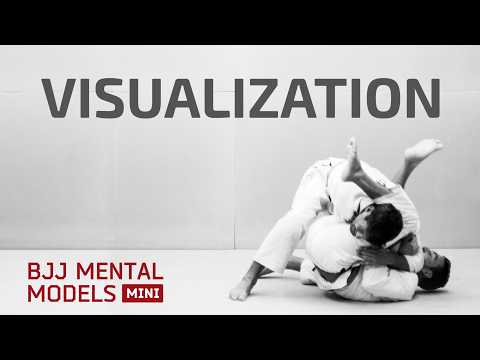
In this week's mini-episode, we explain body tethering! When you clamp onto your opponent as you would via closed guard or a triangle choke, make sure that YOU control THEIR body's alignment, not the other way around. If they still have alignment they can pick you up, stack you, or slam you, which are especially dangerous if you're smaller. Don't be a tetherball!
Don't forget to check out BJJ Mental Models Premium!
If you love the podcast, you'll definitely love our premium membership offerings. The podcast is truly just the tip of the iceberg – the next steps on your journey are joining our community, downloading our strategy courseware, and working with us to optimize your game. We do all this through memberships that come in at a fraction of the cost of a single private.
Speaker 1: Hey everybody, before we get started this week, I have huge news. She actually did it. We're pleased to announce that Beatrice Jin, top-ranked women's competitor in North America and long-time BJJ Mental Models premium community member, has published her first ever course with us, exclusive to BJJ Mental Models. It's called Stop Being Nice. It's a three-part audio series designed to solve real mindset problems that regular folks experience in Jiu-Jitsu. If you struggle to be aggressive and competitive in Jiu-Jitsu, you'll find the solutions here. If you're already a BJJ Mental Models premium subscriber, you've already got access. And if you are not, good news, you can get it now and get your first week free. Go to BJJmentalmodels.com and check it out today.
Speaker 1: Hey, welcome to BJJ Mental Models. I'm Steve Kwan. BJJ Mental Models is your guide to a conceptual and intelligent Jiu-Jitsu approach. And in this week's mini episode, I want to talk about an idea I've discussed for years. I call it body tethering. So here's how I like to think about this. Think back to when you were a kid on the playground. You remember those tether balls that were tied by a rope to a big pole, and you could whack the tether ball and it would just go flying around and it but it was always tethered to the pole and it would just bounce around like crazy. My general advice is don't let yourself be a tether ball like that when you're training Brazilian Jiu-Jitsu. In other words, don't get into a situation where your body weight is completely tethered to your opponent and they can choose what to do with it. This happens a lot in Jiu-Jitsu, particularly at the beginner levels. And it happens from positions where you are clamped onto your opponent. So think of closed guard, for example. Closed guard is a great position if I can keep your posture broken so that you can't posture up and get up. But if I fail to do that, and you posture up and stand up and pick me up with you, now I'm tethered to you. My body is under your control. You can slam me. That's probably the biggest risk, and I know people in Jiu-Jitsu sometimes think, well, slams aren't legal, so I don't need to worry about that. And I would argue that point. I would say, first of all, we should always train the art in such a way that it's realistic for self-defense. But even if you don't care about that at all, slams happen by accident. It's hard to pick up and hold a person in the air while they're actively trying to fight you. What happens if someone picks you up and you're trying to do something and they slip and fall and drop you on your back or on your head? That's not good. So, we want to avoid those situations where we are tethered to our opponent and they have full control of our body. So back to the closed guard example, playing closed guard is fine, but as soon as they start trying to lift you up, be very, very careful. Another example is the triangle choke. A very powerful position if you can keep your opponent's posture broken. But if they can posture up, it's quite easy for them to stack you or again, pick you up and slam you. And that happens because you're tethered onto the person. This kind of tethering happens when you use a clamp-based technique. So, we talked about this back in the earlier mini episodes, the different core mechanics of Jiu-Jitsu. One of those core mechanics is clamping. So when you are clamping onto your opponent's body, locking them in place, again, things like closed guard, triangle chokes, backpacks, stuff like that. All very valid techniques, but if you think about it, these are also techniques where people, especially smaller people, tend to get injured a lot. And that's because they're clamped onto their opponent. And if they fail to break their opponent's alignment, now they are latched onto their opponent like a fanny pack or a backpack, and when their opponent moves their body, you're going to move with them. So, I'm not saying don't use these kind of clamping techniques. They're very legitimate. But I am saying that just clamping onto someone is not good by itself. You need to actually have some control over them. If I'm playing closed guard and I've got my legs tightly locked around your body, but I can't prevent you from posturing up, and I can't prevent you from standing up, then I don't really have a good closed guard. And I'm going to have to consider abandoning that and switching to something else if I just don't have that kind of posture control on you. Because again, if you stand up, it will be very easy for you to break my guard. Also, it'll lift my hips way off the ground and make it harder for me to fight. And if you pick me up off the ground, now I'm in a really compromised position. Another great example, if your opponent is turtled, you'll often see people jump onto their backs and try to catch a seatbelt on them and roll through. And these do work, but I personally avoid these techniques because of the risk of injury. What you're doing in that situation is you're clamping onto your opponent. And if they move suddenly, you could wind up getting dropped on your shoulder, getting dropped on your head. There was that terrible situation not too long ago where someone had their neck broken because their instructor tried to do a rolling turtle back take on them. So, clamping can be risky. If you're going to clamp onto someone, my advice is again, always make sure that you're able to break their alignment. You should be able to significantly compromise their ability to move and fight effectively. If you're clamped onto someone and you can't do that, then the clamp is actually probably helping them more than it's helping you, especially if you're smaller than your opponent. And this is where you really need to think about body tethering when you are much smaller than your opponent, because it's going to be much easier for them to move your body weight around if you're clamped onto them. This is why you often don't see smaller grapplers use a lot of clamp techniques against bigger grapplers. For example, when is the last time you saw a small person dominate a larger person through closed guard or tap a larger person with a triangle? These are pretty rare things to see, and it's because when you clamp onto a larger person, their ability to turn you into a tether ball is much, much higher because they are just so big and strong. So, that's a pretty key concept I like to think about in Jiu-Jitsu, especially when it comes to safety. Don't be a tether ball. Don't tether onto your opponent in such a way that they have control of your body weight. I hope you found this concept and this episode helpful. If you want more like this, go to BJJmentalmodels.com. All episodes of our long-form podcast and our short-form minis like this are completely free. Plus you can sign up to the BJJ Mental Models newsletter, over 12,000 strong. I really suggest you get on that because we do some awesome thought pieces every week that will help you better understand Jiu-Jitsu and be more effective on the mats. And of course, I really suggest that you check out BJJ Mental Models Premium if you haven't already. That is the best tool we have for making your Jiu-Jitsu safe, simple, effective, and fun. Thanks again for everything. BJJmentalmodels.com is where you check out our stuff, and I'll talk to you in the next episode.