Speaker 1: We're rolling.
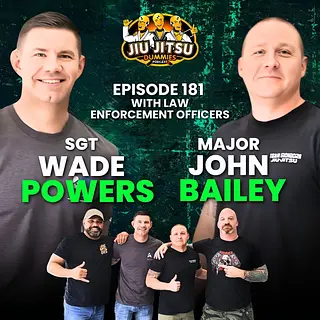
Speaker 2: Welcome back everyone. This is episode 181 of the Jujitsu Dummies Podcast. We're brought to you by Black Belt Digital Marketing. Anything you need to build your business on or offline, you got website design, SEO, Google Ads, graphic design, printing. We can absolutely help with anything. Check us out at Black Belt Digital Marketing or on Instagram @BlackBeltDigitalMarketing, the full name. Uh our website is bbdigitalmarketing.com. You can request a free review of your online presence today. My name is Milton Campus. I'm a Black Belt training out of Coral Springs BJJ in Coral Springs, Florida. Don't forget to like, comment, save, share, click the subscribe button. We appreciate all the support. Joining us today, we have Wade Powers, John Bailey, um two law enforcement officers from what Gwinnett County. You are you in the same same department? Gwinnett County. So just bear with us for a little bit. We're going to do some shout outs and uh and then we'll bring you in. Um, Ben, introduce yourself.
Speaker 3: Hi. My name is Ben Stark. I'm a third degree Black Belt from the illustrious and world famous American Top Team, head coach and owner of American Top Team Palm Beach Gardens. If you are in the North Palm Beach area and you are looking for the absolute best in mixed martial arts training, come by American Top Team Palm Beach Gardens. We'll get you where you need to be. Beyond that, we support our sport. Check out fighttape.us for the absolute best in fight tape and gauze. If you are a cornerman, coach, fighter, or just a general athlete, chances are you are using athletic tape already. Save the cash, ignore the big brands, go to fighttape.us. Higher quality products, lower prices. Get yours there. Oh, promo code JJD saves 10%.
Speaker 2: Hey. You got that last time. We got to remind about to put that up. You're you are you a top team? Are you you train at American Top Team or you're or you're from what was your association with Mike Brown and and I know we're going to get into it more during the podcast, but are you an American Top Team guy or you just associate with them?
Speaker 4: Just associate with them.
Speaker 2: Just okay. All right. I didn't know if you were training at a at a American Top Team somewhere.
Speaker 4: No.
Speaker 2: No. Okay.
Speaker 4: Gwinnett County.
Speaker 2: All right. It's when you when you walked in, I thought you were like, yeah, American Top Team. I know.
Speaker 3: Well, I saw when you posted him, I saw that he was in an ATT t-shirt. So I was like, we haven't met. What's up?
Speaker 2: All right, a couple more shout outs. We're also brought to you by academysafe.org. Academy Safe is a nonprofit whose mission is to clean up the martial arts by advocating by advocating for background checks, US Center for Safe Sport certifications and concussion training for all coaches and staff members. We also uh verify lineage, looking at business insurance, uh make sure you have security cameras, a whole host of things, about eight things that an academy owner's got to do. Uh we want not just to do a background check on the owner, we're doing a background check on the owner and all staff members over 18 years old. Uh so uh check us out at academysafe.org, get your academy signed up. If you're a parent, if you're somebody who's doing martial arts already and you're moving, you're looking for a new academy, you can either register your academy as an owner or you can find a list of academies in your area that's are have gone through the program or or in the process of going through. We only list them after they get their background checks done. But after that, uh look for the accreditation right at the top of the page. If it says that they're fully accredited, that means that they've checked every box and are fully accredited with academysafe.org. You can use uh if you're an academy owner, use code JJD5, F I V E. Uh you uh enter that at checkout, you get a couple dollars off your membership. Uh also wanted to shout out Flo N' Roll. Uh hands down the best custom ghee and no-gi gear in the business. You can visit them on Instagram @Flo_N_Roll. Check out their custom designs they've created for academies and competitors across the country. Uh gym owners, you can stop stock up on your gees and no-gi kits at flonroll.com. They have a great pre-order program. If you're a new gym owner, ask them about that. You can visit their website at flonroll.com, get 20% off your online order with code JJD. I just booked my ticket yesterday for IBJJF Vegas.
Speaker 3: Oh.
Speaker 2: Going to be hanging out in the Flo N' Roll booth.
Speaker 3: Don't lie, you're going to be hanging out at the win.
Speaker 2: On the $5 tape. I'm going to be uh I'm going to be hanging out at the booth, uh, you know, just chatting people up. Uh he always has a banner or a camera.
Speaker 3: I'll be there for free Monstry eating fried Oreos alone.
Speaker 2: Yeah, right. All right. Once again, uh welcome uh Wade and John. I appreciate you guys coming out. Now officially this is a Sergeant Wade Powers.
Speaker 4: Yes, sir.
Speaker 2: And Major John Bailey.
Speaker 3: Do you guys prefer to be called by your rank in everyday life?
Speaker 4: Absolutely not.
Speaker 3: Oh, I thought you were going to say absolutely. I got excited.
Speaker 2: I tell I tell the the younger guys at the gym, if you ever see me out with a girl, I just want you to come over to me, say hi Professor and walk away. Don't say anything. I'll take it from there. You're going to be you're going to be helping me out. But um, yeah, man, welcome. I appreciate you guys coming down. Again, you guys are both uh part of the Gwinnett County Police Department. Okay. Um, you know, one of my favorite subjects is is talking about jiu-jitsu. Uh tell me a little bit, let's let's kind of start with each of you like you're getting talking about your start in the martial arts. When did you get your start and then we'll kind of we'll bring it full circle and and talk about the departments and stuff like that. Wade, why don't you go first?
Speaker 4: Okay. Yeah, I started in 2007 at Bill Academy of Mixed Martial Arts under Frank Mullis while I was at Georgia College and State University. Trained all the way through there up to purple belt.
Speaker 2: You give me wrestler fields. You give me like you you wrestled. No?
Speaker 4: Everybody always thinks that.
Speaker 2: I don't know. You got that wrestler vibe.
Speaker 4: I did not wrestle. Yeah. Did not wrestle. Even my jiu-jitsu style is kind of wrestle heavy. Everybody always thinks I'm a wrestler, but I never wrestled in high school. We didn't even have a high school wrestling club.
Speaker 2: Oh, jeez. Where'd you grow up? In in uh in Georgia?
Speaker 4: Actually grew up in Florida.
Speaker 2: Oh, you grew up in Florida.
Speaker 4: Polk County, Florida. Small town called Fort Meade.
Speaker 2: Okay. Right outside of Lakeland. Uh west side? Is it the west side?
Speaker 4: It's like in between Orlando and in Tampa, right in between.
Speaker 2: Okay. All right. And then uh okay, so continue.
Speaker 4: And then from there I moved up to Gwinnett County. Okay. For the to work at the department and start training. It was at first ATT Gwinnett County. Okay. There you go. See? ATT. And then it uh changed names of course to Gwinnett Training Academy. Okay. And that's where I got my black belt under Amir Datovich.
Speaker 2: Okay. So what what came first? You on the force and then you started training jiu-jitsu?
Speaker 4: No, I trained jiu-jitsu while I was still in college. Okay. So by the time I got to the department, I was already when I started my law enforcement career 10 years ago, I was a purple belt then.
Speaker 2: What was that um when you get into the academy, what was what was the the the the defensive tactics portions of the We we we're jumping in already.
Speaker 3: Were you were you the instructor?
Speaker 4: I was. I was the defensive tactics.
Speaker 2: Tell us how you feel. Yeah, it They were they were So the impression is that things were pretty shitty. They were I mean, we kind of know that the mandates come down from the state typically, right?
Speaker 3: A lot of them are, but you know, our department, we always went well above and beyond. So we always try to make it better than what it was, anything from the state that they required of us. So we did a good job with that. There were just places where it lacked, you know what I'm saying? And that's just not it's just you don't know what you don't know yet, you know. Getting the got right guys in the right place to get everything going. Um we always like I said, we're above and beyond, but um, you know, defensive tactics, it's it's it's hard in the the law enforcement side of things because you have the mandates of things you have to do. An officer has to do this. You have to shoot so many times a year. You have to qualify this. You have to do that. DT is like for the state of Georgia, you know, one time you you do it in the academy, you get certified and then technically you're done. Never again, right? But as a department, we always made you do more, right? We always made you come back and do at least some things. Um and it was good, but you know, we knew that we could grow and increase and be better with that. So
Speaker 3: This is a question I think we pretty consistently have. Like everyone that goes up through the ranks, I'm assuming started out on the beat on the street, dealing with people. So how could they not know that the DT requirements were subpar? You'd think a guy who maybe is now on a desk, but five years ago was on the street is going to go, oh, I remember XYZ. Like we need to do more.
Speaker 2: Well, thing is again, it goes I'm going to answer that with saying, you probably don't know what you don't know. It's just like, well, somebody's trying to fight me. I need to fight them back.
Speaker 3: Not saying specifically like jiu-jitsu or anything, but just saying like the training that we have once in academy and then at most again once or twice a year, I am not proficient at controlling a body or I can't get someone taken care of without striking them, using a baton or using a taser. You know, like why would it have taken so long?
Speaker 3: I think you have to think about in a law enforcement and a police officer's career, right? You have so many things you've got to train and be proficient at, right? You got to be proficient in your firearm. You got to be proficient. Nowadays, you almost have to have a a degree in psychology, right? To be able to work out and and deal with people on the street. There's so many different things. And I think that it's not that it they didn't see that, everybody across the board. I think it's just it's it's making it fit, making it work. And I think that is where we're growing and getting better. Over the years, we got better and better and better and better at it, you know what I'm saying? And I think that was just putting more emphasis on it, right?
Speaker 3: Now, obviously, a station to station or station is, right?
Speaker 3: Precincts and stuff like that.
Speaker 3: Would be like the way they use their budgets, is that dictated by the state or that's dictated what they get and then within the the building, they're allowed to make their own choices on how it's spent.
Speaker 3: No, no, we you know, we're funded by the county, the tax dollars. So no, we get to do pretty much, you know, as far as that. Now, we just there are certain things, you know, there's a governing body of the state of Georgia for training. It's called post, peace officer standards of training. So you have to follow the rules of post. Um, but we in Gwinnett, so we did it talking about like going out and doing when you go to like a state academy, it's a lot different. Um, we have our own academy in the Gwinnett County. So we do everything in house and I was a full-time instructor. So all of our instructors are Gwinnett County police officers. So we've went through the department, we trained specifically for our department to make our department the best we can. So it's a little bit different when it comes to that.
Speaker 2: So let's go back and and talk about when you how how did you get your start in the martial arts?
Speaker 3: So, just like that. I so I was I I came over to the police academy.
Speaker 2: Did some purple belt show up and try to beat you up?
Speaker 3: That's right. This guy, right? Uh, so I I've been with the police department. I I've been with the department for 24 years. And so at that point in time, I'd been there, um, I was 2015. So I've been there like 14 years with the department. Um, done a lot of different things. And um, I got assigned to training for full-time. And when I went to training, man, I loved it. I fell in love with all the different aspects of training. And I went to, um, defensive tactics, uh, instructor course, right? Became a defensive tactics instructor. Like like I said, it's being a defensive tactics instructor, you know, you would think that sounds phenomenal, but it it lacks there's a lot of holes in that game, right? You go for a 40-hour week course and they call you a defensive tactics instructor, right? So, because of that, I knew that I had to be better at something. I had to get better and stuff. So, um, I I went to the department and said, hey, can we we because our ground fighting portion in the academy was kind of lower. So I went to uh the Gracie Survival Tactics. I went to level one, level two instructor, Gracie Survival Tactics. Man, and that was huge. Um, and I didn't have a a martial arts background or anything at the time, right? So, went to that, fell in love with that. Again, got promoted, moved out of training a couple of different times. And that's when I finally started training full-time in jiu-jitsu after that. But that led me to it, 100%.
Speaker 2: So you're already on the job. You're in the
Speaker 3: Oh, yeah, absolutely. I've been on the job for a long time. Yeah. I I started late in in training jiu-jitsu, right? I was 38 years old, I guess, when I started. Uh, 45 now, so it's kind of
Speaker 2: Yeah, it's like a whole world opens up.
Speaker 3: That's right. That's right.
Speaker 2: I don't I don't know if you get them, but we've had plenty of, you know, LEO guys in here and they all say pretty much the same things. And then we have uh precincts like Jacksonville, which mandate a blue belt to be on the force. So, if the the instructors are so are interested in like, I guess stepping the game up, going above and beyond, what kind of advice or what kind of direction would you steer them in to get their, I guess, departments to kind of go along with them?
Speaker 3: Exactly kind of the thing we did. You have to have someone first an advocate for like jiu-jitsu, right? In the department. You have to have uh something that's really going in and and and and sees how good that is. And and and want to, you know, implement it inside the department. And for us, you know, we we had some good people in the right places, right time. Um, and then I think you just have to have in a department, man, you have to have a command staff that is willing to go into it and be part of it, you know what I'm saying? And and be a be for it.
Speaker 2: Meaning the officers, the leaders of the room.
Speaker 3: The leaders of the department, right? Have to be 100%. And then but then again, you have to have someone I think that that kind of steps out and says, hey, we need this program, right? And which we did. So.
Speaker 2: Now, how could we differentiate I.E. bringing someone like ourselves, you guys that have jiu-jitsu experience into a department to teach jiu-jitsu to police versus working along with the police to develop an LEO specific jiu-jitsu curriculum that can be done, I guess for the the officers ideally at the precinct, but if need be in a local facility.
Speaker 3: Yeah, so so that's exactly I I'll talk about that a little bit. Um, so across the nation, you saw departments that were making full-time jiu-jitsu programs. And uh Marietta PD in in Georgia was one of the ones close to us that has started a full-time program and they've been on all kinds of different stuff and and it's been great for them. The thing with them is they're a smaller department, way smaller than us. You know, we have 750 officers roughly right now.
Speaker 2: It's a competition here.
Speaker 3: It's it is, right? Exactly. If we get them all on board, man, it would be awesome. Um, and so we had such a large department. So doing the same things that they did, wasn't necessarily going to work for us because they did what you just said. They sponsored with a local gym and they just paid that gym and let their officers come train full-time in that gym. Well, there's no gym that's going to house, you know, if if all of our officers want to train.
Speaker 2: They would all try. I would try.
Speaker 3: They would try. I agree, right? Oh, yeah, I'm sure my gym would love that. But but they they wouldn't, you know, it was something we had to do. So we decided to explore different options. And for us, uh, we decided to do it in house. That way, um, it would just be easier for us to do. And the lucky, the blessing that we had is we had someone like Wade Powers, who was a black belt in the department, already in the department. So that was a blessing.
Speaker 2: Were you still on the street at that point? And then they kind of took you off?
Speaker 4: So I was with our gang unit then at the time.
Speaker 2: Were you like, dude, this is going to be boring. You have to work with these guys in the gym.
Speaker 4: I was like, I thought it was a pipe dream. When he first came to me about it, I was like,
Speaker 2: Dude, it's the dream, right?
Speaker 4: Right. It is the dream. I was like, this is a pipe dream. That's I mean, we talked about it and I was like, no way this could happen, right? And I was like, if it does, I was thinking like, uh we're years down the road, you know, for them I don't know how the command staff like them and the powers that be, you know, I know there's a lot of stuff that has to go into that, implementing something like that. And it was like two months later he called me. He's like, hey, you still want to do this? And I was like, yeah. Wait, what? Yeah. All right. I think it was like what you give me three weeks notice?
Speaker 2: That's right. Were you a stand out like during the academy? Was it like, hey, Wade can show you how to do that? Was was was any of that happening?
Speaker 3: Yeah. Honestly, we were talking it was funny because we were talking about that just uh last night. We when we came up, we were just like, yeah, man, when he was in the academy, he was he kind of laid low, right? He's a military guy. He knows what's up. So he just stays low and uh did his thing, but he always did very good.
Speaker 2: You're supposed to be like the middle you stay in the middle of the pack, right? Your mouth shut. You don't want to be the last one. You don't want to be the first one.
Speaker 3: But always solid, you know what I'm saying? So yeah. Yeah, yeah. So, you know, he was he was really good in the academy, man. And we had, you know, good times.
Speaker 2: Did you did you know that he had a black belt? Like was it
Speaker 3: So at the time he didn't disclose. He was a purple.
Speaker 2: Purple. Okay. Did he disclose that he had been doing jiu-jitsu or
Speaker 3: So, you know what was awesome about him is even when we did like the ground fighting portion and I, you know, here I am a guy that's teaching defensive tactics, but I didn't have, you know, the degrees stuff that he had, right? And but he was just he was more offered help than he did. He kind of kept quiet. He knew what to do. He wasn't going to get in there and show.
Speaker 2: He was in the back. He goes, Yeah, exactly. He was like, what are we doing? This guy doesn't know anything, right? You hear this? Yeah. Yeah.
Speaker 4: I guess that's one way of doing it.
Speaker 3: That's great, but if you did the complete opposite.
Speaker 2: Yeah, what are those Can I show you something else that might work? Yeah.
Speaker 3: One of those kind of things, but no, he did great in that and and so it it was good, but um, afterwards then when we were trying, so we tried for years to try to get something going. And it's just the right things had to kind of had to fall in place, I guess, is the right way to put it. Um, and when the right things fell in place, it was great. But I knew all along like if if we're going to have a program, someone he, you know, he hadn't had his black belt quite yet. He was a brown belt, um, when I really was trying to get this thing off up and going. And then he got his black belt. And then that's when things really started to go up for that getting to do that.
Speaker 2: So in those three weeks, did you guys sit down and kind of build at least the first month or so of a curriculum or was the plan to teach jiu-jitsu?
Speaker 4: Just teach jiu-jitsu. I mean, that first month, you know, you've got everybody coming in that's completely green. Beginner 101. So you're like, well, I've got to teach everybody how to do a shrimp. Yeah. Forward roll. A back roll. I mean, you're starting from
Speaker 2: Way more difficult than one might think at times.
Speaker 4: Absolutely. A lot more difficult, right? My coaching experience had actually always been more on the MMA side and most of my fighters were already, you know, that when I even started just stroke of luck, we're already pros. So it's more like finessing things, right? Like, let's fix this one small thing. Then you have to start teaching beginners and building from the ground up. It's a whole different animal.
Speaker 2: Definitely. Is there a curriculum? Do you have a like written curriculum now?
Speaker 4: Is I have guidelines as far as like that I've written down what I want to see for like my beginners, white belt to blue belt, right? And then more advanced techniques, but I teach it like a standard jiu-jitsu program now. We offer three classes.
Speaker 2: Are they are they belted within your system or they have to be going to a school? They can be belted through the police department now?
Speaker 4: Yep.
Speaker 2: That's the first time. I I think that's the first time I've asked that question only because it sounded like it was going that route. But I don't think anybody I don't know that we've interviewed anybody that's actually belting within their system. They're coming in for training, but they're not coming in and getting belted or promoted.
Speaker 3: When we first started, the idea, we didn't think that was going to be the way we were going to go. Yeah. Uh, you know, when I pitched it to him and everything was going forward, it was more just, hey, it's all going to be no-gi, you know, because that's it's made more sense kind of thing for for the officers to do that. And um, but then as things started, it was like, hey, let's let's put up a belt program in here and let the guys do some ghee train on top of regular no-gi.
Speaker 2: Well, so this whole this whole we've talked about this a few times. So this whole like, well, let's do ghee, let's do no-gi for the street. Yeah. But you're wearing a jacket. You're wearing a
Speaker 3: Absolutely. As as real as you get, right? Absolutely.
Speaker 2: Is the real is the ghee. The somebody in pants with a jacket on or a shirt.
Speaker 3: I don't I don't know about you guys, but as a bouncer or as a guy working concerts, I've strangled multiple people with a thumb in a t-shirt. Yeah. Multiple people. Absolutely.
Speaker 2: You grab enough shirt.
Speaker 3: Not even. These are so not to rip easily. You get a good thumb hook. No one's peeling that off you. Yeah. And if it tears, it tears out here. And he goes,
Speaker 2: I I the whole there was this argument for the longest time of like, well, you know, ghee is not, you know, put on your no-gi and let's do like if it was in the street and you can't grab my Well, no, wait a minute. I can grab your I can grab anything I want. You know, so
Speaker 3: If it's in the street.
Speaker 2: And I believe that the ghee jiu-jitsu is the more relevant of the jiu-jitsus.
Speaker 3: Especially if you live outside of South Florida. Yeah. A place where you will wear a hoodie four months a year. Yeah, yeah. Way more of a jacket, a suit.
Speaker 3: Definitely Georgia. For sure. Half the year you're wearing, you know, you're wearing a long clothes. Yeah. And you know, it it's I think I always look at it too is even if you talk about the things you can't grab and stuff, you also got friction to think about too, right? You're wearing pants, jeans, a lot more friction like a ghee does inside the rolls versus
Speaker 2: Hey, you're under arrest. Let me put my shorts on.
Speaker 3: Exactly, right? Pull my spats out and and jump in.
Speaker 2: I mean, some people might prefer this type of roll.
Speaker 3: Yeah, you know. Um, but
Speaker 2: You might have less paperwork in it.
Speaker 3: And I I think the the no-gi thing though is more just selling it to the guys in the department that don't know anything about jiu-jitsu, right? It looks for us talking about it. I agree with you. 100% a ghee is is sounds it's the best.
Speaker 2: Do you guys have like a kit? Like a PD rash guard short set?
Speaker 3: We don't, man. We need to really get one. I know.
Speaker 2: Flo N' Roll.
Speaker 3: Flo N' Roll, baby. Let's go.
Speaker 2: Look you up. Yeah. What is it? Back the blue?
Speaker 3: We do have some stuff though that that you got from some other people.
Speaker 2: Do you guys go to tournaments? Or like fight to wins? How think about this. Coming to the mat, representing your local police department. If you win, you will get a ticket.
Speaker 3: Yeah. They tap the guy fast. He's like,
Speaker 2: I I know for I know from experience from my I have a lot of friends that are cops, but my from my dad living with a cop my whole, you know, my first 25 years of my life. Um, you know, a cop doesn't want anybody to know that they're a cop, right? You usually, you know, you're not advertising it. You don't want anybody to know. Am I am I wrong? Like you kind of want to keep it quiet.
Speaker 3: No, you're right. I'm my cop friends are officer. We all the whole room calls them officer.
Speaker 2: Well, that's different. It's in a, you know, kind of a closed environment.
Speaker 3: I take it back. We got one guy who's like,
Speaker 2: My dad, I remember as a kid because I was so proud that my dad was a cop that I could, you know, I couldn't tell enough people that my dad was a cop and he used to be like, you know, you don't you don't have to tell anybody, you know.
Speaker 3: Yeah, yeah.
Speaker 2: I was like, all right, you know, you lose the element of surprise or, you know, people want to automatically think that you're going to be able to help. He's like, I'm a city cop. I'm on Long Island. You know, I don't have to. Yeah, yeah, it's just like. So I know that it most of the most cops don't want anybody to know. As a retired cop, he's got his little he's got his badge. He's got his badge from being a sergeant. He can give one to everybody in the family has a badge that they that they could wear. So now it's a little different, but uh but back then it was. So, you know, I had this question in my mind since we started since Ben asked something before. And not to this is in no way shitting on any police department, although there, you know, there are bad apples in every bunch, right? How much of this change in in the law enforcement community with bringing in jiu-jitsu is because of social media and is because of what we've seen, you know, good, bad, you know, a cop getting beat up or, you know, a cop taking somebody down and, you know, punching somebody on the ground. How much do you think that played into what feels like um things are moving a lot more quickly than they were before, right? They were moving at a snail's pace, but with social media and Instagram and, you know, whatever other movements and things that have happened, how much do you think that played into it being number one faster to get jiu-jitsu into police department or into, you know, into the academy and and something like he said with Jacksonville where they're requiring blue belts. I didn't know that that they were requiring blue belts. How much do you think that social media has played into that? Either one of you.
Speaker 3: I think it's huge. I I think it's very huge. I mean, the optics of jiu-jitsu, we know it is great, right? It looks a whole lot better if something was to go down on here and I, you know, just, you know, double leg, sweep to the ground, Kimura, put you in handcuffs. Looks a whole lot better than taking out your baton or something, right? So the optics are there. And I think that's that's what you've seen from social media and whatnot, right? Seen some of the bad stuff.
Speaker 2: And I
Speaker 3: Go go on, go on. I'm sorry. Yeah, so I think like you you see all these instances where officers are just failing when it comes to defensive tactics, right? Their use of force and they're just going down. And I think saying, hey, I have an answer for that is a good thing, right? And and that sells up to you. So you're 100% correct. I think social media has been huge.
Speaker 2: There's a video, there's a it's I believe it was Brazil. Do you remember the guy had a machete and the cop is coming at him and he like hits it on the ground to kind of like, come on. And then he goes like that. Yeah, he goes like that and he gets the cop. Yeah, judo throws him. That's the one video that stands out in my mind as like, that's the one that I would show people. Of all, you know, okay, cuffing and everything. That's the one that I would show people. I'm like, look at look at this situation and no one got hurt.
Speaker 3: There's one from Thailand where there's a dude in a bank and he's doing the same thing. And like a guy kind of catty corners like talking to him and this guy sprints, jumps and straight up Hurricanranas the guy, like a pro wrestler, legs around the head. Really? Dumps him. And everyone tackles him as he's dismounting. And this is way before AI. Yeah. But that's that's it. Those are the only two.
Speaker 2: Yeah, yeah. I know there are plenty more. But I when I when I do think about like judo and jiu-jitsu videos that moved things forward, it's something like that. Like and I mean, and the guy was like the cop was jacked. I don't know the video. But um, yeah, I mean I I just think it it feels like it's moving more quickly and I feel again, I'll you guys know, you know, what is the conversation like inside of the department now? Is it, you know, are you getting having to get everything approved like, hey, no, like in New York, right? They're they banned certain like neon bellies and you can't be on their back. I I believe those are still regulations that are in place, which are absolutely ridiculous because if I want to hold somebody down like, you know, a neon belly is perfect or, you know, mount, you know, you know, sitting on their back to, you know, to to to cuff them. Are are you hitting any walls like that or is, you know,
Speaker 4: No, I think what helped us was post. So the state of Georgia has a program to where you get certified as a BJJ officer.
Speaker 2: Okay.
Speaker 4: Right? Once you've got
Speaker 2: A BJJ officer?
Speaker 4: Yes, it's like you hit 100 hours of training and you get a certification. That's awesome. Through post, through the state of Georgia. And they laid out a curriculum. Right? For the whole state to go by basics that they should be taught or been exposed to. So, of course, all these positions are in there, neon belly, mount, side control. So they have to be shown that by post. So.
Speaker 2: Okay. Can you choke somebody out? Can you you're naked choke somebody?
Speaker 3: So so our department has a restriction on that policy or on that with a policy. And and and and there's reasons why for back in the days and stuff like that. Not particularly from our department, obviously, but from, you know, in general. And um, so no, but it it we we can in in in a life or death kind of situation, right? We could. So if they if it led to that, if it was, you know, they're reaching for your weapon or something during an altercation, you could use.
Speaker 2: Could you have him in the position but not choke them out versus yeah, I had to I had to completely choke him out till he passed out. He was not going to comply.
Speaker 3: Absolutely. I would say once you're pulled putting on, you know, like a naked choke or something, once you lock it in, that would be kind of to that point. But before that, just using it as a holder or a position like that, absolutely, right? If you got him, you had a good seat belt around someone and then you'd switch and you just hold in the arm, but you're not really choking. I think we could justify that. No problem. Yeah.
Speaker 2: When you're when you're teaching, right? Are there certain aspects of jiu-jitsu that might not be as commonly highlighted in sport or recreational jiu-jitsu that you guys really, really focus on? Like, I'm obsessed with shin pinning, using my shins to pin limbs, ankles, wrists. I would be like, I would think in in LEO. That's rude. You don't do that to people you like. Right? But I would think in in like an LEO application, if we need to isolate hands, like I now have a third appendage to do all this. So like
Speaker 3: He's big on shin pins and rolls.
Speaker 2: Oh, shin pins. Love shin pins. They're the best.
Speaker 3: Absolutely.
Speaker 2: I've never wrist locked people until like three months ago and I was like, oh my God, I'm just going to shin pin everybody.
Speaker 2: That's if I go to side control, I teach anybody that I teach any type of passing. You know, you usually teach passing, they're just doing the passing. Say, no, no, finish and then pin the arm. And then side, okay, now go and do it again, but go all the way through to the, you know, the pinning of the arm. I don't why would you not do that while you have the opportunity? You know.
Speaker 3: You have to. It's so good.
Speaker 2: So the reason I I ask is because I would think something like a shin pin is such a benign and minute aspect of any thing that we're actually doing. Like, did you develop specific drilling where we can just just rep out like the use of shin pins, application from different positions and angles, kind of like uh like it's cyclical, you know, like the infinity so it kind of flows through, you know, how we go from uh case Gatami, side control, north south, ready mount, mount, side. So you can kind of flow through. Does that am I making sense?
Speaker 4: Yes, like I call it like a closed ended loop, right? To where if I started A, I go to B, if I fail, you know, I'm at C, D, but worst case scenario, I am back at A. I'm never in a worse position than when I started or attempted something. So yes, we built up. I have several, I guess, concepts or systems we use like that. Um, one thing we found to be beneficial for our officers is doing like live scenarios. We do a lot of I mean, most of the classes regular jiu-jitsu, right? Because you're not going to have a lot of
Speaker 2: Are you saying you're an ecological training facility?
Speaker 4: No. No, that's not what I heard. Not at all.
Speaker 2: No, no, no. I didn't hear that. Don't fall into that trap.
Speaker 4: No, but we like I like to try to troubleshoot things before they happen, right? So and like I said, we do mostly regular jiu-jitsu just like at a regular gym because if you're every day it's like this is law enforcement specific, officers after a while is like, this is kind of boring. Exactly, right? They want to
Speaker 2: You're not going to show them a bear and bull of this.
Speaker 4: Yeah, right? And that's what they're going to do. Teach every once in a while, right? Show them a bear and bull. Show them something fun, right? Have fun with it.
Speaker 2: Definitely. We had an officer on uh Shane from uh from Tampa. Um he talked about they bring in like uh if there's a use of force incident, um and they've they've got camera footage, body cam footage. They'll bring that officer in and then like train with them on that situation, what you could have done better. Um is is anything happening like that? Like not just, hey, we're training you for what could possibly happen, but after something happens, well, we really, hey, we need to work on that. Do you have anything in place where you work as a group or bring in that officer and say, hey, we need to we need to go over this so that if this happens again, this is what you should have done.
Speaker 3: So we do somewhat. You know, so our our jiu-jitsu program is voluntary, right? So we're not making it force it. Now, we do actually
Speaker 2: How many of your 750 officers do you know participate?
Speaker 4: So, on an average month, on an average month,
Speaker 2: 749 is the answer.
Speaker 4: It's not even close. That's our goal. Yeah. But right now we're averaging around 75 in a month that'll come in at least one time. It's around 10% mark.
Speaker 2: You got to figure so many of these people are, you know, neither not on the street, so it's not of utmost importance to them or they're working in areas where
Speaker 4: And or they train outside of
Speaker 3: We do we have some they train on their own. Yeah.
Speaker 2: Does that hurt your feelings?
Speaker 3: Maybe other disciplines. Hey, I'm happy if they're training. Yeah.
Speaker 2: And and potentially other disciplines, right? I mean, they could be training something other than jiu-jitsu and, you know, maybe they think their karate kicks are, you know.
Speaker 3: No, Sambo. Way better.
Speaker 2: Yeah. So
Speaker 3: Yeah, we definitely do. I mean, I train outside, obviously, for gym too, but then also I train at at work as well. So.
Speaker 2: So you will bring people in. They'll you you will work with them uh uh on
Speaker 3: Yeah, so like for so I'm a precinct commander, right? So when I I have to watch all my use of forces that pop into my precinct, right? The guys that do those use of force. And when I see one that's like, I'm like, gosh, what what are we doing here? What this this is not good. I said, hey, guy, we got a program for this. You know what I mean? So
Speaker 2: Can you like write them a prescription of like, hey, uh for the next six months, twice a week, you will be here.
Speaker 3: So I try not to make it mandatory. I try more to just say, hey, this is something that's going to help you. This is going to be good for you. And I'll put him in the right place, put him in his hands and say, hey, Wade, show him some good things and get out there and get make it more fun for him, you know what I mean?
Speaker 2: Is there a certain point where you're going, you're either a danger to yourself, you're a danger to the community, you're a danger to the reputation of the department because you are untrained. And as a major, this is what you'll be doing.
Speaker 3: That's right. Yes, yes, it could it could definitely come to that. Um, I haven't had to do that quite yet. But yes, 100% we would there would be a point to where we say, we have a program that was created to help these shortfalls. Why are we not putting you in that and making you do that? So yeah, we we do. We have that kind of in place. But again, we try to make it that they want to come out and stay doing it and that kind of thing. So, you know, that's
Speaker 2: So post so post academy, there's still no requirement.
Speaker 3: So what we did, um because again, we had we had a large department. We were thinking, how do we make this so everybody wants to do it and these kind of thing. So what we did is since we have our own police academy, during the academy, you actually go through um a certain number of hours of training in just jiu-jitsu, right? As you're training. Then you train every week past that point in the academy, you're training jiu-jitsu at least once a week in the academy. On top of all the other things that we do in the academy.
Speaker 2: Do you do a startup course or do you just give them that one week?
Speaker 3: Yes, that's what I'm saying. That that week in there is that kind of like the startup course. And then we do the once a week. So we do like a 40 hours of a basic with the recruits. Then we do um week
Speaker 2: Room job, dude.
Speaker 3: That's right. Yeah, he's got it, man. It's he's blessed.
Speaker 2: I'm blessed.
Speaker 3: Um and then after the academy, we require the recruits while they're on field training. Uh they have to come back once a week. Requirement. They have to come back at least once a week and train jiu-jitsu the whole time they're on field training. Okay. Then once they get done, the idea was again, we wanted to make it so they wanted to come. So we we gave them incentives for the department. Like, you know, so you come, uh, you know, you get you get paid for the first three months you do it. We're going to pay you an overtime kind of thing to be there. Once you complete that time, every time you get if you get your BJJ certification, your 100 hours, we give you two days off for for, you know, doing that. Then every year, if you train so much during the year, we give you more time off and stuff like that. So we made an incentives as well what I'm trying to get at is like
Speaker 2: Wait, they get more paid time off or more time like from work?
Speaker 3: Yeah. Bro. Yeah, exactly.
Speaker 2: I'd work three days a year.
Speaker 3: That's that's what
Speaker 2: Days off and snacks are the way that you get people into jiu-jitsu.
Speaker 3: Yeah. I mean, you really can't you know, I looked at the reason for years I never trained was it wasn't a gym super close to me. And time for my family, but then money, man. It was it was always expensive too to get into a gym. And man, we've taken a lot of that away, right? It's it's free. You get it from the department. You're getting it from a black belt, right? It's not like we're just brought in some, you know, random, you know, like I said, a defensive tactics instructor, hey, now we're going to teach this, you know, actually we have a black belt teaching that can belt people and do the whole nine yards.
Speaker 2: I would say the best part is that with the influence of 10th Planet, now cops can smoke pot if they do jiu-jitsu.
Speaker 3: Yeah, probably be frowned upon at the department. Yeah.
Speaker 2: Special thank you to the crew over at Flo N' Roll for all their support. Flo N' Roll is renowned for their incredible no-gi rash guards, shorts and leggings. Flo N' Roll has quickly become the premier custom apparel provider for academies big and small throughout the United States. Reach out today to discuss your custom order and ask about their incredible pre-order program. You can send an email to
[email protected] or visit their Instagram @Flo_N_Roll and shoot them a direct message. And yes, they can create an awesome custom ghee for your academy as well. Visit flonroll.com to check out their awesome designs and remember, you'll get 20% off your purchase of t-shirts, rash guards or gees with code JJD.
Speaker 2: Is your business getting lost online? Black Belt Digital Marketing is a full-service digital marketing agency that helps you get found, get leads, and grow. We specialize in local and website SEO. So your business stands out when customers search. Our website SEO makes sure your site loads fast, ranks high, and stays ahead of AI-driven search. So customers find you first. More visibility, more clicks, more customers right when they're ready to buy. Grow your business online with Black Belt Digital Marketing. Visit bbdigitalmarketing.com or call 954-220-4932 today.
Speaker 3: Yeah, I don't know that we would do that.
Speaker 2: Are you guys tracking um use of force cases post like bringing jiu-jitsu, you know, are you tracking like before jiu-jitsu use of force?
Speaker 3: Yeah, we've dropped and and we've we've dropped significantly in in certain areas for officers. Injuries has been one that I saw.
Speaker 2: And we're saying we say use of force cases, we're saying public complaints, right? I got arrested, he broke my arm, right? I mean, use of force.
Speaker 3: Yeah, we actually physically use the force. So from the like anytime So our department anytime
Speaker 2: Use of force, but I'm also like use of force like lawsuits. Are that would be involved.
Speaker 3: Yeah, yeah. Yeah. And lawsuits haven't been that, you know, that big of a deal for us anyway.
Speaker 2: So an officer coming in and saying the use of like they when they come in after they have to tell you like, hey, I use force, I had to hit them. That's correct. They're they're reporting that. That's correct. So there's that use of force and then there's a use of force somebody says, yeah, they broke my leg when they.
Speaker 3: That's right. Exactly. Yeah.
Speaker 2: I would expect that both of those things have declined.
Speaker 3: They they have declined. And like I said, the biggest one that I saw that declined was officer injury. Okay. You know, officers learning how to do stuff, right? So
Speaker 2: No, don't fall.
Speaker 3: Exactly. You know how to fall. You learn how to you're not just taking someone and trying to grab them and take them down. You're actually, oh, I know a way to get them down to the ground, right? Versus that. So yeah. That's that's been a big thing.
Speaker 2: How much does it piss you off when you see that fat cop with the belly over the belt and the thing and he's getting a donut. That like really that guy and he's on the beat.
Speaker 3: I couldn't been a cop.
Speaker 2: I I know I mean that, you know, I guess, you know, that guy, you know, we just know that guy's not running down the street after anybody. But how much does that annoy you and as, you know, what do you what do you do with a guy like that? What can you do with a guy like that that's just out of shape?
Speaker 3: So I had a similar question in that like we're starting to get more physical fitness, preparation, like more legitimate defensive tactics. At what point do we get fitness requirements back? I remember it was a thing when I was younger. I don't know about the town or city.
Speaker 2: No, I mean again, NYPD and but Transit Police Department when my dad was on the job. There was no.
Speaker 3: They have to maintain. You have to be able to run this, lift this, pull this, push this.
Speaker 2: No, once you got through the academy, that's it.
Speaker 3: You're done. Get your donut. Get your donut.
Speaker 2: Get your donut.
Speaker 3: It's it's to get hired, we have stuff like that. They just have to do.
Speaker 2: But once you're on, you're on.
Speaker 3: That's right.
Speaker 2: Is that something that I guess guys like you are fighting for? Because I mean if we're we're going to if you're going to interact in a possibly violent scenario, you've got to be fit enough for the violent scenario. That's right. And though most fights and skirmishes are 45 seconds to a minute, when you're going all out, even as a guy who trains, if I'm not warmed up and like stretched out, like it still hits you really hard. So if you're unfit, you're going to get like 30, 40 seconds at absolute maximum.
Speaker 3: Yeah. I guess how do you deal with those unfit people? Are they just not out on the road?
Speaker 3: No, they're definitely on the road. And and you know, that's that that's a hard one, right? Cuz at the end of the day, we have to have police officers out there. Okay. And so you you only get what applies to the department, right? I mean, we have a really good application process and we we vet them very well and we do the best we can. Um, but you know, you have to have the streets filled, you know, there's there's calls that are going to come in no matter what, right? So even if you say, well, I'm going to only going to hire the most fit physical dominance kind of guy. You're not going to have enough police officers to do the job.
Speaker 2: Why not do what they did in New York and send, you know, social workers and psychiatrists?
Speaker 3: Yeah. Yeah. That that would work well. It would make sense though for your requirements to get into the academy to be the continuing ed requirements. It would. Yeah. For any department. And then you know, like I said, I think it's definitely something that we that that was not that's not a bad thing obviously to do. But again, it's I guess the hard part is that every call you go to is not that kind of call. You know, so when you say that, like I agree with you. We can sit there and say, you know, yeah, I've I've stayed fit my whole life because I knew the I knew what the job could call me to do. But the reality is is that you're not you're not chasing someone every single call. You're not fighting with someone.
Speaker 2: How often are you chasing? Like once a week, once a day?
Speaker 3: It depends on the like the area and the area which we work, you know, Gwinnett County where we at is very diverse county and very uh large um geographically. So certain areas are, you know, not so much, you know, you go to our west precinct. Yeah, man, you're going to you're going to get into something weekly, daily.
Speaker 2: It's not it's not. I'm not familiar with the geography of Georgia. Gwinnett County is there like a major metropolitan area?
Speaker 3: Yeah, yeah, we're metropolitan of Atlanta. So yeah, yeah.
Speaker 2: Okay. So you're like right outside the main city.
Speaker 3: We're right outside of Atlanta. Yeah. Okay. If you kind of look at it this way, a lot of people they they they work and stuff inside of Atlanta. They live outside in some of the like um Cobb County, Gwinnett County, Decap County. That's so we're we're sit in that area. That's where most people live in in areas.
Speaker 2: So talk to me about the the UFC stuff. The the pictures that you sent, UFC, you're in the corner, you know, Mike Brown. Give me uh how are you involved in uh in uh in cornering the, you know, UFC fighters? Where did that come all about?
Speaker 4: So, I had one of my fighters that I was working with up here. He was living in Gwinnett County at the time. Christian Turner. He's only 23 now, right? He's a phenom. But I was working with him. Um he ended up going down to ATT Coconut Creek. Got an invite to go down there and train for a couple weeks. While he was there, they offered him, hey, you know, this kid's talent. Come on in. Do you want to stay here full-time and train? We talked about it and I was like, hey, kid, you know, this is one of those golden opportunities. You better seize.
Speaker 2: Lifetime, yeah.
Speaker 4: And through that and then I had another one, uh I work with still lives in Gwinnett. Cody Durden. He still fights in the UFC, but he does his training camps down at ATT Coconut Creek.
Speaker 2: He's with the Lima brothers primarily up north, right?
Speaker 4: Yep. So that's where he trains at when he's in town and, you know, we work together. So then when Christian started fighting now ATT, I still went to corner him, you know, would do film breakdown for him for fights coming up. Then that's where I first cornered with Mike Brown.
Speaker 2: Mike's the best. If you've never met Mike Brown, he's the best.
Speaker 4: And any who, well, me and Mike kind of hit it off, right? We're cornering Christian together and then stay on the phone talking. He's keeping me updated, you know, just shooting the breeze, right? Well, we have this program going and we wanted to go over some more wall pin stuff. It's becoming kind of a big thing in law enforcement, right? Like whether it be pinning somebody against a wall inside of a house or against a car. And we wanted to start developing a curriculum for that. And I was like, well, I mean, being on the MMA side, I'm very familiar with wall pins. I was like, but I know a guy named Mike Brown. Right? He's got some experience with this. Just a little bit. So yeah, I called him up and I was like, hey, Mike, you know, you want to would you come up and do an eight-hour block for us just on wall pins, right? And control dynamics. So he came in and taught a whole day for us there at the academy. We picked up a lot from that and um then cornering of course with Cody, traveling with him. We just out a few weeks ago in Vegas. And his first fight, I was with him at the UFC, I guess a couple years ago. And I met Steve Bruno, another ATT coach over there, one of the striking coaches and then through that going with Christian and them, you know, you just kind of meet everybody, the whole team and all kind of fell in with them and rest is history.
Speaker 2: Yeah. So you'll just those two are the guys that you'll corner if the if they're fighting, they bring you in every time.
Speaker 4: Yes, I have a I have a couple more.
Speaker 2: You have more now?
Speaker 4: Yeah, I have Dylan Salvador. He's a when he made the switch to MMA, he was already a two-time Muay Thai world champion, won the Glory tournament and all. So I kind of helped him with the grappling. Obviously, that was the the part that everybody's going to try to exploit him in, right? So I worked with him in that and he's fighting pro now, of course, and
Speaker 2: Do you come down and spend any time down here in Coconut Creek? Do you come down and like and during the training and hang out for a little bit and train there?
Speaker 4: Oh, yeah. I've been down a couple times. Yeah, I'll come down and see Christian, you know, for a week and
Speaker 2: You ever roll with Mike?
Speaker 4: Do what? You ever do like Bumper's class on Fridays and roll with the guys? No, I've only went in with Mike. Okay. Mike'll come down. Yeah, I'll call Mike and, you know, go over there with them and sit in on training with him. Pick his brain. Yeah. That's like every jiu-jitsu guy's dream. I my my ex-wife used to ask me like, uh when we were talking about the UFC, I said, like, one day, just once. I only want to be in the corner, you know, front row seat or corner somebody in jiu-jitsu one day, you know.
Speaker 2: Cornering's I really enjoy it. I do it a lot. Yeah. It's fun. And at at like the big scale, like I haven't been on like the pay-per-views yet. I've been to the contender and stuff. It's a very different feel. But it always feels awesome, but it's way heavier because you're like, yo, this is the place. Yeah, yeah, yeah. And everywhere you look, there's a camera, you know, like Dana White sitting right there. You're like, first time in. That's awesome. You know, but as soon as the fight starts, I mean, maybe different for you, but as soon as as soon as the fight starts, it's like any other everything just everything else fades out, right? All you can focus on is that right in front of you.
Speaker 2: Have you had anybody else come up besides Mike Brown uh to to help you guys at the
Speaker 4: Oh, yeah. Josh, uh Cody Durden, he comes in all the time. Just swings by and, you know, come by and talk to the guys, which is cool for them, you know, to have that interaction.
Speaker 2: Do you guys do press spots when you bring these guys up?
Speaker 4: Some. So we went we might pop on our social media page or something like that. We've done that a couple times.
Speaker 2: I'm talking like call the local news. You know, it in my opinion, and I think in in most, you know, like this is something that I would honestly, oh, my local department is going so far as to bring in specialists at this minor thing that we need to do to train.
Speaker 4: Well, I don't think that was in that conversation. Yeah. I don't know how to reach. I don't know how to reach. But please get a hold of me. I would love to work with your department and get your police in the gym or myself in your department and help our community grow in this aspect of law enforcement. Please reach out to me. If you're not familiar with our facility, we are American Top Team Palm Beach Gardens. We are the premier mixed martial arts facility in North Palm Beach. The best. The absolute best. So, reach out. We'd love to help. We'd love to be involved. Other than that, online, I am MMA Coach Ben on Instagram. I post instructional videos, tons of clips from these shows and all sorts of great stuff. If you haven't if you guys don't follow me, he's a great follow. There's all sorts of combat sports on there. I'm a professional cut man, a coach, commentator. On top of this, it's all over the place. Check out MMA Coach Ben on Instagram. And last but not least, fight tape. The absolute best in athletic tape, gauze, anything combat oriented. If you are looking for your own look, your own stickers, your own printing, we can white label for you. Just hit us up. Fighttape.us on Instagram. Hit the shop, message me. We'll get you whatever you need. And that's it.
Speaker 2: And you guys on that too, you get the hammer jiu-jitsu on there still, right?
Speaker 4: Yes. Some of them. All of that old school hardcore hammer jiu-jitsu stuff still available. Jump on, check it out. And enjoy jiu-jitsu.
Speaker 2: That's it, guys. Anything to add?
Speaker 4: No, thanks for having us. We appreciate you.
Speaker 2: Thank you for watching and listening everybody. Peace, love, jiu-jitsu. Ous.
.webp)


