
Worm Guard to Back Take: Lapel, Sweep, Steps Back | BJJ Gi Class
From Knots & Collar
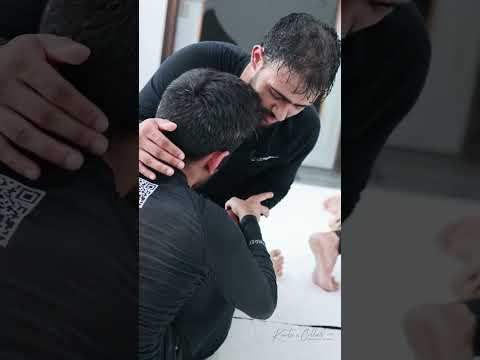
De la Riva with the lapel, and he's defending the sleeve well. In this gi class, Professor Binish Sukhija works the worm guard: kick, sit up, pass the lapel under your calf and let your foot carry the load, not your grip. Then a new control: free foot on the mat, hip escape, and your right hand goes through his knee. Now his foot is stuck. He can't step forward, can't run back, can't lift it to step over.
From there, a scissor sweep that runs on momentum instead of effort: foot up and swing big. Knees to the chest with the ankle in front, pull him down, hold on so he can't run and get the belt. And when the sweep and the inversion both fail because he keeps stepping back, use the same mechanics for an easier back take: inner thigh control, your foot above his knee, hand to the belt or the far hip.
To finish, the first engagement of a match: palm outside to push his grip off your collar, then collar and sleeve, collar-side foot on the mat and a pistol squat down into de la Riva.
CHAPTERS
0:00 Intro
0:31 Worm guard: lapel shift and the knee control
3:10 Scissor sweep: swing big
4:17 Knees to the chest, get the belt
5:17 He steps back: take the back
6:20 Guard pull: palm outside, pistol squat
8:01 Drilling
TRAIN WITH US
Book a free trial class: https://www.knotsandcollar.com/pages/schedule-a-visit
Class schedule: https://www.knotsandcollar.com/programs
WhatsApp us: https://wa.me/919717956687
Instagram: https://www.instagram.com/knotsandcollar/
#bjj #gi #wormguard #delariva #backtake #jiujitsu #grappling #bjjindia #knotsandcollar
TAGS
worm guard, lapel guard, de la riva, scissor sweep, back take, step back, guard pull, pistol squat guard pull, gi bjj, lapel grips, bjj technique, grappling, knots and collar, professor binish sukhija, bjj india
Safety Advisory: Please Practice Movements Shown at Your Own Discretion
Your safety is of utmost importance to us, and we want to ensure that you have a positive and secure experience while watching and attempting the movements demonstrated in this video. Here are some essential safety guidelines:
Consult a Professional: Before attempting any self-defense or physical movements shown in this video, it's advisable to consult with a qualified instructor or healthcare professional, especially if you have any pre-existing medical conditions or injuries.
Start Slowly: If you're new to these techniques or not fully confident, start slowly and gradually increase the intensity as you become more comfortable. Rushing into complex movements can increase the risk of injury.
Use Proper Form: Pay close attention to the instructor's guidance on correct form and technique. Proper form is essential for both effectiveness and safety.
Practice in a Safe Environment: Ensure you have enough space to practice safely, away from any obstacles or hazards. Practicing on a soft surface, such as a mat or carpet, can help reduce the risk of injury in case of accidental falls.
Listen to Your Body: If you experience pain, discomfort, or any unusual sensations while practicing these movements, stop immediately and seek professional advice if needed.
Stay Hydrated: Hydration is key during physical activities. Drink water before, during, and after your practice session to prevent dehydration.
Know Your Limits: Everyone's physical abilities vary. Don't push yourself beyond your limits, and don't feel pressured to perform advanced movements if you're not ready.
Use a Partner: If possible, practice these techniques with a training partner. Having a partner can enhance the learning experience and provide an extra layer of safety.
Respect Personal Boundaries: When practicing with a partner, ensure you both agree on the level of force and contact involved in the training to prevent accidental injuries.
Seek Professional Training: While this video can be a valuable resource, nothing replaces professional training. Consider enrolling in a self-defense or martial arts class to receive hands-on instruction.
Remember, the movements demonstrated in this video are intended for educational purposes, and your safety is your responsibility. Please use caution, exercise common sense, and practice these techniques responsibly.
Published by

More from Knots & Collar
-

The Fight Is Won in the Small Things #bjj
Nov 25, 2026
-

Knee on Belly Escape: Survive First | BJJ No-Gi Class
Nov 25, 2026
-

Tapped a Hundred Times. Back the Next Day. #bjj
Nov 25, 2026
-

Last Round. Nothing Left. Go Again. #bjj
Nov 24, 2026
-
No Crowd. No Lights. Just the Work. #bjj
Nov 24, 2026