Should you pull guard in BJJ competition or fight doggedly for the takedown. You'll get some answers to this perennial question in my conversation about pulling guard with BJJ black belt Rob Biernacki.
You wouldn't think that something like stretching before a workout could be controversial, but it is. Some evidence and experts suggest that you should only do it *after*your workout, whereas most traditions say that you should do it *before.*Who's right and what should you do? In this episode I break it down for you (hint, it really, really depends on the sport you do)!
The other day I almost tore a partner's ACL off the bone, which would have required him to have surgery and many months of rehabilitation.
What happened exactly?
I was more experienced and a bit bigger than my training partner that day and we were doing some no gi sparring.
Because of the experience discrepancy I was hyper-focusing on a couple of very specific positions, namely Ashi Garami and the 411.
(This is a form of **Targeted Sparring** which is a great tool to use when you're going against less experienced training partners - by limiting myself to only a couple positions and one submission it makes the match more even and better training for both of us.)
So we're rolling, carefully and respectfully... I've tapped my training partner out a few times with heel hooks, all applied in slow motion... He's beginning to defend the leglocks more intelligently and I'm having to work a little harder to get them...
Everything is going the way it's supposed to.
Then it almost ended very badly.
I had the Ashi Garami firmly in place, and was just finishing the dig part of the heel hook (where you get your wrist under his heel in preparation for finishing the lock).
And 99% of the time when I'm sparring that's as far as I'll go - no need to actually apply the heel hook. At that point my partner typically knows he's caught and will tap out.
But this new training partner didn't know when to quit. He tried to escape by spinning.
**And, to make matters MUCH worse, he spun the wrong way!**
Spinning or rotating can be part of an effective heel hook defense, BUT NOT WHEN YOU GO IN THE WRONG DIRECTION!!
Instead of relieving the pressure, spinning into the dig amplifies the power of the submission exponentially!
If I had remained still, not moving, his wrong-way-spin would have slammed his heel into my forearm.
He would have full power heel hooked himself, which can tear all sorts of ligaments in the knee, the foot and the ankle.
Fortunately I saw what was about to happen and completely released my grips without a second to spare.
The submission evaporated, he spun safely and 'escaped.'
Then I sat him down and we had a good little chat about the dangers of spinning out of leglock if you don't know which way to spin.
Now I'm not here to vilify leglocks, because I've managed to train them safely for years.
And I've seen lots disasters and near misses on the mats with many other techniques and submissions over the years.
So let's universalise a few take-home lessons from this incident…
**LESSON #1 - IF YOU'RE CAUGHT AND DON'T KNOW WHAT TO DO, THEN DON'T DO SOMETHING DYNAMIC!!**
This is certainly true of the heel hook example above, but this applies to any submission.
Imagine an absolute beginner caught in an armbar from guard with no idea how to defend or escape technically.
But he still doesn't want to tap out, and lacking a good plan, decides to try something dynamic and unorthodox.
He turns 90 degrees to the side then does a flying belly flop onto the mat. Or maybe he launches himself into a full power backwards somersault. Or maybe into a breakdancing head spin.
Do you think something could go wrong in those situations?
Yes! Very seriously wrong. Snap, crackle, pop wrong!
Introducing that much additional and unexpected momentum into a situation where you don't know *exactly*what you're doing is guaranteed to lead to disaster.
At some point a limb will end up in a vulnerable position and the heavy body in motion will result in a sprain, tear, break or dislocation.
Yes, there are times when momentum is your friend for escaping submissions, but it's a tool that you use rarely, in specific situations and with specific techniques.
Don't get injured because your ego makes you unwilling to tap out.
If you're caught in a position or submission and you don't know which way to turn then don't turn!
Instead 1) accept that you're caught, 2) open your hand and 3) tap it on your opponent a few times.
Your jiu-jitsu will improve SO much faster if you're on the mat rather than at the physiotherapist trying to put Humpty together again.
**LESSON #2 - EXPLAIN THE DANGERS OF A TECHNIQUE TO YOUR STUDENTS, AND TEACH THEM THE CORRECT COUNTERS**
A lot of this near miss heel hooking situation was my fault.
I knew that I wouldn't crank my training partner's leg, but I had made an assumption that he understood the basics of defending the heel hook.
**I should not have made this assumption.**
(You know what they say about the word "Assume"? That it makes and "ass" out of "u" and "me".)
I should have at least double checked with him prior to training that he understood the mechanism of the heel hook and the basic do's and don'ts.
Teach the basic safety parameters around a submission you're going to be drilling.
This as logical as teaching or teaching break falls before you teach throws, but I've seen newbies get concussions on day one because they were starting on their feet with zero idea how to land safely.
I've also seen beginners put to sleep because nobody had told them that that was a way to stop a choke once it was applied.
Easily preventable mistakes.
Jiu-jitsu is a contact sport and injuries are inevitable, but let's minimise those injuries!
As the teacher, senior belt, or more experienced rolling partner it's YOUR job to try and keep things as safe as they can be, and that includes not assuming that other people know what you know.
Safety precautions that are totally obvious to you might be revelations to others,*so don't assume that a beginner knows anything, no matter how much internet research they seem to have done prior to coming to class.*
**LESSON #3 - EXPECT PEOPLE TO DO STUPID THINGS, WITHOUT WARNING, FOR NO REASON**
The most important rule in boxing is to *"protect yourself at all times."*
In training, as opposed to actual fighting itself, I would extend this to be *"protect yourself **and your training partner** at all times."*
Expect people, especially beginners, to do stupid things, without warning, for no reason at all.
Do you have someone new in your closed guard? Maybe he's getting ready to try a superman dive forward with the idea of getting directly to mount. Unfortunately this results in him accidentally spearing you in the face with a head butt. I've seen it done…
Protect yourself and your training partner at all times!
Are people sitting on a crowded mat with their arms locked straight behind them with people rolling all around? That arm will shatter if someone falls, rolls or scrambles directly onto that locked elbow. Gently let those people know that they're putting their arms in danger.
Protect yourself and your training partner at all times!
Are you passing the open guard? Watch out for him accelerating to ludicrous speed, lashing out with his legs and inadvertently breaking your nose with a heel kick. This happened to me, which is exactly why I will never be a nose model….
Protect yourself and your training partner at all times!
Are you rolling on the ground while other people are on their feet? Can you guarantee that their takedown gone wrong won't have them landing on your face, shattering your orbital bone? Again, this happened to me, and my face is still lopsided 30 years later.
Protect yourself and your training partner at all times!
Do you see your training partner about to do something really stupid that could get him injured? Don't let it happen. Release whatever you've got, even if it's a submission that you really, really wanted to tap him out with. Then explain to him what could have just happened.
One more time… Say it with me… Protect yourself and your training partner at all times!
Safety first! Injury is the enemy!!
Stephan
## Related Articles and Videos on Grapplearts **HOW TO TRAIN THE MORE DANGEROUS LEGLOCKS**
My best tips, tricks and training methods to get good at leglocks while not getting hurt or hurting your partner, with videos and input from two other experienced leg lockers.
**THE TWELVE POSITIONS OF MODERN LEGLOCKING**
Modern leg locking is really about the 12 major leglock positions. The game is to enter into the entanglement position of your choice, maintain it against opposition, and prevent your opponent from escaping.
This **free PDF** is the best intro to the leglock positional game you can get.
**MORE ARTICLES, TECHNIQUES AND VIDEOS**
This is the home page of my blog, where I am forever adding new techniques, tips, tricks, podcasts, videos, and other information that'll help you get good at gi and no gi grappling faster!
Vlad Koulikov returns to the show to talk about his recent promotion to BJJ Black Belt, winning the Combat Wrestling Worlds in Japan, training through injuries, conditioning and his views on the modern leg lock game from a Sambo perspective
Today's episode comes from a Q&A session I did on Instagram live (@stephan_kesting) and gave the answers to a ton of BJJ and training topics including...
05:00 - When I started training BJJ
06:56 - Is BJJ ever going to make it into the Olympics
08:04 - Advice for remote learners without access to a school
12:33 - Teaching seminars?
13:19 - Grappling and submissions when there's a weapon involved
17:51 - Grapplearts leglock videos
19:01 - The leglock positional hierarchy
20:39 - Dealing with cauliflower ear
23:28 - What does my training look like?
24:51 - How powerful is the ankle lock, and what's the best leglock?
27:35 - Big man game vs small man jiu-jitsu
29:34 - Is it Ok to train at multiple schools?
31:38 - Is catch wrestling any good and do I use it?
33:39 - Custom rash gaurds
34:02 - What makes someone's game world class?
37:38 - Tips for facing larger opponents
39:55 - Strategies for people with bad knees
41:23 - Neck strengthening exercises
43:47 - Mapping out a training schedule
Hope you enjoy this and also make sure to follow me on Instagram where I'm @stephan_kesting
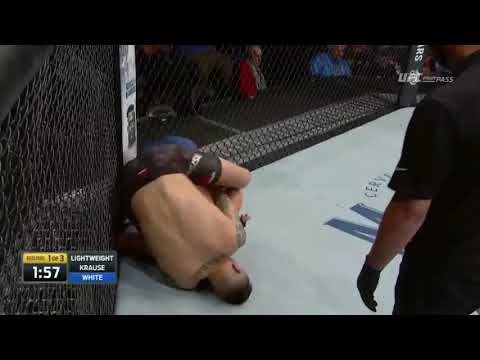
Very interesting MMA technique by James Krause in his last fight. If you followed the Khabib ride, this flows very well into that sequence. Krause only has the top hook which is usually the hook with the least amount of control when on the back. The opponent can escape the hips because of a lack of bottom hook control. Krause uses this to quickly attempt a rear naked choke, but once he is unable to execute the choke, his opponent escapes because of this lack of bottom hook. However, his opponent still remains on bottom with Krause on top which is ideal in MMA. One of the biggest issues with taking the back in MMA is losing control and winding up on the bottom. Krause is very innovative in his attack because he is never in danger of losing top position which is ideal. With this position you can also quickly wind up in the Khabib ride as well with the top half guard control which is imperative for position control. Coach Malachy Friedman at American Top Team Lowcountry Attlowcountry in Charleston South Carolina West Ashley
Spenser Mango is a decorated Greco Roman Wrestling champion and a 2x Team USA Olympian. He talks about finding his style, strength & conditioning, the benefits of being smaller and his Olympic experience. He also gives advice on diet and cutting weight.
Coach Kevin teaches Fox Champs on Monday and Friday as well as our Strike Right classes. Don't waste you or your child's time with inferior martial arts classes and coaches.
This is a great episode with a ton of relevant and useful tips for combat athletes! Jason C. Brown shares a ton of information about kettlebell conditioning for jiu-jitsu and other martial arts including the details of kettlebell form, competitions, and designing conditioning programs for different people with different goals. We also riff on old-school jiu-jitsu techniques and why they still work. Give it a listen and, as always, please share it with someone else if you think it'll be useful for them!
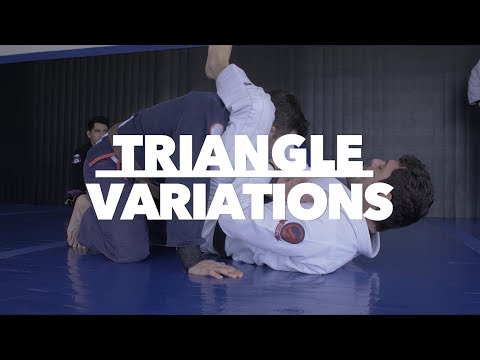
Best jiu jitsu in Huntington Beach, this video is about triangle variations by Joao Assis 3 X World Champion.
Check http://electricjiujitsu.com
Like us on Facebook https://www.facebook.com/electricjiujitsu
Follow us on Instagram http://instagram.com/electricjiujitsu
"Pe De Pano" joins the show to talk about how BJJ saved him from his troubled youth, the Colby Covington incident, Brazil in the 90's vs today, the ingredients of a champion and facing weaknesses head on. He also gives technical insight on the armbar
It started so well! First Rob Biernacki and I discuss The Last Jedi and training with ADCC champion Yuri Simoes and World Champion Caio Terra. Then things went off the rails and we pissed off leftists, rightists, geeks, lesbians, Marxists, trickle-down economists, liberals, Trumpists, systema practitioners, academics, flat-earthers and everyone in between!
What would the boxer Vasyl Lomachenko do if he caught you macking on his girlfriend? Well, I don't think it would involve any elaborate footwork or strategies... It's fun to make things complicated in training, to use setups, fakes, and elaborate combinations to beat your training partners. But when it comes to street self defense you should keep things really, really simple. For more of my self defense material check out my second website at [selfdefensetutorials.com](http://www.selfdefensetutorials.com) and my second YouTube channel at YouTube.com/selfdefensetutorials
I think you'll really like this episode! In it I talk with Alex Kask who is a traditional Japanese Takeuchi-ryu Ju-Jutsu teacher but also no stranger to modern Brazilian Jiu-jitsu. We go deep into the techniques and history of traditional Japanese martial arts systems, including modern vs traditional training methods, the Japanese 'Warring States' period, historical challenge matches, the importance of wrestling in an environment with weapons and armour, and much more!
Find out more about Alex at http://www.shofukan.ca/
Read the article we did together on Japanese Ju-Jutsu vs Submission Grappling here: http://www.grapplearts.com/submission-grappling-vs-classical-ju-jutsu-when-cultures-and-concepts-collide/
See Alex and I talk armbars vs knives here: https://www.youtube.com/watch?v=DUYWwutQrBE
And check out how the Rear Naked Choke (RNC) might be applied differently in traditional Japanese Ju-Jujutsu vs BJJ here: https://www.youtube.com/watch?v=PL8ywtIOtfY
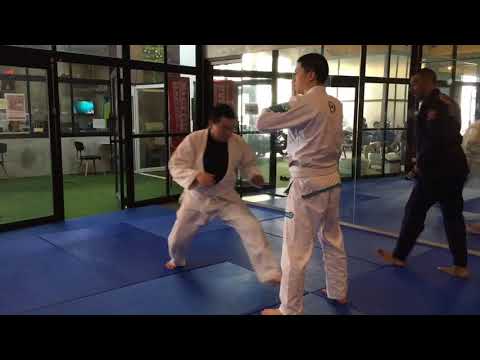
Shintaro Higashi joins the show to talk about the pressures of being the son of a Judo legend, how rule sets impact grappling styles, his diverse grappling experience and pursuing the Olympics. He also covers improving take downs for any grappling style!
I really enjoyed this chat with kiteboarder and extreme athlete Jack Rieder (in part because I'm dying to try kiteboarding myself). Here's just a bit of what we talked about...
1:10 - What is kiteboarding?
6:47 - The disciplines of kiteboarding
13:57 - Other uses for kites
17:51 - Controlling the kite
21:28 - Injuries and risk
27:14 - Media and video process
30:36 - Training vs doing for high level performance
38:07 - The future of the sport
41:11 - The art of getting sponsored
Gustavo "Siri" Pires is a decorated champion and instructor. He talks about appreciating the basics, having a sibling who trains, closed guard and competing against friends. He also talks about competing against Demian Maia and Comprido back in Brazil